📺 X-Men '97 (2024)
Part of Marvel Cinematic Universe (MCU)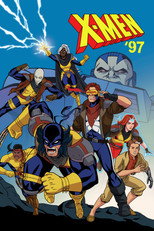
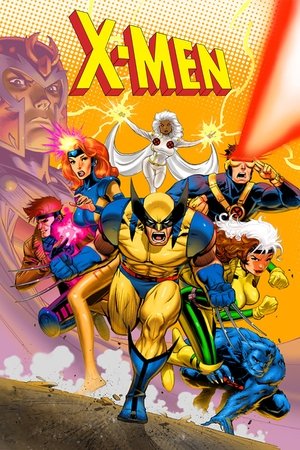
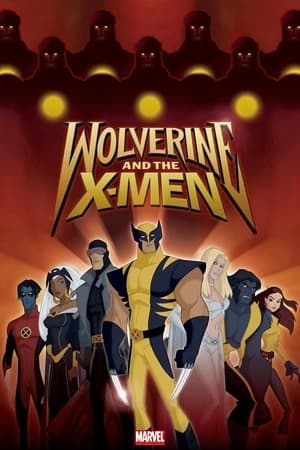
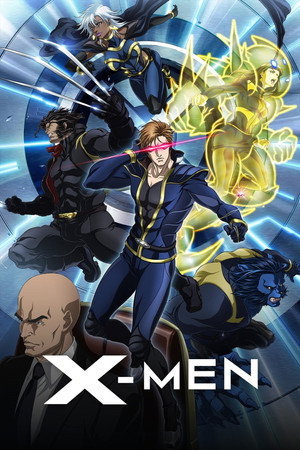
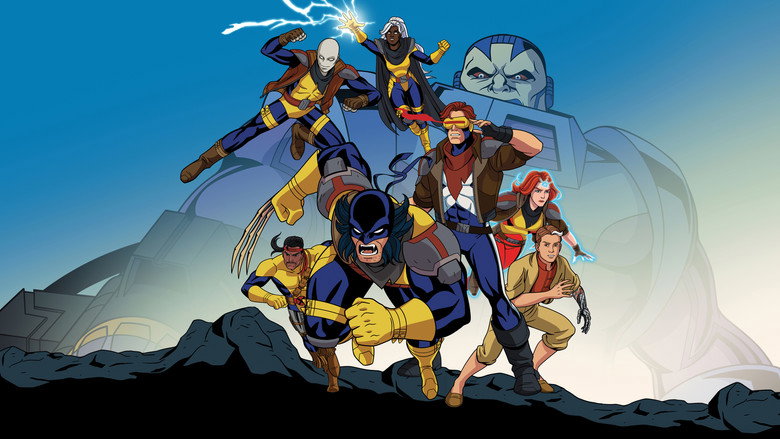
X-Men '97 is a direct continuation of the beloved X-Men: The Animated Series that originally aired from 1992 to 1997, picking up the story after the original series' finale. Produced by Marvel Studios Animation for Disney+, the revival brings back several original voice actors including Cal Dodd as Wolverine, Lenore Zann as Rogue, and George Buza as Beast, while introducing new cast members to voice familiar characters. The animation style modernizes the original's look while retaining its distinctive aesthetic, courtesy of Studio Mir and Tiger Animation.
The series continues to draw from the rich source material of the Marvel Comics X-Men franchise, created by Stan Lee and Jack Kirby in 1963. Like its predecessor, X-Men '97 adapts classic comic storylines while weaving its own narrative threads, exploring the ongoing struggle for mutant rights and the complex dynamics between the X-Men and their adversaries. The revival represents Marvel Studios' first X-Men project since regaining the film and television rights to the characters.
X-Men: The Animated Series was instrumental in bringing the X-Men to mainstream popularity in the 1990s, introducing a generation to characters like Wolverine, Storm, and Magneto through its serialized storytelling and faithful adaptation of major comic arcs such as The Dark Phoenix Saga and Days of Future Past. X-Men '97 honors that legacy while updating the storytelling sensibilities for contemporary audiences, tackling the social allegories that have always been at the heart of the X-Men mythos.

The X-Men are a team of superheroes appearing in American comic books published by Marvel Comics. Created by writer Stan Lee and artist Jack Kirby, they first appeared in The X-Men #1 in September 1963. The series introduces mutants, a subspecies of humans born with superhuman abilities activated at puberty, and explores themes of prejudice, discrimination, and social justice as the team fights for peaceful coexistence between mutants and humans.
Led by the powerful telepath Professor Charles Xavier, the X-Men operate out of his School for Gifted Youngsters in Westchester, New York. The team's roster has included iconic characters such as Cyclops, Jean Grey, Wolverine, Storm, Rogue, and Beast. Their primary adversary and occasional ally is Magneto, a mutant supremacist and former friend of Xavier, who believes mutants should rule over humanity.
After initial cancellation in 1970, the series was revived in 1975 under writer Chris Claremont, whose influential 16-year run transformed the X-Men into one of Marvel's most popular and commercially successful franchises. The series became known for its diverse international cast, complex character relationships, and allegorical storytelling addressing real-world issues of racism, homophobia, and other forms of bigotry. The X-Men franchise has since expanded into numerous spin-off titles, including New Mutants, X-Force, and Excalibur, and has become a cornerstone of Marvel's publishing line.
The Spider-Man (MCU) collection is a trilogy of superhero films centered on Peter Parker, a teenage superhero navigating the complexities of adolescence within the larger Marvel Cinematic Universe. Produced by Marvel Studios and distributed by Sony Pictures Releasing, the series marks the character's integration into the MCU following a landmark agreement between the two studios. The films follow Peter as he balances high school life with his secret identity, mentored by Tony Stark, and gradually confronts threats that escalate from local menaces to multiverse-shattering crises. This collection is defined by its coming-of-age narrative, blending the spectacle of superhero action with the relatable struggles of youth, friendship, and responsibility.
The trilogy explores Peter's evolution from an eager, inexperienced hero seeking approval to a self-reliant figure who understands the weight of his choices. Thematically, it grapples with identity, loss, and the consequences of living a double life, all while maintaining a light, humorous tone characteristic of the MCU's Spider-Man. The films are deeply interconnected with the broader MCU, with events from other films directly impacting Peter's journey, and his actions, in turn, sending ripples through the shared universe. This interconnectedness culminates in a narrative that not only honors the legacy of previous Spider-Man adaptations but also expands the possibilities of the character within a vast, interconnected superhero landscape.
Culturally, the collection has been a significant commercial and critical success, revitalizing the Spider-Man film brand for a new generation. It successfully reintroduced the character without retelling his origin story, instead focusing on his growth within an already established world of heroes. The trilogy's blend of high school comedy, heartfelt drama, and large-scale superhero action resonated with audiences, making it a standout within the MCU's sprawling narrative. Its impact is evident in its box office performance and its role in bridging different eras of Spider-Man cinema, creating a unique, celebratory event for fans.
The legacy of this collection lies in its innovative approach to a well-known character, proving that a fresh perspective can reinvigorate even the most familiar stories. By embedding Spider-Man firmly within the MCU, the trilogy allowed for character dynamics and plot developments impossible in a standalone series, while still delivering a deeply personal arc for Peter Parker. It stands as a testament to collaborative studio filmmaking and a defining chapter in the ongoing story of one of pop culture's most enduring heroes.

The "X-Men: The Animated Series" collection comprises two landmark animated television shows that together form a singular, serialized narrative exploring Marvel's mutant heroes. Beginning with the original 1992 series, this collection introduced a generation to the X-Men's struggle for coexistence in a world gripped by fear and prejudice. Through its distinctive visual style, iconic theme music, and ambitious adaptations of seminal comic book arcs, it elevated Saturday morning cartoons into a platform for sophisticated, emotionally resonant storytelling. The series wove potent allegories of discrimination, identity, and social justice into high-stakes superhero action, cementing its place as a cultural touchstone of the 1990s.
Decades later, the story was revived and continued directly with *X-Men '97* in 2024, a sequel series that picks up immediately after the original finale. This new chapter honors the legacy of its predecessor by retaining the core voice cast and signature aesthetic, while employing modern animation techniques to deliver more fluid action and deeper character exploration. The seamless transition between eras demonstrates the timeless appeal of the ensemble, proving that the personal and political conflicts of Cyclops, Wolverine, Storm, and their found family remain profoundly relevant.
As a cohesive whole, this collection represents a definitive interpretation of the mutant metaphor that has influenced virtually every subsequent screen adaptation of the property. It established a blueprint for treating animated genre fiction with dramatic seriousness, paving the way for the interconnected superhero narratives that dominate contemporary media. Balancing intimate character-driven moments with cosmic spectacle, the saga endures as the animated heart of the X-Men mythology, a masterclass in serialized storytelling that bridges generations of fans.