🎬 X-Men: Days of Future Past (2014)
Part of X-Men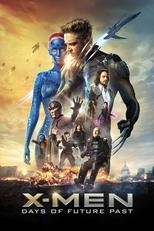
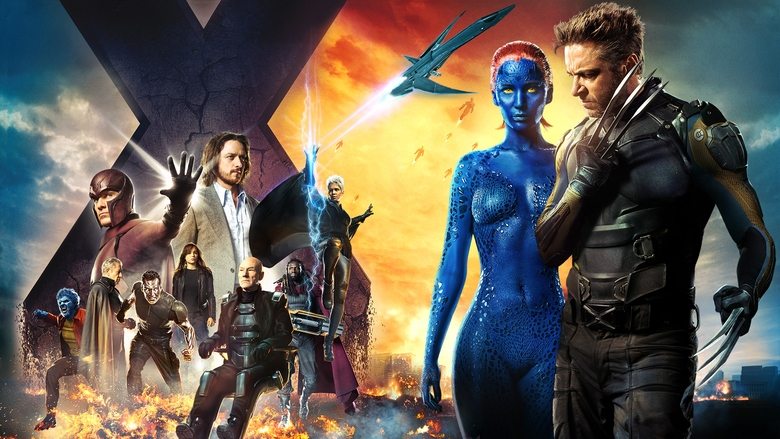
Bryan Singer’s "X-Men: Days of Future Past" stands as a high-water mark for superhero cinema, not just for its ambitious fusion of two beloved casts, but for how it adapts one of the most revered comic book storylines of all time. The 1981 two-issue arc by Chris Claremont and John Byrne was a taut, dystopian thriller that sent an adult Kate Pryde’s consciousness back to her younger self to prevent a mutant genocide. The film, however, makes a crucial and inspired pivot: it’s Wolverine who makes the temporal jump, his consciousness sent back to his unbreakable, un-adamantiumed 1973 body. This change is more than a concession to Hugh Jackman’s star power; it cleverly leverages Wolverine’s role as the franchise’s narrative anchor, making him the bridge between the slick, optimistic First Class era and the grim, Sentinel-ravaged future.
The film’s greatest achievement is its thematic re-centering. While the comic was a race-against-time thriller, the movie deepens the conflict into a character-driven tragedy about the ideological schism between Charles Xavier and Erik Lehnsherr. The 1973 setting isn't just a groovy backdrop; it’s a crucible where a broken, self-medicating Charles must literally walk again with the help of his future self, and where Magneto’s rage is reignited by the assassination of JFK on the very day he was trying to save the mutant president. The addition of Peter Maximoff’s Quicksilver in the now-iconic Pentagon kitchen sequence provided a show-stopping moment of levity and visual invention, while the central mystery of Mystique’s path from vengeful assassin to potential savior gave the sprawling narrative a razor-sharp emotional focus that the original comic, for all its brilliance, lacked.
Critically and commercially, the film was a triumphant course correction. After the convoluted "X-Men: The Last Stand" and the standalone "The Wolverine," "Days of Future Past" was hailed as a return to form, praised for its intelligent script by Simon Kinberg and its deft handling of a massive ensemble. It didn't just pay lip service to continuity; it actively and boldly erased the most maligned chapters of the series, wiping the slate clean and giving the franchise a renewed sense of purpose. The film’s $746 million global box office confirmed that audiences were hungry for superhero stories that prioritized character and consequence over mere spectacle, proving that a complex, time-bending plot could resonate on a massive scale when anchored by genuine emotional stakes.

The X-Men are a team of superheroes appearing in American comic books published by Marvel Comics. Created by writer Stan Lee and artist Jack Kirby, they first appeared in The X-Men #1 in September 1963. The series introduces mutants, a subspecies of humans born with superhuman abilities activated at puberty, and explores themes of prejudice, discrimination, and social justice as the team fights for peaceful coexistence between mutants and humans.
Led by the powerful telepath Professor Charles Xavier, the X-Men operate out of his School for Gifted Youngsters in Westchester, New York. The team's roster has included iconic characters such as Cyclops, Jean Grey, Wolverine, Storm, Rogue, and Beast. Their primary adversary and occasional ally is Magneto, a mutant supremacist and former friend of Xavier, who believes mutants should rule over humanity.
After initial cancellation in 1970, the series was revived in 1975 under writer Chris Claremont, whose influential 16-year run transformed the X-Men into one of Marvel's most popular and commercially successful franchises. The series became known for its diverse international cast, complex character relationships, and allegorical storytelling addressing real-world issues of racism, homophobia, and other forms of bigotry. The X-Men franchise has since expanded into numerous spin-off titles, including New Mutants, X-Force, and Excalibur, and has become a cornerstone of Marvel's publishing line.

The Wolverine collection is a trilogy of superhero films centered on the Marvel Comics character Wolverine, a mutant with a regenerative healing factor, adamantium-laced skeleton, and retractable claws. The collection explores the character's tortured past, his struggle with his own violent nature, and his search for meaning across different eras of his long life. Each entry functions as a standalone narrative, yet together they form a cohesive arc tracing Logan's journey from a weapon of war to a reluctant protector and, ultimately, a figure of sacrifice.
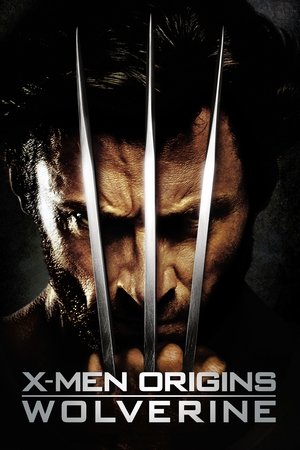
The collection begins with X-Men Origins: Wolverine, which delves into Logan's early life, his relationship with his brother Victor Creed, and his transformation through the Weapon X program. The Wolverine shifts the setting to Japan, where Logan confronts his mortality and the weight of his immortality, drawing inspiration from the celebrated comic book arc by Chris Claremont and Frank Miller. Logan concludes the trilogy with a somber, neo-Western tone, depicting an aged and weary Wolverine in a near-future setting where mutants are nearly extinct, as he undertakes one final, redemptive mission.
While the films are part of the broader X-Men film series, this trilogy stands apart for its focused character study and tonal consistency. The collection is notable for its evolution in style and maturity, moving from a conventional superhero origin to a gritty, R-rated character drama. Hugh Jackman's portrayal of Wolverine across these films is widely regarded as a defining performance in the genre, anchoring the collection's exploration of trauma, identity, and the cost of violence.