🎬 X-Men: The Last Stand (2006)
Part of X-Men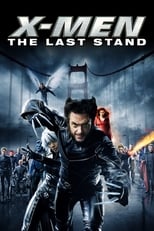
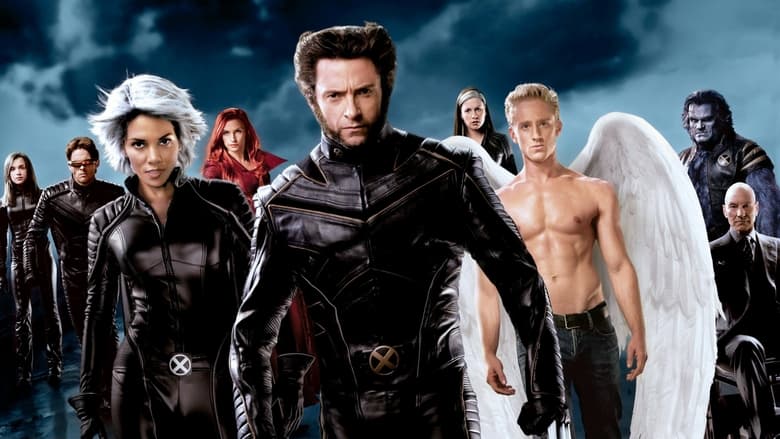
Arriving in 2006 as the culmination of the original X-Men film trilogy, "X-Men: The Last Stand" took one of the biggest swings in superhero cinema by attempting to fuse two of the most revered storylines in Marvel history: Joss Whedon's "Gifted" arc and Chris Claremont's legendary "The Dark Phoenix Saga." The result was a film defined by its audacious choices and polarizing reception. Directed by Brett Ratner after Bryan Singer departed to helm "Superman Returns," the movie faced a tumultuous production that saw key creative talent and cast members like James Marsden exit, leading to a script that condensed massive, emotionally complex narratives into a brisk 104-minute runtime. The introduction of a "mutant cure" provided a compelling ethical dilemma that forced characters to question whether their powers were a gift or a disease, a concept that resonated deeply with the franchise's core themes of identity and acceptance.
The film's most controversial decision was its handling of the Dark Phoenix, transforming the cosmic entity of the comics into a dissociative identity suppressed by Professor Xavier's psychic blocks. Famke Janssen's Jean Grey becomes a largely silent, feral force of nature rather than a character grappling with absolute power and desire, a simplification that frustrated many fans of the source material. The movie didn't shy away from permanent consequences, unceremoniously killing off major characters like Cyclops off-screen and Professor Xavier in a shocking disintegration scene, before famously stripping Magneto of his powers with the cure. These narrative risks, while bold, often felt rushed, sacrificing the slow-burn character development that made Singer's previous films so effective for a spectacle-driven finale featuring the Golden Gate Bridge relocation and a massive battle on Alcatraz Island.
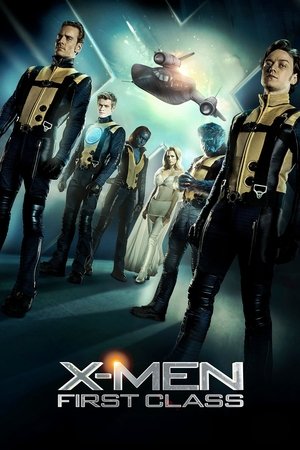
Despite the behind-the-scenes chaos and a critical mauling that often places it at the bottom of X-Men rankings, "The Last Stand" was a monumental box office success, grossing over $459 million worldwide and holding the record for the highest Memorial Day weekend opening at the time. It introduced Kelsey Grammer's perfectly cast Beast to the big screen, gave Halle Berry's Storm a more prominent leadership role, and featured a memorable post-credits scene that hinted at Xavier's survival through a braindead twin brother, a dangling plot thread that would take years to resolve. The film's legacy is one of fascinating contradiction: a commercial juggernaut that was so divisive it eventually led to the franchise being soft-rebooted with "X-Men: First Class" and later completely overwritten by the time-travel shenanigans of "Days of Future Past."
In retrospect, "The Last Stand" serves as a cautionary tale about the difficulty of adapting sprawling comic book mythology without the singular vision of a dedicated creative team. Its attempt to tackle the mutant cure metaphor alongside the Dark Phoenix's destructive awakening created a thematic overload that the truncated production schedule couldn't fully support. Yet, for all its flaws, the film's willingness to embrace irreversible change and its exploration of a cure that forces mutants to choose between fitting in and staying true to themselves remains a fascinating, if flawed, chapter in the X-Men's cinematic journey.

The X-Men are a team of superheroes appearing in American comic books published by Marvel Comics. Created by writer Stan Lee and artist Jack Kirby, they first appeared in The X-Men #1 in September 1963. The series introduces mutants, a subspecies of humans born with superhuman abilities activated at puberty, and explores themes of prejudice, discrimination, and social justice as the team fights for peaceful coexistence between mutants and humans.
Led by the powerful telepath Professor Charles Xavier, the X-Men operate out of his School for Gifted Youngsters in Westchester, New York. The team's roster has included iconic characters such as Cyclops, Jean Grey, Wolverine, Storm, Rogue, and Beast. Their primary adversary and occasional ally is Magneto, a mutant supremacist and former friend of Xavier, who believes mutants should rule over humanity.
After initial cancellation in 1970, the series was revived in 1975 under writer Chris Claremont, whose influential 16-year run transformed the X-Men into one of Marvel's most popular and commercially successful franchises. The series became known for its diverse international cast, complex character relationships, and allegorical storytelling addressing real-world issues of racism, homophobia, and other forms of bigotry. The X-Men franchise has since expanded into numerous spin-off titles, including New Mutants, X-Force, and Excalibur, and has become a cornerstone of Marvel's publishing line.

The Wolverine collection is a trilogy of superhero films centered on the Marvel Comics character Wolverine, a mutant with a regenerative healing factor, adamantium-laced skeleton, and retractable claws. The collection explores the character's tortured past, his struggle with his own violent nature, and his search for meaning across different eras of his long life. Each entry functions as a standalone narrative, yet together they form a cohesive arc tracing Logan's journey from a weapon of war to a reluctant protector and, ultimately, a figure of sacrifice.
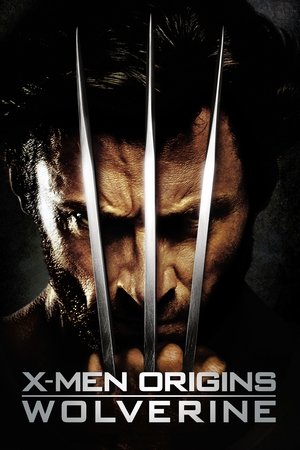
The collection begins with X-Men Origins: Wolverine, which delves into Logan's early life, his relationship with his brother Victor Creed, and his transformation through the Weapon X program. The Wolverine shifts the setting to Japan, where Logan confronts his mortality and the weight of his immortality, drawing inspiration from the celebrated comic book arc by Chris Claremont and Frank Miller. Logan concludes the trilogy with a somber, neo-Western tone, depicting an aged and weary Wolverine in a near-future setting where mutants are nearly extinct, as he undertakes one final, redemptive mission.
While the films are part of the broader X-Men film series, this trilogy stands apart for its focused character study and tonal consistency. The collection is notable for its evolution in style and maturity, moving from a conventional superhero origin to a gritty, R-rated character drama. Hugh Jackman's portrayal of Wolverine across these films is widely regarded as a defining performance in the genre, anchoring the collection's exploration of trauma, identity, and the cost of violence.