🎬 Dark Phoenix (2019)
Part of X-Men
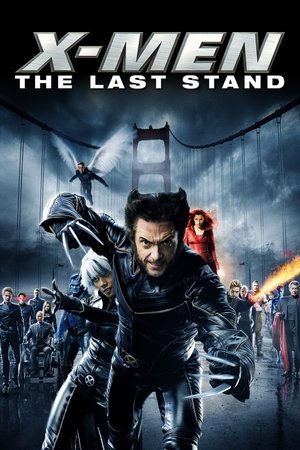
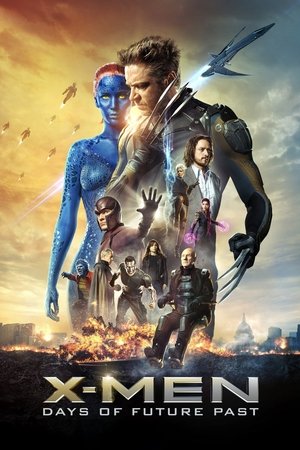
Dark Phoenix is a 2019 superhero film that marks the second attempt by 20th Century Fox to adapt Chris Claremont and John Byrne's iconic "The Dark Phoenix Saga" for the big screen. The first attempt, X-Men: The Last Stand (2006), relegated the Phoenix storyline to a subplot and was widely criticized by fans and critics alike. Following the timeline reset in X-Men: Days of Future Past (2014), writer-producer Simon Kinberg saw an opportunity to craft a more faithful adaptation, this time stepping into the director's chair for his directorial debut. The film serves as a direct sequel to X-Men: Apocalypse (2016) and is the twelfth installment in the X-Men film series.
Set in 1992, the story follows the X-Men as they embark on a rescue mission in space, where Jean Grey absorbs a mysterious cosmic force that vastly amplifies her psychic abilities. As she struggles to control her new powers and confronts buried childhood trauma, Jean's instability threatens not only her found family but the entire planet. The film stars Sophie Turner as Jean Grey, alongside James McAvoy, Michael Fassbender, Jennifer Lawrence, and Nicholas Hoult, with Jessica Chastain joining the cast as an alien shapeshifter seeking to harness the Phoenix force.
Unlike the comic storyline, which involves the Hellfire Club's manipulation and a grand cosmic trial, Dark Phoenix reimagines the Phoenix Force as a primordial entity of destruction and introduces an extraterrestrial antagonist. The film underwent significant reshoots that altered its third act, originally set in space, to a more grounded confrontation on a military train. Despite its ambitions to faithfully capture the emotional core of the source material, Dark Phoenix received mixed-to-negative reviews and underperformed at the box office, ultimately becoming the final mainline X-Men film before Disney's acquisition of 20th Century Fox and the franchise's eventual reboot within the Marvel Cinematic Universe.

"The Dark Phoenix Saga" is a landmark storyline in American comic books, published by Marvel Comics across Uncanny X-Men #129–138 from January to October 1980. Written by Chris Claremont with art by John Byrne, the arc chronicles the corruption of X-Men member Jean Grey by the cosmic Phoenix Force. After exposure to a solar flare, Jean's powers are amplified to god-like levels, but she is manipulated by the villainous Hellfire Club into becoming the destructive Dark Phoenix. The story culminates in Jean's sacrifice to prevent the Phoenix from annihilating the universe, cementing her as one of comics' most tragic heroes.
The saga is celebrated for its emotional depth, moral complexity, and groundbreaking storytelling in the superhero genre. It introduced several enduring characters, including Kitty Pryde, Emma Frost, and Dazzler, and explored themes of power, identity, and redemption. Widely regarded as one of the greatest comic book stories ever told, it set a new standard for serialized superhero narratives and remains a touchstone for X-Men lore.
Its influence extends far beyond comics, inspiring multiple adaptations across television and film. The storyline's blend of cosmic spectacle and intimate character drama has made it a perennial favorite for reinterpretation, though its dense narrative has proven challenging to fully capture outside the original medium.

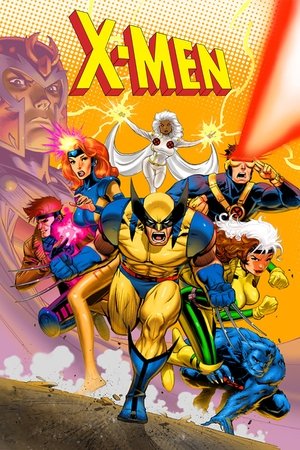
The X-Men are a team of superheroes appearing in American comic books published by Marvel Comics. Created by writer Stan Lee and artist Jack Kirby, they first appeared in The X-Men #1 in September 1963. The series introduces mutants, a subspecies of humans born with superhuman abilities activated at puberty, and explores themes of prejudice, discrimination, and social justice as the team fights for peaceful coexistence between mutants and humans.
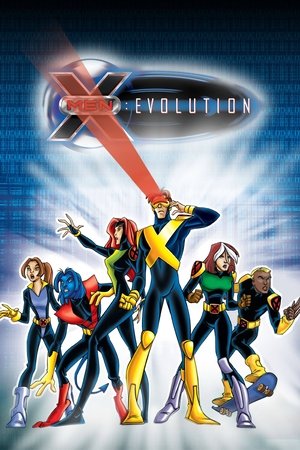
Led by the powerful telepath Professor Charles Xavier, the X-Men operate out of his School for Gifted Youngsters in Westchester, New York. The team's roster has included iconic characters such as Cyclops, Jean Grey, Wolverine, Storm, Rogue, and Beast. Their primary adversary and occasional ally is Magneto, a mutant supremacist and former friend of Xavier, who believes mutants should rule over humanity.
After initial cancellation in 1970, the series was revived in 1975 under writer Chris Claremont, whose influential 16-year run transformed the X-Men into one of Marvel's most popular and commercially successful franchises. The series became known for its diverse international cast, complex character relationships, and allegorical storytelling addressing real-world issues of racism, homophobia, and other forms of bigotry. The X-Men franchise has since expanded into numerous spin-off titles, including New Mutants, X-Force, and Excalibur, and has become a cornerstone of Marvel's publishing line.

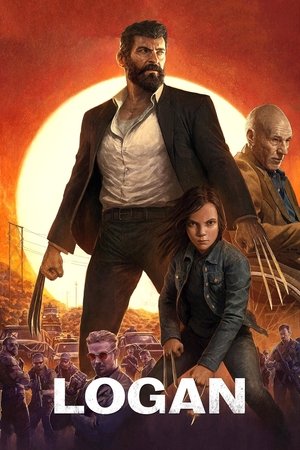
The Wolverine collection is a trilogy of superhero films centered on the Marvel Comics character Wolverine, a mutant with a regenerative healing factor, adamantium-laced skeleton, and retractable claws. The collection explores the character's tortured past, his struggle with his own violent nature, and his search for meaning across different eras of his long life. Each entry functions as a standalone narrative, yet together they form a cohesive arc tracing Logan's journey from a weapon of war to a reluctant protector and, ultimately, a figure of sacrifice.
The collection begins with X-Men Origins: Wolverine, which delves into Logan's early life, his relationship with his brother Victor Creed, and his transformation through the Weapon X program. The Wolverine shifts the setting to Japan, where Logan confronts his mortality and the weight of his immortality, drawing inspiration from the celebrated comic book arc by Chris Claremont and Frank Miller. Logan concludes the trilogy with a somber, neo-Western tone, depicting an aged and weary Wolverine in a near-future setting where mutants are nearly extinct, as he undertakes one final, redemptive mission.
While the films are part of the broader X-Men film series, this trilogy stands apart for its focused character study and tonal consistency. The collection is notable for its evolution in style and maturity, moving from a conventional superhero origin to a gritty, R-rated character drama. Hugh Jackman's portrayal of Wolverine across these films is widely regarded as a defining performance in the genre, anchoring the collection's exploration of trauma, identity, and the cost of violence.