🎬 X-Men (2000)
Part of X-Men
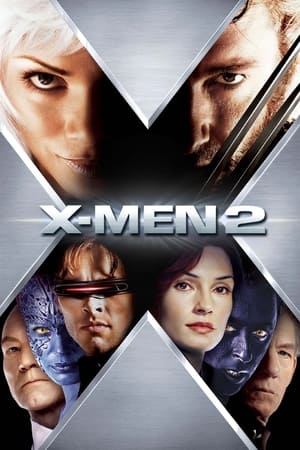
Bryan Singer's X-Men arrived at a precarious moment for superhero cinema, arriving before the genre's modern explosion and carrying the weight of one of comicdom's most beloved franchises. Rather than attempting to faithfully translate decades of convoluted continuity to the screen, Singer and his collaborators wisely chose to distill the X-Men mythology to its essence, using Wolverine and Rogue as audience surrogates thrust into the established world of Xavier's school and the ideological war between Professor X and Magneto. This approach allowed newcomers to discover the mutant world organically while longtime fans could appreciate the careful character dynamics and thematic fidelity to Chris Claremont's celebrated run, particularly the allegorical treatment of prejudice and societal fear of the other.
The film's production was famously turbulent, with numerous high-profile writers including Joss Whedon, Michael Chabon, and Andrew Kevin Walker contributing scripts at various stages, and a development history stretching back to the 1980s when James Cameron and Kathryn Bigelow were briefly involved. The most legendary behind-the-scenes story concerns Hugh Jackman, who was cast as Wolverine just three weeks into filming after Dougray Scott had to drop out due to scheduling conflicts with Mission: Impossible 2. Jackman, a relative unknown outside of Australian theater, became an instant star and would go on to define the character across two decades of films. Patrick Stewart and Ian McKellen brought Shakespearean gravitas to Xavier and Magneto, their real-life friendship infusing the characters' fractured bond with genuine emotional weight.
Singer made several deliberate choices to ground the material in realism, most controversially abandoning the characters' iconic colorful costumes in favor of black leather tactical suits, a decision that drew some fan criticism at the time but helped establish a tone that took the material seriously. The film also streamlined the roster, focusing on a core group that included Cyclops, Jean Grey, and Storm alongside Wolverine and Rogue, while relegating other fan-favorite characters to smaller roles. The decision to center the plot on Magneto's scheme involving the Statue of Liberty and a machine that could mutate world leaders gave the story a contained, blockbuster-scale stakes without overwhelming audiences with mythology.
Upon release in July 2000, X-Men earned solid reviews and over 296 million dollars worldwide, proving that Marvel properties could succeed on film and paving the way for the superhero boom that followed with Spider-Man, Batman Begins, and eventually the Marvel Cinematic Universe. Critics praised the film's performances and its respectful treatment of the source material's themes, though some felt the relatively modest budget constrained the action sequences. The film's success launched a long-running franchise that would span multiple sequels, spin-offs, and prequels over the next two decades, with Jackman's Wolverine becoming one of the most enduring character portrayals in genre cinema history.

The X-Men are a team of superheroes appearing in American comic books published by Marvel Comics. Created by writer Stan Lee and artist Jack Kirby, they first appeared in The X-Men #1 in September 1963. The series introduces mutants, a subspecies of humans born with superhuman abilities activated at puberty, and explores themes of prejudice, discrimination, and social justice as the team fights for peaceful coexistence between mutants and humans.
Led by the powerful telepath Professor Charles Xavier, the X-Men operate out of his School for Gifted Youngsters in Westchester, New York. The team's roster has included iconic characters such as Cyclops, Jean Grey, Wolverine, Storm, Rogue, and Beast. Their primary adversary and occasional ally is Magneto, a mutant supremacist and former friend of Xavier, who believes mutants should rule over humanity.
After initial cancellation in 1970, the series was revived in 1975 under writer Chris Claremont, whose influential 16-year run transformed the X-Men into one of Marvel's most popular and commercially successful franchises. The series became known for its diverse international cast, complex character relationships, and allegorical storytelling addressing real-world issues of racism, homophobia, and other forms of bigotry. The X-Men franchise has since expanded into numerous spin-off titles, including New Mutants, X-Force, and Excalibur, and has become a cornerstone of Marvel's publishing line.

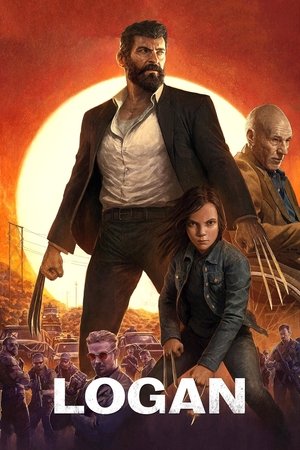
The Wolverine collection is a trilogy of superhero films centered on the Marvel Comics character Wolverine, a mutant with a regenerative healing factor, adamantium-laced skeleton, and retractable claws. The collection explores the character's tortured past, his struggle with his own violent nature, and his search for meaning across different eras of his long life. Each entry functions as a standalone narrative, yet together they form a cohesive arc tracing Logan's journey from a weapon of war to a reluctant protector and, ultimately, a figure of sacrifice.
The collection begins with X-Men Origins: Wolverine, which delves into Logan's early life, his relationship with his brother Victor Creed, and his transformation through the Weapon X program. The Wolverine shifts the setting to Japan, where Logan confronts his mortality and the weight of his immortality, drawing inspiration from the celebrated comic book arc by Chris Claremont and Frank Miller. Logan concludes the trilogy with a somber, neo-Western tone, depicting an aged and weary Wolverine in a near-future setting where mutants are nearly extinct, as he undertakes one final, redemptive mission.
While the films are part of the broader X-Men film series, this trilogy stands apart for its focused character study and tonal consistency. The collection is notable for its evolution in style and maturity, moving from a conventional superhero origin to a gritty, R-rated character drama. Hugh Jackman's portrayal of Wolverine across these films is widely regarded as a defining performance in the genre, anchoring the collection's exploration of trauma, identity, and the cost of violence.