📺 X-Men: Evolution (2000)
Based on comic
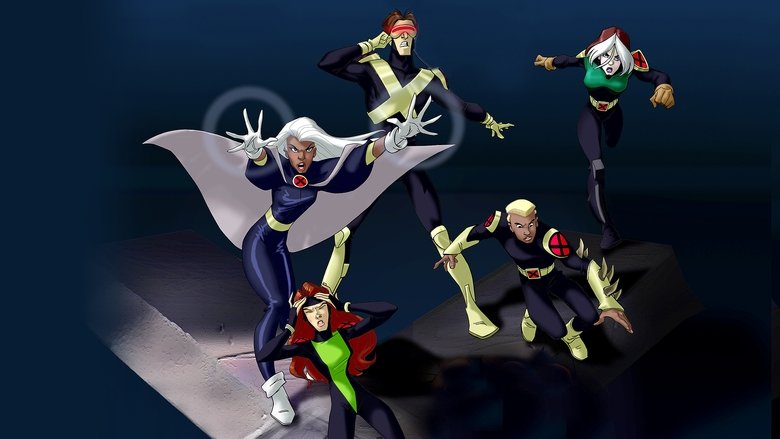
X-Men: Evolution took one of the boldest creative swings in the franchise’s animated history by sending Marvel’s mutants back to high school. Rather than following the adult superhero team of the comics, the series reimagined Professor Xavier’s students as actual teenagers navigating the familiar trials of adolescence alongside the discovery of their powers. Cyclops, Jean Grey, Rogue, Nightcrawler, and Shadowcat all attend Bayville High, while Wolverine and Storm serve as faculty mentors. This high school setting wasn’t just a gimmick—it allowed the show to explore the core metaphor of mutation as puberty with a literalness the source material had never attempted, making the characters’ struggles with identity and acceptance feel immediate and grounded.
The series made significant changes to established X-Men lore, most notably by splitting Magneto’s Brotherhood of Mutants into a rival teen faction led by Mystique. Characters like Avalanche, Toad, and Blob were aged down to become classmates and foils for the X-Men, while Quicksilver and the Scarlet Witch were introduced as Magneto’s estranged children much earlier than in the comics. The show also gave Rogue her goth-inspired look and personality that would later influence her comic book counterpart, and it introduced X-23 as a female clone of Wolverine in the third season—a character so popular she was later integrated into the mainstream Marvel universe.
Over its four-season run, the series gradually matured alongside its audience. The early episodes focused on episodic high school drama and mutant-of-the-week recruitment battles, but by season two, the mythology deepened with the introduction of Magneto and the Sentinel program. The third season’s identity-reveal arc, where mutants were publicly exposed, pushed the show into darker territory, culminating in a fourth season that adapted the dystopian future of Days of Future Past. This slow-burn approach to serialization earned the series a devoted fanbase that appreciated how it balanced character development with escalating stakes.
Critically, X-Men: Evolution was praised for its fluid animation—a product of its Japanese and South Korean studios—and its voice cast, which featured Canadian talent recording in Vancouver. While some purists initially balked at the teen-centric premise, the show has aged into a beloved entry in the X-Men animated canon, often ranked alongside the 1990s series for its cohesive storytelling and willingness to reinvent familiar characters in ways that honored their essence while making them accessible to a new generation.

The X-Men are a team of superheroes appearing in American comic books published by Marvel Comics. Created by writer Stan Lee and artist Jack Kirby, they first appeared in The X-Men #1 in September 1963. The series introduces mutants, a subspecies of humans born with superhuman abilities activated at puberty, and explores themes of prejudice, discrimination, and social justice as the team fights for peaceful coexistence between mutants and humans.
Led by the powerful telepath Professor Charles Xavier, the X-Men operate out of his School for Gifted Youngsters in Westchester, New York. The team's roster has included iconic characters such as Cyclops, Jean Grey, Wolverine, Storm, Rogue, and Beast. Their primary adversary and occasional ally is Magneto, a mutant supremacist and former friend of Xavier, who believes mutants should rule over humanity.
After initial cancellation in 1970, the series was revived in 1975 under writer Chris Claremont, whose influential 16-year run transformed the X-Men into one of Marvel's most popular and commercially successful franchises. The series became known for its diverse international cast, complex character relationships, and allegorical storytelling addressing real-world issues of racism, homophobia, and other forms of bigotry. The X-Men franchise has since expanded into numerous spin-off titles, including New Mutants, X-Force, and Excalibur, and has become a cornerstone of Marvel's publishing line.