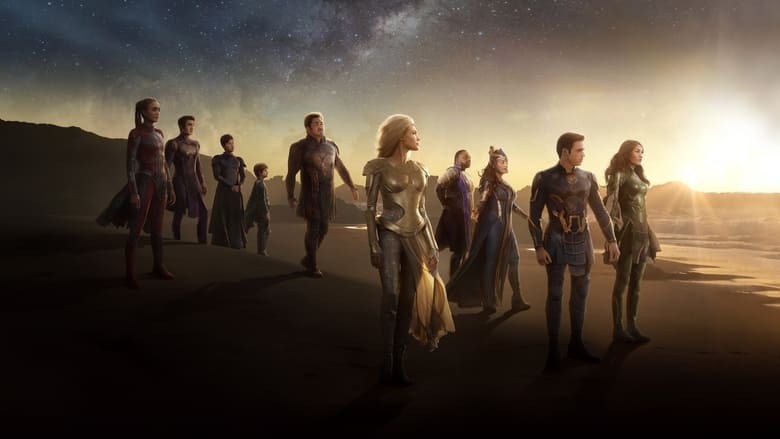
🎬 Eternals (2021)
Part of Marvel Cinematic Universe (MCU)
Marvel Studios' Eternals, released in 2021, brought one of the most ambitious and cosmically sweeping corners of the Marvel Universe to the big screen. The film is based on the race of immortal beings created by the legendary Jack Kirby, who first appeared in the pages of The Eternals #1 in 1976. Kirby, fresh off his work on DC's New Gods, returned to Marvel with a grand vision that merged ancient mythology with science fiction, positing that humanity's gods and heroes were actually alien-engineered protectors. The film adaptation, directed by Academy Award-winner Chloé Zhao, takes this core concept and expands it into a millennia-spanning epic that redefines the history of the Marvel Cinematic Universe.
The film introduces a diverse ensemble of ten Eternals, sent to Earth by the Celestials to protect humanity from the monstrous Deviants. Unlike the comics, where the Eternals are a naturally occurring offshoot of humanity, the film reimagines them as synthetic beings created by the Celestials, a significant change that ties directly into the MCU's larger cosmic mythology. Zhao was given remarkable creative freedom, shooting extensively on location with natural light, a stark departure from the typical green-screen-heavy Marvel production. This approach gives the film a visual grandeur and intimacy that sets it apart, as the immortal characters grapple with their purpose, their love for humanity, and a devastating secret about their true mission.
Eternals is notable for being the 26th film in the Marvel Cinematic Universe and part of Phase Four, marking a bold new direction for the franchise. It features the MCU's first deaf superhero (Makkari, played by Lauren Ridloff) and its first on-screen same-sex kiss, representing significant steps in representation for the blockbuster series. The film's sprawling timeline, jumping from ancient Babylon to the Gupta Empire to modern-day London, showcases the Eternals' influence on human civilization, a theme directly pulled from Kirby's original concept that these beings inspired our myths and legends. Despite its ambition and a star-studded cast including Gemma Chan, Richard Madden, and Angelina Jolie, the film received a polarized critical response, becoming the first MCU entry to not earn a 'Certified Fresh' rating on Rotten Tomatoes, though it was praised for its visuals and thematic depth.

The Eternals are a fictional race of humanoid beings appearing in American comic books published by Marvel Comics. Created by legendary artist and writer Jack Kirby, they made their first appearance in The Eternals #1 in July 1976. Kirby conceived the Eternals after returning to Marvel from DC Comics, where he had been working on his New Gods saga. The Eternals allowed him to continue exploring grand mythological and science fiction themes, blending ancient astronaut theories with superhero action.
In the Marvel Universe, the Eternals are an evolutionary offshoot of humanity, created over a million years ago by the colossal cosmic beings known as the Celestials. Endowed with a vast array of superhuman powers including super strength, flight, energy manipulation, and virtual immortality, they were designed to be the protectors of Earth. Their eternal adversaries are the Deviants, a genetically unstable and monstrous race also created by the Celestials, who frequently threaten humanity and the planet.
Over the decades, the Eternals have largely lived in secret among humans, their long lifespans and incredible abilities leading to them being mistaken for gods and inspiring various mythological figures across different cultures. The comic series has explored their complex internal dynamics, their relationship with their creators the Celestials, and their interactions with other Marvel heroes like Thor and the X-Men. Though not as continuously published as some Marvel titles, the Eternals have maintained a dedicated following and have been revived in several limited series, cementing their place as a unique and cosmically significant corner of the Marvel Universe.
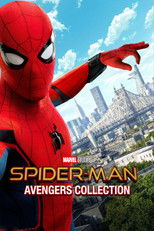
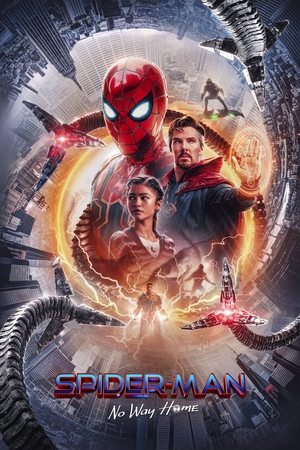
The Spider-Man (MCU) collection is a trilogy of superhero films centered on Peter Parker, a teenage superhero navigating the complexities of adolescence within the larger Marvel Cinematic Universe. Produced by Marvel Studios and distributed by Sony Pictures Releasing, the series marks the character's integration into the MCU following a landmark agreement between the two studios. The films follow Peter as he balances high school life with his secret identity, mentored by Tony Stark, and gradually confronts threats that escalate from local menaces to multiverse-shattering crises. This collection is defined by its coming-of-age narrative, blending the spectacle of superhero action with the relatable struggles of youth, friendship, and responsibility.
The trilogy explores Peter's evolution from an eager, inexperienced hero seeking approval to a self-reliant figure who understands the weight of his choices. Thematically, it grapples with identity, loss, and the consequences of living a double life, all while maintaining a light, humorous tone characteristic of the MCU's Spider-Man. The films are deeply interconnected with the broader MCU, with events from other films directly impacting Peter's journey, and his actions, in turn, sending ripples through the shared universe. This interconnectedness culminates in a narrative that not only honors the legacy of previous Spider-Man adaptations but also expands the possibilities of the character within a vast, interconnected superhero landscape.
Culturally, the collection has been a significant commercial and critical success, revitalizing the Spider-Man film brand for a new generation. It successfully reintroduced the character without retelling his origin story, instead focusing on his growth within an already established world of heroes. The trilogy's blend of high school comedy, heartfelt drama, and large-scale superhero action resonated with audiences, making it a standout within the MCU's sprawling narrative. Its impact is evident in its box office performance and its role in bridging different eras of Spider-Man cinema, creating a unique, celebratory event for fans.
The legacy of this collection lies in its innovative approach to a well-known character, proving that a fresh perspective can reinvigorate even the most familiar stories. By embedding Spider-Man firmly within the MCU, the trilogy allowed for character dynamics and plot developments impossible in a standalone series, while still delivering a deeply personal arc for Peter Parker. It stands as a testament to collaborative studio filmmaking and a defining chapter in the ongoing story of one of pop culture's most enduring heroes.