🎬 Doraemon: Nobita and the Robot Kingdom (2002)
Part of Doraemon Movies
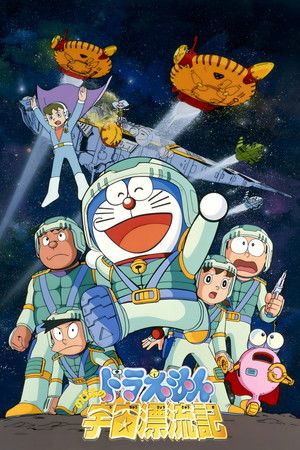
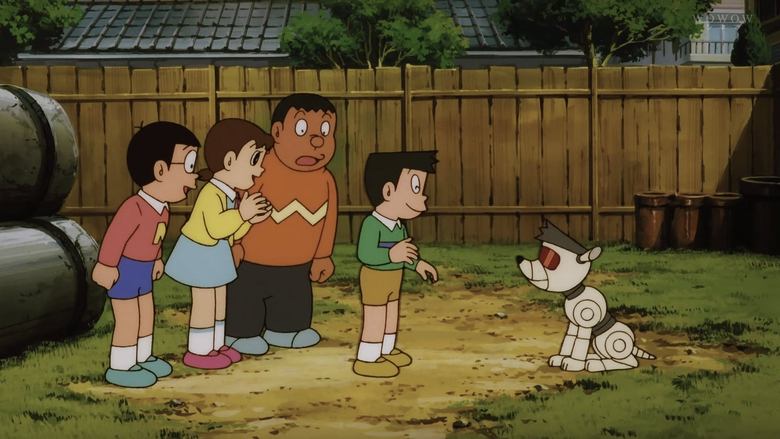
Doraemon: Nobita and the Robot Kingdom, the 23rd feature film in the long-running franchise, stands as a significant milestone for purely technical reasons: it was the final Doraemon movie to be produced using traditional cel animation before the series transitioned to digital techniques later that same year. This gives the film a distinct, hand-crafted visual warmth that marks the end of an era for the beloved robotic cat's cinematic adventures. The story itself is a classic Doraemon space opera, whisking Nobita and his friends away from their suburban squabbles over robot pets to a faraway planet where a tyrannical queen is forcibly "remodelling" all robots, stripping them of their emotions.
The film's central conflict is a direct exploration of the franchise's core themes of friendship and the soul of technology. By pitting the gang against a regime that views robots as mere tools, the narrative echoes the very essence of Doraemon's character—a robot from the future who is defined entirely by his compassion and loyalty. The adventure begins with a portal-opening robot boy named Poko, who escapes the purge on his home world and crashes into Nobita's life, immediately raising the stakes from a simple desire for a pet to a fight for an entire kingdom's freedom. The film cleverly contrasts the cold, metallic army of the antagonist with the warm, empathetic bond between Poko and his mother, a robot who sacrifices herself to save her child.
While the film follows the established Doraemon movie formula of a one-off adventure in a fantastical setting, it distinguishes itself through its darker, more science-fiction-oriented tone. The concept of "robot euthanasia" and forced emotional suppression gave the story a slightly more mature edge than some of its contemporaries, resonating with audiences who had grown up with the series. Released on a triple bill alongside two short films, it performed well at the Japanese box office and is remembered fondly for its emotional climax, where the power of a mother's love and the courage of a child ultimately dismantle a dehumanizing system, proving that a heart is not something that can be programmed or erased.

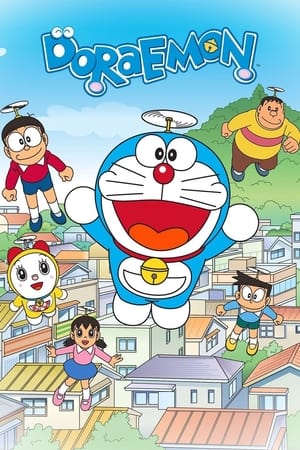
Doraemon is a Japanese manga series written and illustrated by Fujiko F. Fujio. It was first serialized in 1969 in various children's magazines published by Shogakukan. The story follows a robotic cat from the 22nd century named Doraemon, who is sent back in time to help a young boy named Nobita Nobi navigate the challenges of childhood and improve his future. Doraemon possesses a four-dimensional pocket from which he can produce futuristic gadgets, often leading to comedic and heartfelt adventures.
The manga chapters were collected into 45 tankōbon volumes between 1974 and 1996. Doraemon quickly became one of Japan's most beloved and iconic characters, winning numerous awards and achieving immense cultural significance. The series is considered a cornerstone of modern Japanese pop culture and has been a staple of children's entertainment for decades.
Beyond the manga, Doraemon spawned a massive media franchise including three anime television series, over forty animated feature films, video games, and a vast array of merchandise. The character has been recognized as a cultural ambassador for Japan and remains popular across Asia and globally, symbolizing friendship, imagination, and the wonders of technology.

The Doraemon film series is a long-running collection of animated feature films based on the beloved manga and anime franchise created by Fujiko F. Fujio. Beginning in 1980 with 'Doraemon: Nobita's Dinosaur', the series has become an annual tradition in Japanese cinema, with new installments released almost every spring. These films typically follow the titular robotic cat from the 22nd century and his young friend Nobita Nobi as they embark on extraordinary adventures across time, space, and fantastical realms, often utilizing Doraemon's ingenious gadgets from his four-dimensional pocket. While the original manga and television series focus on everyday slice-of-life scenarios, the movies expand the narrative scope, introducing higher stakes, epic journeys, and environmental or moral themes that resonate with family audiences. The series has evolved through different eras of animation and storytelling, with many early films being direct adaptations of manga storylines, while later entries explore original plots and even reimaginings of classic tales. This enduring collection has cemented Doraemon as a cornerstone of Japanese popular culture, with the films consistently drawing large audiences and contributing to the character's status as an official cultural ambassador of Japan.