📺 Doraemon (1973)
Based on manga
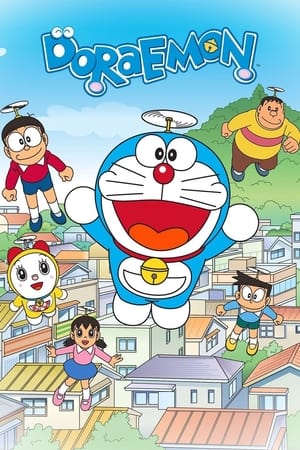
The 1973 Doraemon anime holds a unique and somewhat ghostly position in the franchise's history as the very first attempt to bring Fujiko F. Fujio's beloved manga to the screen. Produced by Nippon TeleMovie Productions and broadcast on Nippon Television, this adaptation ran for a brief six-month period, from April to September 1973. It was a pioneering effort that established the basic formula viewers would come to adore: a blue robotic cat from the 22nd century, Doraemon, lives with the hapless Nobita Nobi and pulls fantastical gadgets from his four-dimensional pocket to solve everyday problems, often with chaotic results. However, this version took significant creative liberties, diverging from the source material in ways that later adaptations would not. It introduced anime-original characters like Gachako, a robotic duck, and reimagined supporting cast members, giving Suneo's mother a prominent role and even altering the family dynamics and personalities slightly to fit the comedic style of the era's television.
Behind the scenes, the production was tumultuous. The series was spearheaded by Nippon Television president Masami Niikura, but it suffered from a low budget and a rushed production schedule. The animation quality was notably crude compared to the polished 1979 series that would later define the character's visual identity. A significant point of trivia involves the voice cast: Doraemon himself was initially voiced by Kōsei Tomita for the first thirteen episodes before Masako Nozawa, the future voice of Goku in Dragon Ball, took over the role for the remainder of the series. This casting change is a fascinating footnote, but it also reflects the instability of the production. The show's visual design for Doraemon was also plumper and more exaggerated, a far cry from the sleeker, more standardized design that would become iconic.
The 1973 series ended abruptly and, by most accounts, was considered a failure. Fujiko F. Fujio was reportedly deeply dissatisfied with the adaptation, feeling it did not capture the spirit of his manga. This displeasure led to the series being disowned and effectively erased from the official canon; it was never rebroadcast, and for decades, the master tapes were believed to be lost or destroyed, making it a piece of lost media. Only a handful of episodes are known to survive in private collections, with brief clips occasionally surfacing online, adding to its mystique. The negative experience directly influenced the strict creative control the author exerted over the wildly successful 1979 Shin-Ei Animation adaptation, ensuring it remained faithful to his vision.
Despite its obscurity, the 1973 Doraemon is a crucial piece of anime history. It serves as a cautionary tale about adaptation fidelity and the importance of a creator's vision. While it lacks the warmth, polish, and timeless charm of its successor, its existence proves that even a beloved property can have a false start. For hardcore fans and animation historians, the surviving fragments of this series are a fascinating glimpse into what might have been, a strange and forgotten prototype for one of the world's most enduring and beloved animated characters.

Doraemon is a Japanese manga series written and illustrated by Fujiko F. Fujio. It was first serialized in 1969 in various children's magazines published by Shogakukan. The story follows a robotic cat from the 22nd century named Doraemon, who is sent back in time to help a young boy named Nobita Nobi navigate the challenges of childhood and improve his future. Doraemon possesses a four-dimensional pocket from which he can produce futuristic gadgets, often leading to comedic and heartfelt adventures.
The manga chapters were collected into 45 tankōbon volumes between 1974 and 1996. Doraemon quickly became one of Japan's most beloved and iconic characters, winning numerous awards and achieving immense cultural significance. The series is considered a cornerstone of modern Japanese pop culture and has been a staple of children's entertainment for decades.
Beyond the manga, Doraemon spawned a massive media franchise including three anime television series, over forty animated feature films, video games, and a vast array of merchandise. The character has been recognized as a cultural ambassador for Japan and remains popular across Asia and globally, symbolizing friendship, imagination, and the wonders of technology.