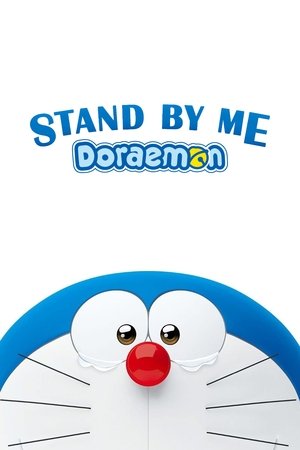
🎬 Stand by Me Doraemon 2 (2020)
Part of Stand by Me Doraemon
Stand by Me Doraemon 2 arrived in 2020 as a direct sequel to the groundbreaking 2014 CGI film, but it took a markedly different emotional path through the Doraemon canon. Rather than stitching together multiple greatest-hits storylines as its predecessor did, this film zeroes in on just two deeply personal short stories from the early 2000s: "A Grandmother's Recollections" and "The Day When I Was Born." The result is a film less concerned with zany gadget-fueled adventures and more with the quiet, tearful spaces between generations. The narrative cleverly frames itself as a continuation of the first film's wedding storyline, revealing that the adult Nobita has fled his own ceremony, prompting a time-traveling intervention that forces the child Nobita to confront his past, his future, and his own sense of self-worth.
The film's most celebrated sequence is undoubtedly Nobita's reunion with his late grandmother, a character whose gentle presence had only been glimpsed in the franchise before. The filmmakers made a bold structural choice here, allowing the grandmother to recognize the time-traveling Nobita immediately — a departure from the typical Doraemon formula of disguise and deception. This narrative honesty pays off emotionally, creating a raw, unguarded dynamic that many critics cited as the film's high point. The animation studio Shirogumi returned to handle the CGI, refining the character models to be slightly more expressive, particularly in the grandmother's scenes where subtle facial animations carry enormous emotional weight. The film also revisits Nobita's literal birth day, weaving in a surprisingly existential thread about whether the world is better off with Nobita in it — a question the narrative answers with characteristic warmth.
Commercially, the film faced the unprecedented challenge of releasing during the COVID-19 pandemic, which delayed its original August 2020 date and pushed it into November of that year. Despite these hurdles, it performed admirably at the Japanese box office, though it didn't quite match the phenomenon-level success of the first Stand by Me Doraemon. International audiences gained access through Netflix, which acquired distribution rights outside Asia and released the film on its platform on December 24, 2021 — a Christmas Eve gift that introduced the film's multigenerational themes to a global audience. The streaming release helped cement the film's reputation as a holiday-season tearjerker, with many viewers discovering the Doraemon franchise's deeper emotional register for the first time.
Critically, the film was praised for its tonal maturity and willingness to slow down and sit with difficult emotions, though some reviewers noted that the tighter focus on two stories meant less of the manic invention that characterized the first film. The voice cast, led by Wasabi Mizuta as Doraemon and Megumi Ohara as Nobita, delivered performances that balanced childlike wonder with the heavier dramatic demands of the grandmother storyline. The film's score, composed by Naoki Sato, leaned heavily into orchestral arrangements that underscored the generational themes without becoming saccharine. Ultimately, Stand by Me Doraemon 2 stands as a fascinating experiment in franchise storytelling — proof that a beloved children's property could successfully pivot into a meditation on memory, regret, and the quiet courage it takes to show up for the people who believe in you.

Doraemon is a Japanese manga series written and illustrated by Fujiko F. Fujio. It was first serialized in 1969 in various children's magazines published by Shogakukan. The story follows a robotic cat from the 22nd century named Doraemon, who is sent back in time to help a young boy named Nobita Nobi navigate the challenges of childhood and improve his future. Doraemon possesses a four-dimensional pocket from which he can produce futuristic gadgets, often leading to comedic and heartfelt adventures.
The manga chapters were collected into 45 tankōbon volumes between 1974 and 1996. Doraemon quickly became one of Japan's most beloved and iconic characters, winning numerous awards and achieving immense cultural significance. The series is considered a cornerstone of modern Japanese pop culture and has been a staple of children's entertainment for decades.
Beyond the manga, Doraemon spawned a massive media franchise including three anime television series, over forty animated feature films, video games, and a vast array of merchandise. The character has been recognized as a cultural ambassador for Japan and remains popular across Asia and globally, symbolizing friendship, imagination, and the wonders of technology.
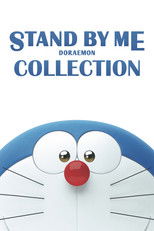
The Stand by Me Doraemon collection is a duology of Japanese 3DCG animated films that reimagine classic stories from the beloved Doraemon manga and anime series. Departing from the traditional 2D animation style, these films employ advanced computer-generated imagery to bring the whimsical gadgets and heartfelt adventures to life with a fresh, contemporary aesthetic. The collection adapts and weaves together several iconic short stories from the original work, creating cohesive narratives that explore the enduring friendship between the robotic cat Doraemon and the young boy Nobita Nobi. The first film, released in 2014, was a landmark achievement, becoming the highest-grossing film in the Doraemon franchise and demonstrating the powerful appeal of these characters in a new visual medium. A sequel followed in 2020, continuing the emotional journey and further exploring the themes of personal growth and the passage of time.\n\nAt its core, the duology delves deeply into themes of friendship, self-improvement, and the bittersweet nature of growing up. Rather than focusing solely on comedic escapades, the stories place a strong emphasis on the emotional bonds between the central characters, crafting narratives that resonate with both longtime fans and new audiences. The films use science fiction elements—such as time travel and futuristic gadgets—as a backdrop to examine human connections, nostalgia, and the importance of supporting one another through life's challenges. The narrative arc often centers on Nobita's desire to change his future for the better, leading to poignant reflections on fate, effort, and the value of the present moment.\n\nCulturally, the Stand by Me Doraemon films have been celebrated for successfully translating a cornerstone of Japanese popular culture into a globally accessible format. The first film's commercial success, both in Japan and internationally, highlighted a growing appreciation for emotionally driven 3DCG animation from Japan. By balancing lighthearted adventure with poignant drama, the collection has cemented its legacy as a significant modern adaptation that honors the spirit of Fujiko F. Fujio's original creation while pushing the boundaries of animated storytelling. The duology stands as a testament to the timeless appeal of Doraemon, proving that these characters and their stories can evolve with technology without losing their heart.