🎬 Doraemon: Nobita and the Winged Braves (2001)
Part of Doraemon Movies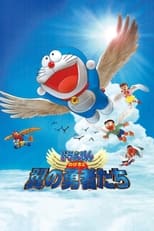
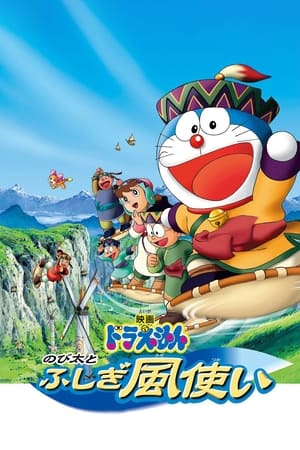
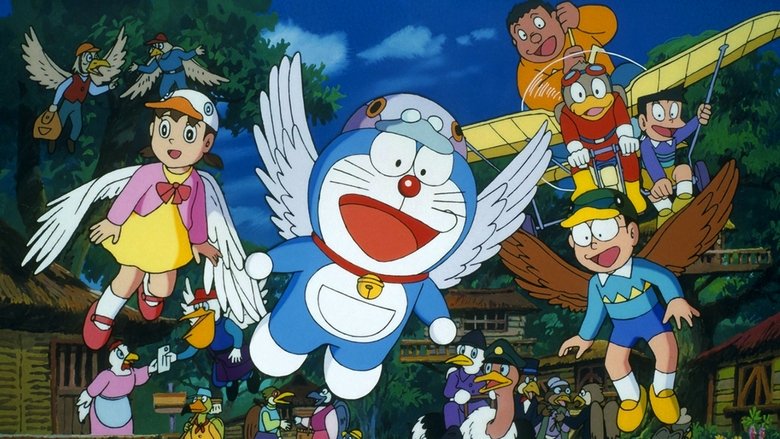
Released in 2001, "Doraemon: Nobita and the Winged Braves" marks the 22nd feature film in the long-running Doraemon franchise, and it stands out for its high-flying adventure that taps into the universal childhood dream of soaring through the skies. The story kicks off with Nobita's obsession with flight, a desire sparked by a news report on disappearing flamingos. After his homemade wooden wings fail spectacularly, fate intervenes in the form of a dimensional portal and Gusuke, a humanoid bird from the hidden world of Birdopia. This setup cleverly pivots from a simple gadget-of-the-week premise into a full-fledged isekai-style journey, transporting the core cast into a richly imagined avian civilization.
The film adapts the familiar Doraemon formula by emphasizing themes of environmentalism and prejudice, as Birdopia's society is built on a strict hierarchy between different bird species. The narrative takes a darker turn than some of its predecessors when Gian and Suneo are captured by crow soldiers and sentenced to execution by the vulture Commander Seagrid, raising the stakes considerably. The visual design of Birdopia is a highlight, blending steampunk elements with natural cliffside habitats, and the film features a memorable aerial race sequence that showcases the animators' ability to convey speed and freedom. Unlike stories where Doraemon's gadgets solve every problem, the resolution here relies heavily on teamwork and the bravery of the winged inhabitants themselves.
Upon its release on March 10, 2001, the film was a solid box office success, continuing the tradition of annual spring Doraemon movies that had become a staple for Japanese families. It was directed by Tsutomu Shibayama, a veteran of the series who helmed many of the films from this era, ensuring a consistent tone that balanced slapstick humor with genuine moments of peril. The theme song, "Love You Close" by Rina Chinen, became closely associated with the film's emotional core. While not always ranked at the very top of fan-favorite lists, "Nobita and the Winged Braves" is often praised for its creative world-building and for giving Nobita a proactive role, as his initial fascination with flight directly leads the group into the adventure, making the journey feel more personal than a random excursion.

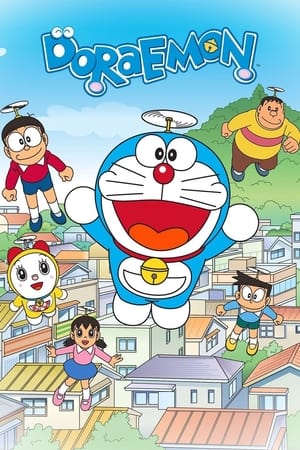
Doraemon is a Japanese manga series written and illustrated by Fujiko F. Fujio. It was first serialized in 1969 in various children's magazines published by Shogakukan. The story follows a robotic cat from the 22nd century named Doraemon, who is sent back in time to help a young boy named Nobita Nobi navigate the challenges of childhood and improve his future. Doraemon possesses a four-dimensional pocket from which he can produce futuristic gadgets, often leading to comedic and heartfelt adventures.
The manga chapters were collected into 45 tankōbon volumes between 1974 and 1996. Doraemon quickly became one of Japan's most beloved and iconic characters, winning numerous awards and achieving immense cultural significance. The series is considered a cornerstone of modern Japanese pop culture and has been a staple of children's entertainment for decades.
Beyond the manga, Doraemon spawned a massive media franchise including three anime television series, over forty animated feature films, video games, and a vast array of merchandise. The character has been recognized as a cultural ambassador for Japan and remains popular across Asia and globally, symbolizing friendship, imagination, and the wonders of technology.

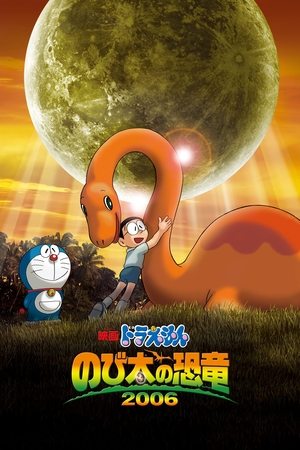
The Doraemon film series is a long-running collection of animated feature films based on the beloved manga and anime franchise created by Fujiko F. Fujio. Beginning in 1980 with 'Doraemon: Nobita's Dinosaur', the series has become an annual tradition in Japanese cinema, with new installments released almost every spring. These films typically follow the titular robotic cat from the 22nd century and his young friend Nobita Nobi as they embark on extraordinary adventures across time, space, and fantastical realms, often utilizing Doraemon's ingenious gadgets from his four-dimensional pocket. While the original manga and television series focus on everyday slice-of-life scenarios, the movies expand the narrative scope, introducing higher stakes, epic journeys, and environmental or moral themes that resonate with family audiences. The series has evolved through different eras of animation and storytelling, with many early films being direct adaptations of manga storylines, while later entries explore original plots and even reimaginings of classic tales. This enduring collection has cemented Doraemon as a cornerstone of Japanese popular culture, with the films consistently drawing large audiences and contributing to the character's status as an official cultural ambassador of Japan.