🎬 Doraemon: Nobita's Diary on the Creation of the World (1995)
Part of Doraemon Movies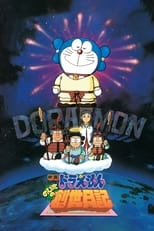
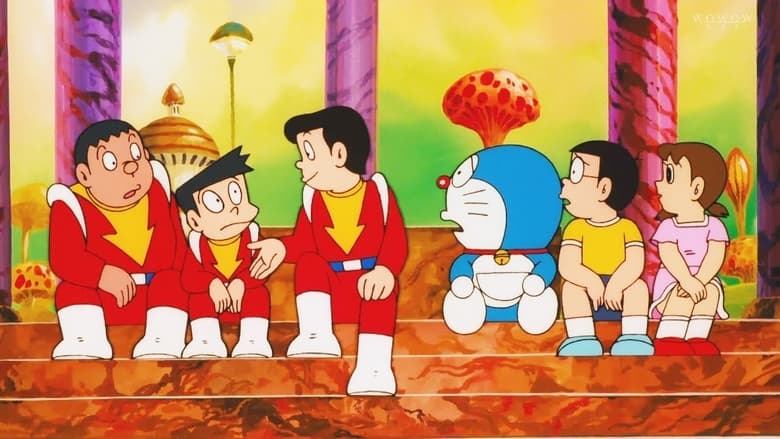
Doraemon: Nobita's Diary on the Creation of the World is the sixteenth feature film in the long-running Doraemon movie franchise, premiering in Japanese theaters on March 4, 1995. The film is based on the fifteenth volume of the Doraemon Long Stories manga series by Fujiko F. Fujio, which was itself inspired by an earlier short chapter from 1973 called "Planet Builders." The story takes a uniquely ambitious approach by placing the power of cosmic creation directly into Nobita's hands, blending scientific concepts about the origins of the solar system and the evolution of life with the series' trademark warmth and humor.
The plot begins with Nobita struggling to complete his summer vacation research homework. After seeing his friends' impressive projects, he feels discouraged until Doraemon produces the World Creation Set, a gadget that allows him to create an actual miniature solar system. Nobita documents his experiences in a diary, observing the formation of planets and the emergence of life from primordial cells to fish-like organisms. However, his experiments take unexpected turns, including accidentally causing the artificial sun to consume other planets, requiring Doraemon to reverse time within the set so Nobita can continue his project properly.
What makes this entry particularly distinctive is its philosophical undertones. The film opens with Nobita reading about Adam and Eve, pondering how the mistakes of ancestors affect their descendants. This framing device elevates the story beyond a simple gadget-of-the-week adventure into a meditation on creation, responsibility, and the consequences of one's actions. The film was directed by Tsutomu Shibayama, who helmed many Doraemon features during this era, and features the voice talents of the regular cast including Nobuyo Oyama as Doraemon and Noriko Ohara as Nobita.
As the sixteenth Doraemon film, Nobita's Diary on the Creation of the World arrived during a period when the franchise was at the height of its popularity in Japan. The film continues the tradition established by earlier entries of adapting the Doraemon Long Stories manga volumes, though it stands out for its cosmic scale and its thoughtful exploration of creation mythology. The movie remains a beloved entry among fans for its imaginative premise and its ability to make vast scientific concepts accessible and entertaining through the eyes of its young protagonists.
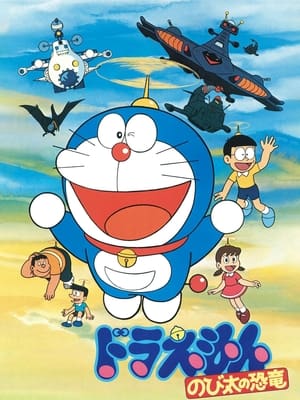
Doraemon's Long Tales, also known as Doraemon Long Stories, is a manga series that expands upon the beloved Doraemon universe created by Fujiko F. Fujio. Unlike the regular Doraemon comics, which consist of short, self-contained episodes, this series presents full-volume, continuous narratives that send Nobita, Doraemon, and their friends on epic adventures through science fiction and fantasy landscapes. The stories were originally serialized in CoroCoro Comic magazine, with the first volume, Nobita's Dinosaur, launching the series in 1980.
The series was initially illustrated by Fujiko F. Fujio himself, who completed the first sixteen volumes before his passing in 1996. Following his death, the mantle was taken up by Shintaro Mugiwara and Yasunori Okada, who continued the tradition of crafting longer, more complex tales for the characters. These manga volumes served as the direct source material for the annual Doraemon feature films released in Japanese cinemas from 1980 through 2004, creating a unique synergy between the printed page and the silver screen.
Doraemon Long Stories holds a special place in the hearts of fans, as it allowed for deeper character development and more intricate world-building than the standard series format permitted. The stories often blend educational elements about history and science with the whimsical, gadget-driven fantasy that defines Doraemon, making them enduringly popular with both children and adults.

The Doraemon film series is a long-running collection of animated feature films based on the beloved manga and anime franchise created by Fujiko F. Fujio. Beginning in 1980 with 'Doraemon: Nobita's Dinosaur', the series has become an annual tradition in Japanese cinema, with new installments released almost every spring. These films typically follow the titular robotic cat from the 22nd century and his young friend Nobita Nobi as they embark on extraordinary adventures across time, space, and fantastical realms, often utilizing Doraemon's ingenious gadgets from his four-dimensional pocket. While the original manga and television series focus on everyday slice-of-life scenarios, the movies expand the narrative scope, introducing higher stakes, epic journeys, and environmental or moral themes that resonate with family audiences. The series has evolved through different eras of animation and storytelling, with many early films being direct adaptations of manga storylines, while later entries explore original plots and even reimaginings of classic tales. This enduring collection has cemented Doraemon as a cornerstone of Japanese popular culture, with the films consistently drawing large audiences and contributing to the character's status as an official cultural ambassador of Japan.