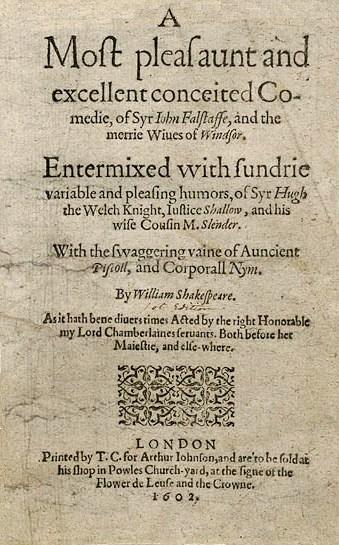
The Merry Wives of Windsor is a comedy by William Shakespeare, first published in 1602, though believed to have been written around 1597. It is unique among Shakespeare's works for its focus on middle-class provincial life in the town of Windsor, rather than the courts and aristocracies of his other comedies. The play centers on the rotund, impoverished knight Sir John Falstaff, a beloved character who also appears in the Henry IV plays.
In the story, Falstaff devises a scheme to seduce two wealthy married women, Mistress Ford and Mistress Page, in order to gain access to their husbands' money. He sends them identical love letters, but the two women quickly discover his duplicity and join forces to exact revenge. Through a series of hilarious and humiliating pranks, they trick Falstaff repeatedly—hiding him in a laundry basket and dumping him in a muddy ditch, and later disguising him as a witch and having him beaten.
The play is notable for its strong, clever female protagonists who drive the action and outwit the would-be seducer. It also features a subplot involving the Pages' daughter, Anne, whose parents each try to arrange her marriage to different suitors while she pursues her own choice. The Merry Wives of Windsor has been adapted numerous times across stage, opera, film, and television, and remains a popular example of Shakespeare's comedic genius and his exploration of class, marriage, and gender dynamics.