
🎬 My Own Private Idaho (1991)
Based on play/musical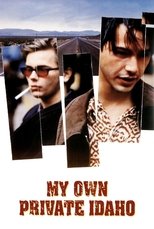
My Own Private Idaho is a bold and deeply unconventional 1991 film by Gus Van Sant that transposes the narrative and character dynamics of Shakespeare's Henry IV plays onto the streets of Portland, Oregon. The film follows Mike Waters (River Phoenix), a narcoleptic street hustler searching for his estranged mother, and Scott Favor (Keanu Reeves), the rebellious son of the city's mayor who hustles as an act of defiance before he is due to inherit a fortune. Their friendship forms the emotional core of the story, mirroring the relationship between Prince Hal and his wayward companions in Shakespeare's histories.
The film's Shakespearean roots are most evident in its character parallels and its language. Scott Favor is a direct stand-in for Prince Hal, a privileged young man slumming it among the lowlifes before a calculated return to respectability. The character of Bob Pigeon, a Falstaffian figure played by William Richert, is a portly, boisterous mentor to Scott and his gang of street kids. In a brilliantly audacious sequence, Van Sant has the characters speak Shakespeare's original dialogue verbatim, reciting scenes from Henry IV, Part 1 in a grimy adult bookstore, creating a jarring and poetic juxtaposition of high art and low life.
My Own Private Idaho is a landmark of the New Queer Cinema movement, notable for its frank and empathetic portrayal of a gay protagonist. River Phoenix's performance as Mike is heartbreakingly vulnerable, particularly in the film's most famous scene: a campfire confession of unrequited love for Scott. The film's avant-garde style, including time-lapse photography, dreamlike narcoleptic sequences, and a fragmented narrative, elevates it beyond a simple street drama into a lyrical and melancholic meditation on unbelonging and the search for home. It has since become a cult classic, celebrated for its artistry and its sensitive, groundbreaking representation.

Henry IV, Part 1 and Henry IV, Part 2 are history plays by William Shakespeare, written around 1596–1599. They form the second and third parts of a tetralogy that begins with Richard II and concludes with Henry V. The plays chronicle the reign of King Henry IV, who usurped the throne from Richard II, and his troubled relationship with his son, Prince Hal. A significant portion of the drama focuses on Hal's wild youth spent in the taverns of Eastcheap with the dissolute, larger-than-life knight Sir John Falstaff, before Hal must reject that life to assume his royal responsibilities.
The plays masterfully blend high political drama with low comedy, contrasting the serious world of rebellion and court intrigue with the chaotic, witty, and poignant world of Falstaff and his companions. They explore themes of honor, power, father-son relationships, and the transformation of a seemingly wayward prince into a legendary king. The character of Falstaff became one of Shakespeare's most beloved creations, a figure of immense appetite, wit, and cowardice who serves as a surrogate father to Hal.
Henry V, written around 1599, completes the arc of Prince Hal, now King Henry V. The play focuses on his invasion of France and the miraculous English victory at the Battle of Agincourt. It portrays Henry as a mature, charismatic, and shrewd leader, a stark contrast to the reckless youth of the earlier plays. The play is famous for its rousing speeches, including the St. Crispin's Day speech, and its exploration of the burdens of kingship and the morality of war.