🎬 Henry V (1944)
Based on true story
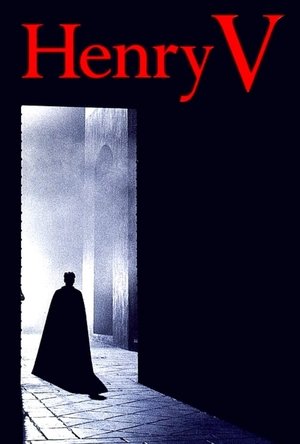
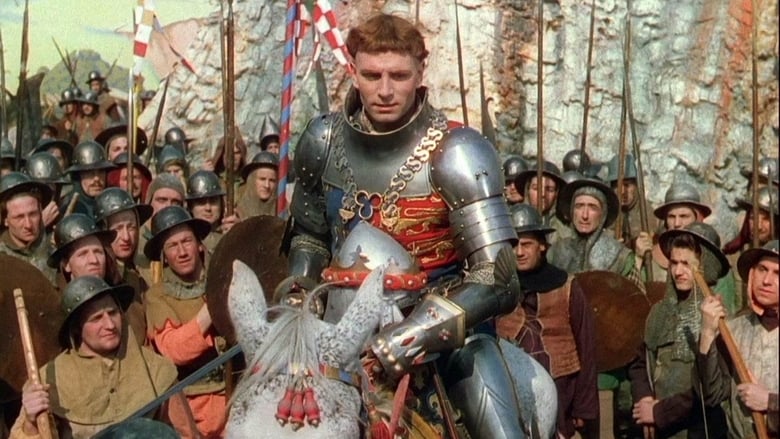
Laurence Olivier's 1944 film adaptation of Shakespeare's Henry V is a landmark in both cinema and Shakespearean performance. Made during the height of World War II, the film was conceived as a patriotic morale booster for a war-weary Britain, and it was partly funded by the British government. Olivier, who directed and starred as King Henry, crafted a film that begins as a recreation of a performance at the Globe Theatre in 1600 before gradually transitioning into a more naturalistic, cinematic depiction of the Battle of Agincourt.
The film is a stunning Technicolor spectacle, a deliberate and vibrant contrast to the grey realities of wartime. Olivier's performance captures the youthful charisma and stirring leadership of Henry, and his delivery of the St. Crispin's Day speech remains one of the most iconic moments in film history. The score by William Walton is equally celebrated, providing a rousing and majestic backdrop that has since taken on a life of its own in concert halls.
Olivier's Henry V was a critical and commercial triumph, earning him an Academy Honorary Award for his outstanding achievement as actor, producer, and director. It was the first successful, large-scale cinematic adaptation of Shakespeare, proving that the Bard's work could be not only a box-office draw but a genuinely thrilling film experience. Its influence can be seen in nearly every subsequent Shakespeare film, from Orson Welles's work to Kenneth Branagh's own celebrated 1989 adaptation of the same play, which offered a grittier, less romanticized take on the story.

Henry V is a history play by William Shakespeare, believed to have been written around 1599. It is the final installment in a tetralogy of plays that includes Richard II, Henry IV, Part 1, and Henry IV, Part 2, chronicling the rise of the Lancastrian dynasty. The play focuses on the young King Henry V of England and his stunning military campaign in France, culminating in the famous Battle of Agincourt in 1415, where his outnumbered English forces achieve a miraculous victory.
The play is notable for its exploration of leadership, national identity, and the burdens of kingship. Through the character of the Chorus, Shakespeare directly addresses the audience, asking them to use their imagination to fill in the gaps of the theatrical experience, famously beginning with the line, 'O for a Muse of fire.' The work presents a complex portrait of its hero, showing him as a charismatic leader, a ruthless politician, and a reflective man grappling with the moral weight of war.
Henry V has remained one of Shakespeare's most popular and frequently performed history plays, particularly resonant in times of national crisis or patriotic fervor. Its famous speeches, including the 'St Crispin's Day' speech, have become iconic in English literature and have been adapted numerous times for stage, radio, and screen.