🎬 Henry V (1989)
Based on true story
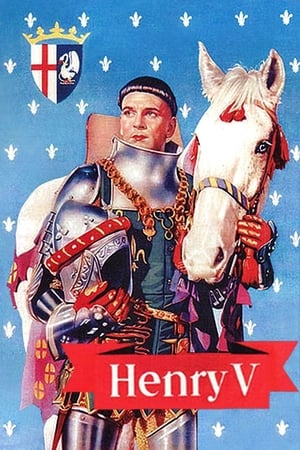
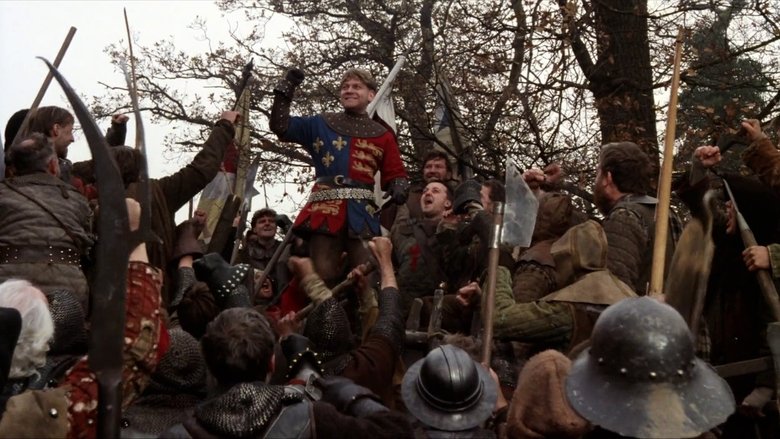
Kenneth Branagh's 1989 film adaptation of Henry V is a landmark in the history of Shakespeare on screen. Making his feature directorial debut at the age of twenty-eight, Branagh also stars as the titular king, delivering a raw and gritty interpretation that deliberately moved away from the idealized, heroic portrayal made famous by Laurence Olivier's 1944 version. Where Olivier's film was a Technicolor pageant designed to boost wartime morale, Branagh's is a mud-and-blood-soaked meditation on the cost of leadership and the brutality of medieval warfare.
The film is structured around the play's original acts but is bookended by a modern framing device: Derek Jacobi's Chorus walks through an empty film studio in contemporary dress, striking a match to illuminate the darkness of history. This choice immediately signals the film's central theme—the power of storytelling to bridge centuries. Branagh retains the full text of Shakespeare's Chorus, using it to guide the audience through the narrative leaps in time and space. The supporting cast is a staggering assembly of British acting talent, including Paul Scofield as the melancholic French King, Ian Holm as the fiery Welsh captain Fluellen, and a young Christian Bale in a small role as the boy.
The film's centerpiece is the Battle of Agincourt, staged not as a clean, chivalric clash but as a grueling, claustrophobic slog in the rain and mud. Cinematographer Kenneth MacMillan uses long, unbroken tracking shots to follow Henry through the carnage, culminating in the famous post-battle sequence where a physically and emotionally exhausted king carries the body of a dead boy across the devastated field. This single, powerful image encapsulates the film's anti-war subtext. Branagh's performance of the 'St Crispin's Day' speech is delivered not as a bombastic rallying cry but as an intimate, urgent whisper to a small circle of terrified men, making it feel less like propaganda and more like a desperate act of communal bonding.
Henry V was a critical and commercial triumph, earning three Academy Award nominations, including Best Director and Best Actor for Branagh, and winning the Oscar for Best Costume Design. It revitalized interest in Shakespearean cinema for a new generation and launched Branagh's prolific career as a director and interpreter of the Bard. The film remains a definitive adaptation, celebrated for balancing the play's patriotic fervor with a profound, modern skepticism about the glories of war.

Henry V is a history play by William Shakespeare, believed to have been written around 1599. It is the final installment in a tetralogy of plays that includes Richard II, Henry IV, Part 1, and Henry IV, Part 2, chronicling the rise of the Lancastrian dynasty. The play focuses on the young King Henry V of England and his stunning military campaign in France, culminating in the famous Battle of Agincourt in 1415, where his outnumbered English forces achieve a miraculous victory.
The play is notable for its exploration of leadership, national identity, and the burdens of kingship. Through the character of the Chorus, Shakespeare directly addresses the audience, asking them to use their imagination to fill in the gaps of the theatrical experience, famously beginning with the line, 'O for a Muse of fire.' The work presents a complex portrait of its hero, showing him as a charismatic leader, a ruthless politician, and a reflective man grappling with the moral weight of war.
Henry V has remained one of Shakespeare's most popular and frequently performed history plays, particularly resonant in times of national crisis or patriotic fervor. Its famous speeches, including the 'St Crispin's Day' speech, have become iconic in English literature and have been adapted numerous times for stage, radio, and screen.