🎬 The King (2019)
Based on true story
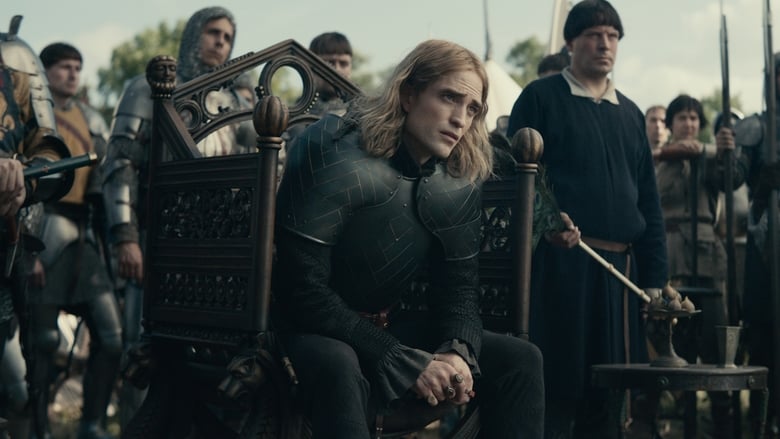
David Michôd’s The King isn’t a straightforward adaptation of Henry V, but a cinematic remix of Shakespeare’s entire Henriad—borrowing from Henry IV, Parts 1 and 2 and then pivoting into the Agincourt campaign. The film strips away the Chorus, the poetic flourishes, and the stage’s self-conscious grandeur, replacing them with mud-caked boots, brutal hand-to-hand combat, and a Hal who transforms from dissolute prince to reluctant king without the glow of patriotic rhetoric. Timothée Chalamet’s Henry mumbles the “St. Crispin’s Day” speech as a weary, almost private reassurance rather than a clarion call, a choice that divided audiences but underscored the film’s commitment to subverting the play’s heroic sheen.
Joel Edgerton, who co-wrote the script and plays Falstaff, reimagines the fat knight as a sober, seasoned warrior—a military mentor rather than a comic foil. This Falstaff doesn’t exist for laughs; he’s the moral compass Henry loses too soon. The film also takes significant liberties with history and Shakespeare, most notably by making the Dauphin (a delightfully grotesque Robert Pattinson) the primary antagonist who goads Henry into war with a personal insult. In reality, the real Dauphin was a child and nowhere near Agincourt, but the fabrications serve a thematic purpose: the entire campaign becomes a trap of manipulation, with Henry slowly realizing that his casus belli was a lie. The final scene, where he confronts his wife Catherine and his own conscience, drives home the hollowness of victory.
Critics were generally warm, praising the performances and the film’s moody texture, but historians howled at the inaccuracies—from plate armor appearing a century too soon to the complete erasure of the English longbow’s tactical dominance. Purists of Shakespeare may miss the play’s linguistic fireworks, but The King isn’t trying to be a faithful rendition. It’s a revisionist, character-driven drama that reframes kingship as a perpetual burden, where the patriotism of the original is replaced by existential fatigue. The result is a film that feels less like a celebration of English heroism and more like a slow-burn meditation on the machinery of power and the lies that launch wars.

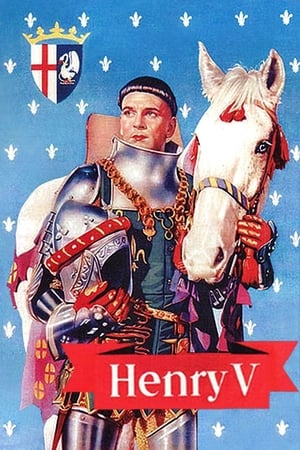
Henry V is a history play by William Shakespeare, believed to have been written around 1599. It is the final installment in a tetralogy of plays that includes Richard II, Henry IV, Part 1, and Henry IV, Part 2, chronicling the rise of the Lancastrian dynasty. The play focuses on the young King Henry V of England and his stunning military campaign in France, culminating in the famous Battle of Agincourt in 1415, where his outnumbered English forces achieve a miraculous victory.
The play is notable for its exploration of leadership, national identity, and the burdens of kingship. Through the character of the Chorus, Shakespeare directly addresses the audience, asking them to use their imagination to fill in the gaps of the theatrical experience, famously beginning with the line, 'O for a Muse of fire.' The work presents a complex portrait of its hero, showing him as a charismatic leader, a ruthless politician, and a reflective man grappling with the moral weight of war.
Henry V has remained one of Shakespeare's most popular and frequently performed history plays, particularly resonant in times of national crisis or patriotic fervor. Its famous speeches, including the 'St Crispin's Day' speech, have become iconic in English literature and have been adapted numerous times for stage, radio, and screen.