🎬 Haider (2014)
Based on play/musical
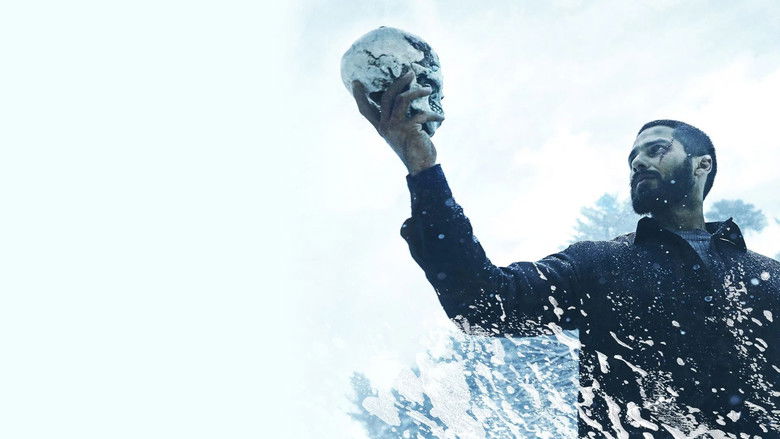
Vishal Bhardwaj’s "Haider" doesn't just transpose Shakespeare's Danish prince to a new location; it buries him in the snow and blood of 1990s Kashmir, finding a devastatingly apt parallel for the original play's themes of surveillance, grief, and a state rotten from within. In this adaptation, Hamlet becomes Haider Meer, a poetry-loving student who returns home to find his father, a doctor, has been "disappeared" by the security forces, and his mother Ghazala (a phenomenal Tabu) has taken up with his uncle Khurram, a slick political operator. The ghost of Hamlet's father is reimagined as Roohdaar, a haunted, physically broken man held in a secret prison, who delivers the truth not as a supernatural specter but as a chillingly real product of state-sponsored terror. This shift from the metaphysical to the brutally political is the film's masterstroke, turning Elsinore's paranoia into the very real claustrophobia of a militarized zone.
Bhardwaj and co-writer Basharat Peer weave the play's DNA into the fabric of Kashmiri culture and conflict. The "play within a play" becomes a raucous, coded folk performance of the traditional Bhand Pather theatre, used to expose the uncle's guilt. Ophelia is Arshia, a journalist whose relationship with Haider is strained by his descent into a very public and politically charged form of "madness"—one that sees him giving a speech on the nature of existence not in a graveyard, but in front of a jeering crowd, his shaved head and wild eyes marking him as a potential militant. The film’s most daring reinterpretation is its climax, which famously deviates from Shakespeare’s bloodbath. Instead of a duel, the final confrontation is a raw, emotional reckoning in a graveyard, where the question of revenge is answered not with a sword, but with a deeply personal, shocking act that redefines the entire notion of "to be or not to be" as a political choice.
Upon its release, "Haider" was met with both rapturous critical acclaim and fierce political controversy. It was celebrated as the crowning achievement of Bhardwaj's Shakespearean trilogy, following "Maqbool" (Macbeth) and "Omkara" (Othello), with particular praise for Shahid Kapoor's career-best performance, Tabu's complex portrayal of Gertrude, and Kay Kay Menon's charismatic villainy. However, its unflinching depiction of human rights abuses, mass graves, and torture by Indian security forces sparked outrage among nationalist groups, who called for a boycott and accused the film of being anti-national propaganda. This very reaction, however, proved the potency of the adaptation; by grounding Hamlet's existential crisis in a specific, ongoing political tragedy, Bhardwaj created a work that, like its source material, refuses to offer easy answers, instead forcing the audience to stare directly into the heart of a corrupted system and the cycles of violence it spawns.

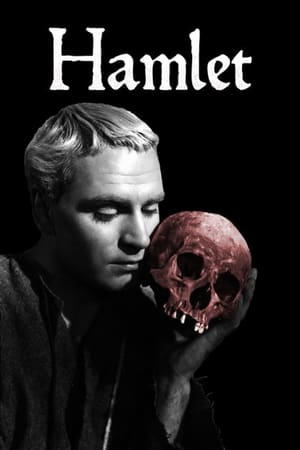
The Tragedy of Hamlet, Prince of Denmark is a tragedy by William Shakespeare, believed to have been written between 1599 and 1601. Set in Denmark, the play follows Prince Hamlet as he seeks revenge against his uncle Claudius, who murdered Hamlet's father to seize the throne and marry Hamlet's mother, Gertrude. The play explores themes of madness, revenge, mortality, and corruption, and features some of the most famous soliloquies in the English language, including "To be, or not to be."
The play exists in three early versions: the First Quarto (1603), the Second Quarto (1604), and the First Folio (1623), each containing lines and scenes missing from the others. Shakespeare drew on a variety of sources, including the legendary Danish prince Amleth from Saxo Grammaticus's 12th-century history and earlier Elizabethan revenge tragedies. Hamlet is Shakespeare's longest play and the title role is one of the most demanding and sought-after in theatre.
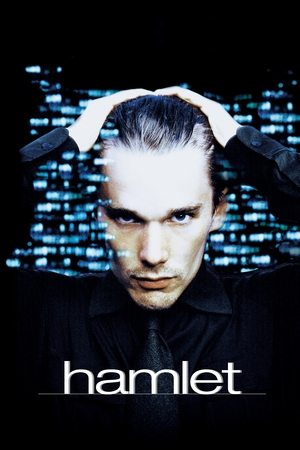
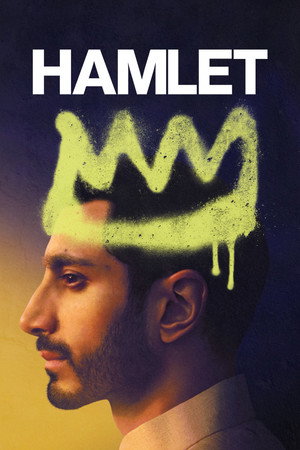
Hamlet is widely regarded as one of the most powerful and influential works in world literature. It has been performed countless times on stage and adapted into numerous films, operas, ballets, and novels. The character of Hamlet, with his philosophical introspection and existential doubt, has become an archetype of the modern consciousness, and the play's exploration of grief, betrayal, and the nature of action continues to resonate across cultures and centuries.