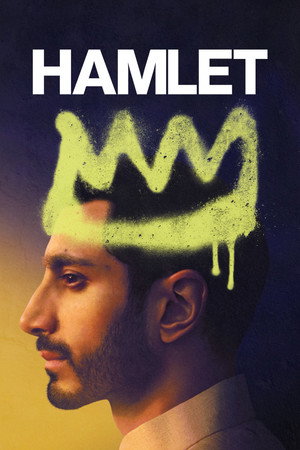
🎬 Hamlet (2000)
Based on play/musical
Michael Almereyda’s "Hamlet" (2000) is a bold and divisive re-imagining that transplants Shakespeare’s Danish prince into the neon-lit, corporate landscape of modern Manhattan. Ethan Hawke’s Hamlet is not a brooding medieval prince but a disaffected film student, wandering the aisles of Blockbuster Video and editing his own experimental projects. The film’s central conceit is ingenious: the state of Denmark becomes the Denmark Corporation, a shadowy conglomerate ruled by CEO Claudius (Kyle MacLachlan) after the mysterious death of his brother. By preserving the original Elizabethan dialogue within a world of limousines, fax machines, and surveillance technology, Almereyda creates a jarring yet strangely lyrical juxtaposition that highlights the timelessness of the play’s themes of grief, paranoia, and moral decay.
This adaptation is notable for how it translates the play’s motifs through the lens of modern media. The ghost of Hamlet’s father (Sam Shepard) does not appear on a foggy battlement but flickers on a closed-circuit television screen. The iconic "To be, or not to be" soliloquy is delivered not in a graveyard but in a Blockbuster action aisle, prefaced by a clip of Buddhist monk Thích Nhất Hạnh discussing the concept of "inter-being." The play-within-a-play, "The Mousetrap," is reworked as a frenetic video art collage assembled by Hamlet himself, a perfect expression of his internal chaos. Other clever updates include Polonius (Bill Murray) being shot through a closet door rather than stabbed behind a tapestry, and the character of Marcellus becoming Marcella, Horatio’s girlfriend.
The film features a remarkable cast that bridges independent cinema and Hollywood, with Julia Stiles as a vulnerable Ophelia, Liev Schreiber as a menacing Laertes, and a memorably understated Bill Murray as a corporate yes-man Polonius. While the adherence to Shakespeare’s language in a modern setting was polarizing for critics and audiences, the film has since gained appreciation for its prescient commentary on corporate greed and the isolating effects of technology. It stands as a quintessential artifact of turn-of-the-millennium anxiety, using a 400-year-old text to probe a world where power is brokered in boardrooms and identity is mediated through screens.

The Tragedy of Hamlet, Prince of Denmark is a tragedy by William Shakespeare, believed to have been written between 1599 and 1601. Set in Denmark, the play follows Prince Hamlet as he seeks revenge against his uncle Claudius, who murdered Hamlet's father to seize the throne and marry Hamlet's mother, Gertrude. The play explores themes of madness, revenge, mortality, and corruption, and features some of the most famous soliloquies in the English language, including "To be, or not to be."
The play exists in three early versions: the First Quarto (1603), the Second Quarto (1604), and the First Folio (1623), each containing lines and scenes missing from the others. Shakespeare drew on a variety of sources, including the legendary Danish prince Amleth from Saxo Grammaticus's 12th-century history and earlier Elizabethan revenge tragedies. Hamlet is Shakespeare's longest play and the title role is one of the most demanding and sought-after in theatre.
Hamlet is widely regarded as one of the most powerful and influential works in world literature. It has been performed countless times on stage and adapted into numerous films, operas, ballets, and novels. The character of Hamlet, with his philosophical introspection and existential doubt, has become an archetype of the modern consciousness, and the play's exploration of grief, betrayal, and the nature of action continues to resonate across cultures and centuries.