🎬 Romeo & Juliet (2013)
Based on play/musical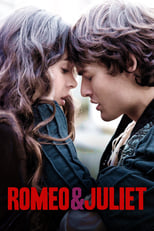
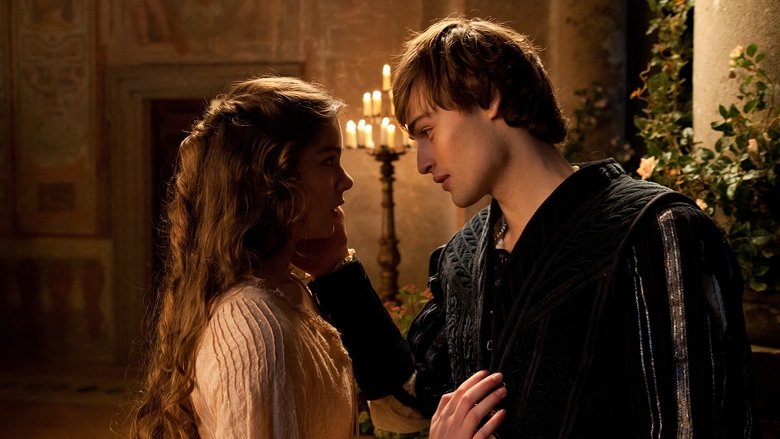
Carlo Carlei’s 2013 adaptation of Romeo & Juliet arrived with the promise of a return to traditional, period-specific Shakespeare on screen, a stark contrast to the modernized, hyper-stylized energy of Baz Luhrmann’s iconic 1996 version. Shot on location in Italy with sumptuous costumes and Renaissance-era production design, the film aimed for a classic, romantic aesthetic. It cast young, photogenic leads in Douglas Booth and Hailee Steinfeld, hoping to capture the adolescent passion at the heart of the tragedy. The screenplay, penned by Downton Abbey creator Julian Fellowes, was marketed as a faithful retelling, but it immediately sparked controversy among purists for its most fundamental choice: significantly altering and trimming Shakespeare’s original dialogue.
Fellowes’s approach was to make the language more accessible to a modern audience unfamiliar with Elizabethan English, a decision that became the film’s most criticized element. While the basic plot structure remains intact, much of the Bard’s poetry was replaced with simplified, explanatory speech, effectively turning the world’s most famous love story into a straightforward costume drama. This led many critics to argue that the film lost the very essence of the play, stripping away the linguistic richness that defines the characters and their emotions. The adaptation also made specific narrative tweaks, such as giving a more prominent role to Rosaline early on and altering the dynamics of certain scenes, but these changes were largely overshadowed by the debate over the script’s handling of the verse.
Upon its release in October 2013, the film was met with largely negative reviews and a tepid box office response, grossing only around $3 million globally. Critics pointed to a lack of chemistry between the leads and a ponderous pace, but the primary target was the diluted script, with many publications denouncing it as “Romeo and Juliet for the Twilight generation” that missed the point entirely. Despite a strong supporting cast including Paul Giamatti as Friar Laurence and Damian Lewis as Lord Capulet, the performances were often seen as constrained by the uninspired adaptation. The film stands as a cautionary tale in Shakespearean cinema, demonstrating that visual fidelity to a period setting cannot compensate for the loss of the playwright’s language.

Romeo and Juliet is a tragedy written by William Shakespeare early in his career, believed to have been composed between 1591 and 1595. It tells the story of two young star-crossed lovers whose deaths ultimately reconcile their feuding families in the Italian city of Verona. The play is among Shakespeare's most popular works and, alongside Hamlet, remains one of his most frequently performed plays.
The plot draws on a long tradition of tragic romances stretching back to antiquity. Shakespeare's immediate sources were Arthur Brooke's 1562 narrative poem The Tragical History of Romeus and Juliet and William Painter's 1567 prose version in Palace of Pleasure, both of which derived from an Italian tale by Matteo Bandello. Shakespeare expanded the story significantly, developing supporting characters like Mercutio and Paris, and employing a sophisticated poetic structure that shifts between comedy and tragedy.
The play was first published in a quarto edition in 1597, though this early text was of poor quality. A more authoritative version appeared in the 1599 quarto. The title characters have since become the archetypal young lovers in Western culture, and the play has inspired countless adaptations across opera, ballet, musical theatre, film, and television.