🎬 Valley Girl (1983)
Based on play/musical
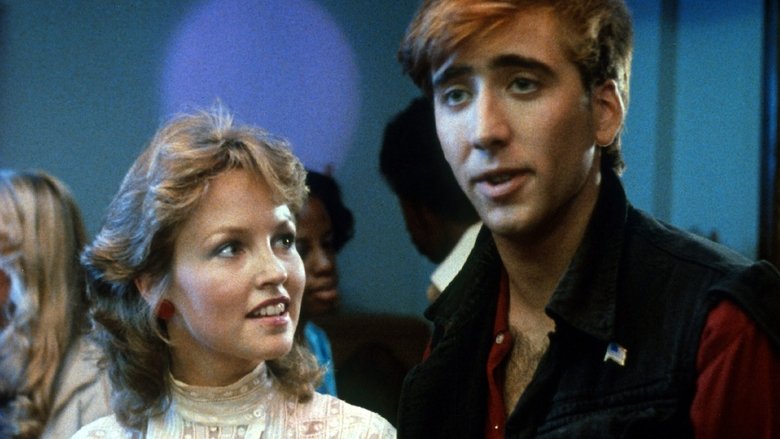
Martha Coolidge's 1983 film 'Valley Girl' is a vibrant and affectionate loose adaptation of William Shakespeare's 'Romeo and Juliet', transplanting the classic tale of star-crossed lovers from Renaissance Verona to the neon-lit, slang-filled world of early 1980s Los Angeles. The film replaces the feuding Montagues and Capulets with the cultural clash between the preppy, materialistic 'Valley girls' of the San Fernando Valley and the rebellious Hollywood punk scene.
The story follows Julie Richman, a quintessential Valley girl, who breaks up with her arrogant boyfriend Tommy and falls for Randy, a sensitive punk from the other side of the Hollywood Hills. Their romance blossoms despite the disapproval and meddling of their respective friend groups, mirroring the forbidden love of Shakespeare's protagonists. The film famously marked Nicolas Cage's first leading role, with his performance as Randy showcasing the offbeat intensity that would define his career.
While the film takes significant liberties with the plot, the core structure of a romance threatened by social division remains intact. Unlike the play, 'Valley Girl' opts for a happy, upbeat ending that perfectly suits its new wave soundtrack and comedic tone. The film became a cult classic, celebrated for its authentic snapshot of 1980s teen culture, its fashion, and its distinctive slang, and it even spawned a jukebox musical remake in 2020.

Romeo and Juliet is a tragedy written by William Shakespeare early in his career, believed to have been composed between 1591 and 1595. It tells the story of two young star-crossed lovers whose deaths ultimately reconcile their feuding families in the Italian city of Verona. The play is among Shakespeare's most popular works and, alongside Hamlet, remains one of his most frequently performed plays.
The plot draws on a long tradition of tragic romances stretching back to antiquity. Shakespeare's immediate sources were Arthur Brooke's 1562 narrative poem The Tragical History of Romeus and Juliet and William Painter's 1567 prose version in Palace of Pleasure, both of which derived from an Italian tale by Matteo Bandello. Shakespeare expanded the story significantly, developing supporting characters like Mercutio and Paris, and employing a sophisticated poetic structure that shifts between comedy and tragedy.
The play was first published in a quarto edition in 1597, though this early text was of poor quality. A more authoritative version appeared in the 1599 quarto. The title characters have since become the archetypal young lovers in Western culture, and the play has inspired countless adaptations across opera, ballet, musical theatre, film, and television.