🎬 Ran (1985)
Based on play/musical
Akira Kurosawa’s Ran is less a direct translation of King Lear and more a cinematic apotheosis of its themes, transposed from ancient Britain to the brutal, windswept plains of Japan’s Sengoku period. The aging warlord Hidetora Ichimonji, a Lear-like patriarch, divides his kingdom among his three sons, a decision that unleashes a maelstrom of betrayal and civil war. Kurosawa’s most radical and brilliant change is the re-gendering of the story’s villains. The two older sons are not inherently evil but weak, manipulated by a single, terrifyingly focused character: Lady Kaede, a vengeful widow who weaponizes their ambition. This shift transforms the play’s exploration of filial ingratitude into a more complex, almost cosmic cycle of violence and retribution, where the sins of the father are visited upon the next generation with apocalyptic fury.
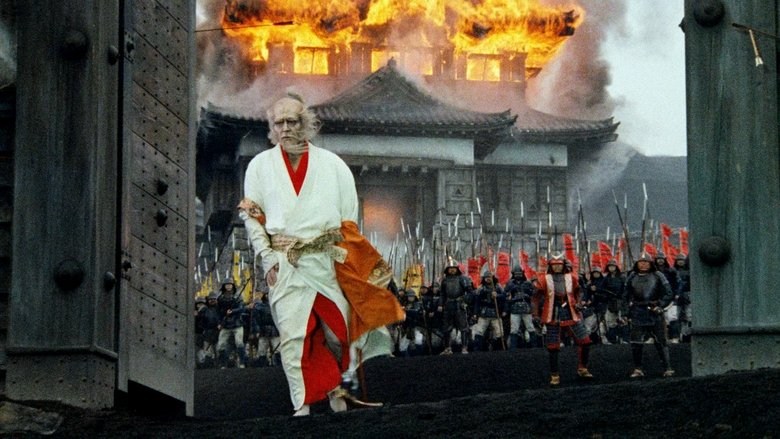
Visually, Ran is a staggering achievement, famously requiring the construction of an actual castle on the slopes of Mount Fuji only to burn it to the ground in a sequence of unparalleled spectacle. The film replaces Shakespeare’s storm on the heath with a silent, catatonic Hidetora wandering out of a flaming fortress, his mind shattered not by thunder but by the visual cacophony of hell he has created. Kurosawa’s use of color, with each son’s army clad in distinct, vibrant banners, creates a painterly grandeur that frames the chaos, while Toru Takemitsu’s mournful, Mahler-esque score underlines the tragedy with a profound sense of lamentation. The film’s title, meaning “chaos” or “tumult,” is perfectly realized in these meticulously orchestrated battle scenes that feel like a descent into a beautifully rendered abyss.
While the ghost of Lear haunts every frame, Kurosawa also drew from the legend of the daimyō Mōri Motonari, whose three famously loyal sons provided the initial seed of a story about a father’s trust being shattered. The character of the Fool is split between the loyal jester Kyoami and the faithful son Saburo, while the Gloucester subplot is entirely excised, replaced by a more streamlined focus on the Ichimonji dynasty’s implosion. The film’s ending offers no redemption, only a blind man standing at the edge of a precipice, having lost his scroll of Buddha’s image, a final, devastating image of a world abandoned by the gods. This uncompromising bleakness, a hallmark of Kurosawa’s late period, makes Ran not just a great Shakespeare adaptation, but one of cinema’s most powerful statements on the futility of power and the inevitability of ruin.

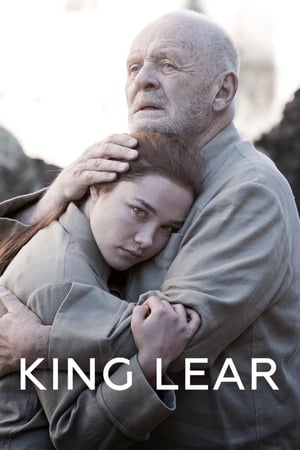
King Lear is a tragedy by William Shakespeare, believed to have been written between 1605 and 1606. It is considered one of his greatest works and a pinnacle of English literature. The play is set in ancient Britain and follows the aging King Lear, who decides to divide his kingdom among his three daughters based on their declarations of love for him. When his youngest daughter Cordelia refuses to flatter him, she is disinherited, setting off a chain of events that leads to betrayal, madness, and tragedy.
The play explores profound themes of power, loyalty, justice, and the nature of human suffering. Its bleak and uncompromising vision, combined with its poetic brilliance, has made it a staple of theatrical repertoires worldwide. The character of Lear, descending into madness on the heath during a storm, is one of the most iconic figures in drama.
First performed in 1606, the play exists in two major textual versions: the 1608 quarto and the 1623 First Folio, with significant differences between them. After the Restoration, Nahum Tate's heavily revised version with a happy ending dominated the stage for over a century, but Shakespeare's original text was restored in the 19th century and has since been recognized as a masterpiece. The play has inspired countless adaptations across all media, from opera and film to modern-dress stage productions.