🎬 King Lear (2018)
Based on play/musical
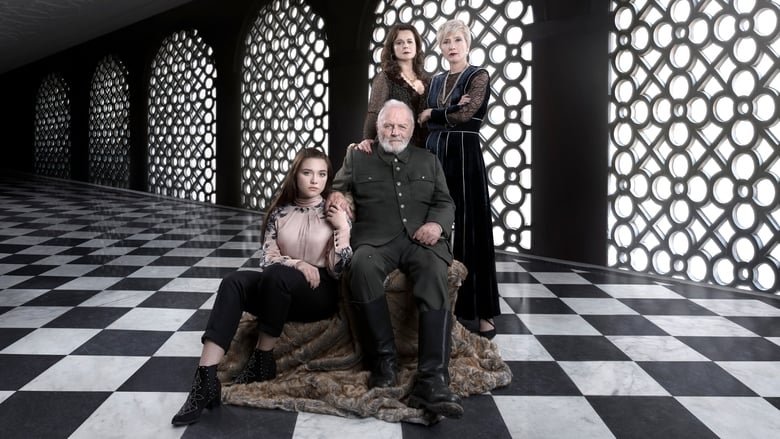
The 2018 television film King Lear, directed by Richard Eyre, is a bold modern reimagining of Shakespeare's tragedy, set in a highly militarised 21st-century London. Starring Anthony Hopkins in the title role, the production strips the play down to a taut 115 minutes, focusing on the raw emotional core of the story. The setting replaces ancient Britain with a near-future totalitarian state, where Lear is a sovereign ruler whose decision to divide his kingdom triggers chaos and betrayal among his daughters Goneril, Regan, and Cordelia.
Hopkins delivers a powerful performance as the aging monarch, capturing both his imperious authority and his heartbreaking descent into madness. The adaptation retains Shakespeare's language but trims and rearranges scenes to heighten the political thriller atmosphere. The militarised backdrop adds a layer of menace, with soldiers and security forces underscoring the themes of power and control. The cast also includes Emma Thompson, Emily Watson, and Florence Pugh as the daughters, bringing a contemporary edge to the classic roles.
This version was broadcast on BBC Two on 28 May 2018 and received positive reviews, with particular praise for Hopkins' performance and the inventive setting. Critics noted how the abridged script and modern context made the play's themes of family dysfunction and political disintegration feel urgently relevant. The film stands as a testament to the enduring power of Shakespeare's work, proving that King Lear can be endlessly reinterpreted for new generations.

King Lear is a tragedy by William Shakespeare, believed to have been written between 1605 and 1606. It is considered one of his greatest works and a pinnacle of English literature. The play is set in ancient Britain and follows the aging King Lear, who decides to divide his kingdom among his three daughters based on their declarations of love for him. When his youngest daughter Cordelia refuses to flatter him, she is disinherited, setting off a chain of events that leads to betrayal, madness, and tragedy.
The play explores profound themes of power, loyalty, justice, and the nature of human suffering. Its bleak and uncompromising vision, combined with its poetic brilliance, has made it a staple of theatrical repertoires worldwide. The character of Lear, descending into madness on the heath during a storm, is one of the most iconic figures in drama.
First performed in 1606, the play exists in two major textual versions: the 1608 quarto and the 1623 First Folio, with significant differences between them. After the Restoration, Nahum Tate's heavily revised version with a happy ending dominated the stage for over a century, but Shakespeare's original text was restored in the 19th century and has since been recognized as a masterpiece. The play has inspired countless adaptations across all media, from opera and film to modern-dress stage productions.