🎬 Othello (1965)
Based on play/musical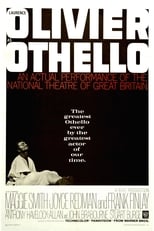
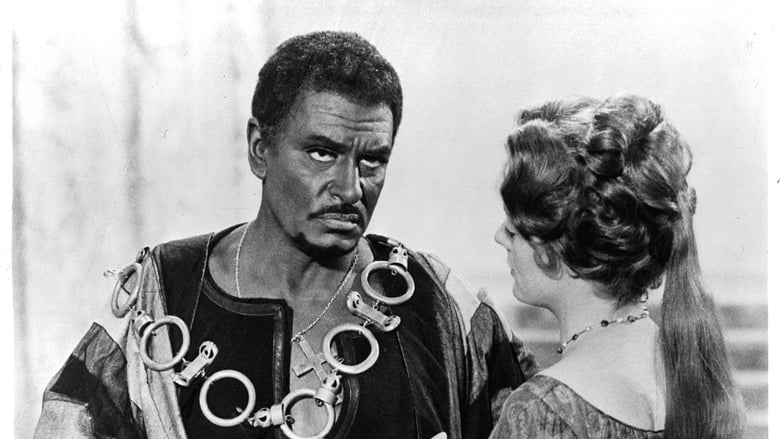
The 1965 film adaptation of Shakespeare's Othello was directed by Stuart Burge and based on the acclaimed National Theatre Company stage production, which had been directed by John Dexter. The film stars Laurence Olivier in the title role, with Maggie Smith as Desdemona, Joyce Redman as Emilia, and Frank Finlay as Iago. All four principal actors received Academy Award nominations for their performances, a rare achievement for a Shakespeare adaptation.
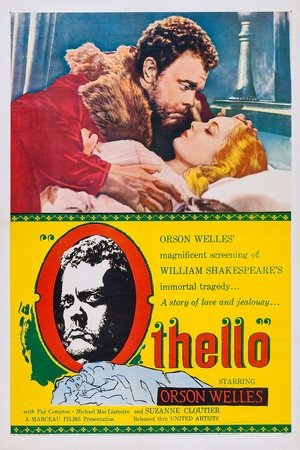
Filmed on enlarged duplicates of the original stage sets rather than on location, the picture retains most of Shakespeare's text, though it omits the Fool's scene and some minor lines. The production marked the film debuts of both Derek Jacobi (Cassio) and Michael Gambon. It was the first English-language colour and widescreen film version of the play, following a Russian colour adaptation in 1955 and Orson Welles' 1952 black-and-white version.
Olivier's performance, which he had previously played on stage, was praised for its physicality and vocal power, though the film itself received mixed reviews, with some critics feeling it was too bound to its theatrical origins. Nevertheless, the film remains a significant record of the National Theatre's early work and of Olivier's late-career Shakespeare interpretations.

The Tragedy of Othello, the Moor of Venice is a tragedy by William Shakespeare, believed to have been written around 1603. Set against the backdrop of Venice and Cyprus, the play follows the Moorish general Othello as he is cunningly manipulated by his ensign, Iago into believing his wife Desdemona has been unfaithful. The play explores themes of jealousy, race, betrayal, and the destructive power of suspicion.
Shakespeare drew the core plot from a 1565 story by the Italian writer Cinthio, but he transformed it significantly, deepening the psychological complexity of the characters and tightening the dramatic structure. The play was first published in quarto form in 1622, a year before its appearance in the First Folio.
Othello is regarded as one of Shakespeare's four great tragedies, alongside Hamlet, King Lear, and Macbeth. It has remained one of his most frequently performed and adapted works, inspiring countless stage productions, films, operas, and literary reinterpretations. The roles of Othello, Iago, and Desdemona are considered among the most demanding and rewarding in the dramatic canon, and the play's treatment of race and otherness has made it a continually relevant and debated text.