🎬 Macbeth (1948)
Based on play/musical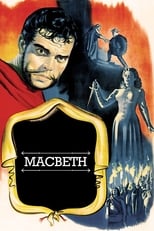
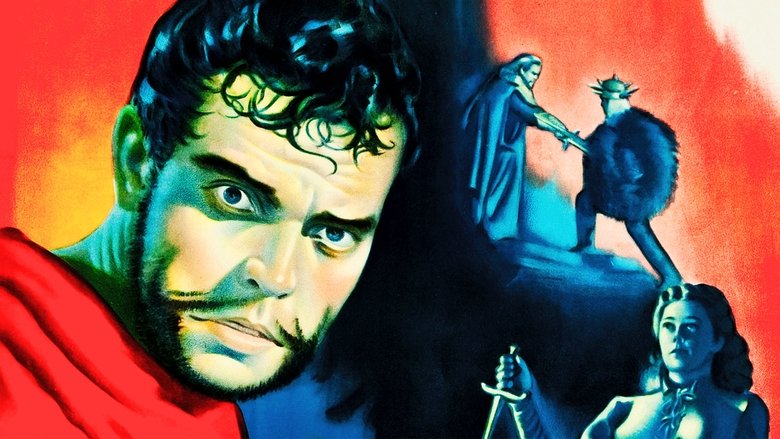
Orson Welles’s 1948 film adaptation of Macbeth remains one of the most audacious and stylistically distinct Shakespeare adaptations ever committed to celluloid. Shot in a mere 23 days on a shoestring budget for Republic Pictures, a studio better known for B-movie westerns than highbrow drama, Welles crafted a feverish, expressionistic nightmare. The director famously utilized a single, abstract set built from papier-mâché rocks that looked like a primordial, hellish landscape, allowing him to shoot long, unbroken takes. This creative decision, born partly of financial necessity, gave the film a claustrophobic, theatrical intensity that mirrors the protagonist’s psychological collapse. Welles also made the controversial choice to have the cast perform in thick Scottish burrs, a decision that was heavily criticized at the time for obscuring the verse, but which he defended as an attempt to ground the supernatural story in a raw, primitive reality.
Jeanette Nolan, in her feature film debut, delivers a ferocious and polarizing performance as Lady Macbeth. Her interpretation is less a seductive manipulator and more a primal, almost demonic force of will, her voice a chilling, high-pitched wail that cuts through the foggy soundscape. The dynamic between Welles’s brutish, hulking Macbeth and Nolan’s unnerving intensity shifts the play’s focus onto a couple already teetering on the edge of madness before the first murder even occurs. Welles also took significant liberties with the text, most notably creating a brand-new character, the Holy Man, who serves as a direct mouthpiece for the forces of Christian good opposing Macbeth’s pagan evil. This addition, along with the prominent placement of a voodoo doll during the witches’ scenes, explicitly frames the tragedy as a battle between primitive witchcraft and divine order, a thematic sharpening not present in the source material.
Upon its initial release, the film was a critical and commercial failure in the United States. Audiences and reviewers lambasted the thick accents, which they claimed made the dialogue unintelligible, and Republic Pictures, panicked by the negative reception, cut the film down by nearly 20 minutes and destroyed the excised footage. The original 107-minute version was considered lost for decades. However, the film found a champion overseas, winning the Grand Prix at the 1948 Venice Film Festival, where European critics praised its bold visual style. Over time, the critical consensus has shifted dramatically, and the restored full-length version is now hailed as a masterpiece of low-budget, high-imagination filmmaking, a testament to Welles’s ability to turn severe limitations into a singular artistic vision.
Beyond the accents and the set, Welles’s adaptation is a masterclass in cinematic shorthand for guilt and paranoia. The director uses deep focus and stark chiaroscuro lighting to trap his characters in a world of encroaching shadows, making the castle feel like a cavern of the mind. The famous 'Tomorrow, and tomorrow, and tomorrow' soliloquy is delivered not as a grand theatrical moment but as a weary, bitter whisper, a broken man staring into an abyss of his own making. It is a deeply personal film for Welles, who saw Macbeth not just as a villain but as a great man undone by a flaw, a theme that resonated with the director’s own turbulent career. This 1948 version stands as a defiantly unconventional take that sacrifices textual purity for pure cinematic atmosphere, proving that the Scottish Play’s dark heart beats just as powerfully on a papier-mâché rock as it does on any authentic heath.

Macbeth is a tragedy by William Shakespeare, believed to have been first performed in 1606. It dramatizes the corrosive psychological and political effects of ambition as a Scottish general named Macbeth receives a prophecy from three witches that he will one day become King of Scotland. Spurred on by his wife, he murders King Duncan and seizes the throne, only to descend into paranoia, tyranny, and madness.
Shakespeare's shortest tragedy draws on Holinshed's Chronicles for its historical basis but takes considerable creative liberties with the real King Macbeth. The play is renowned for its exploration of guilt, fate, and the supernatural, and it contains some of the most famous passages in English literature, including the 'Tomorrow, and tomorrow, and tomorrow' soliloquy.
First published in the 1623 First Folio, Macbeth has been staged countless times and adapted into numerous films, operas, and other media. It remains one of Shakespeare's most frequently performed and studied works, and a theatrical superstition holds that the play's name should not be spoken inside a theater.