🎬 Case Closed: The Crimson Love Letter (2017)
Part of Detective Conan
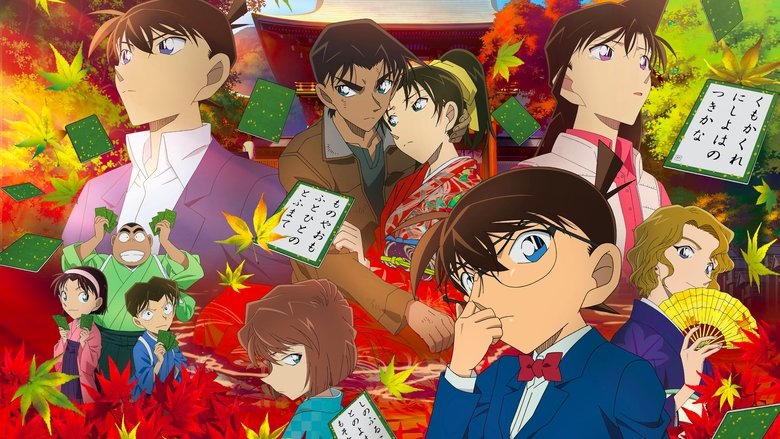
The twenty-first film in the long-running Case Closed franchise, The Crimson Love Letter, distinguishes itself by shifting the spotlight away from the series' central protagonist, Conan Edogawa, and onto his Osakan rival and best friend, Heiji Hattori. While the core premise of a brilliant detective trapped in a child's body remains, this installment functions primarily as a high-stakes romantic drama wrapped in a traditional whodunit. The film cleverly adapts the manga's deep bench of supporting characters by introducing a significant new figure, Momiji Ooka, a wealthy and determined high school karuta champion who boldly declares herself Heiji's fiancée. This creates a compelling love triangle that forces the usually dense Heiji to confront his long-unspoken feelings for his childhood friend, Kazuha Toyama, adding a layer of emotional urgency rarely seen so directly in the series' main narrative.
The film's central mystery is ingeniously woven into the world of competitive karuta, a Japanese card game based on the Ogura Hyakunin Isshu poetry anthology. This cultural backdrop is not merely set dressing; the poems themselves become clues, with the bomber's motives and the solution to the case deeply embedded in the interpretation of the ancient verses. Director Kobun Shizuno uses the vibrant autumn setting of Kyoto to great effect, contrasting the serene beauty of the Arashiyama mountains and historic temples with explosive action sequences and a tense, ticking-clock investigation. The adaptation takes full advantage of the theatrical format, delivering spectacular set pieces—including a dramatic rescue from a burning television studio and a perilous climax involving a collapsing dam—that far exceed the scale of a typical manga chapter.
A key change from the source material's usual formula is the film's focus on the Heiji-Kazuha dynamic, which in the weekly manga often serves as a parallel but secondary romance to the Shinichi-Ran relationship. Here, it takes center stage, allowing for significant character development. The introduction of Momiji, a character who would later be integrated into the manga by creator Gosho Aoyama, demonstrates the symbiotic relationship between the films and the source material at this point in the franchise's history. The Crimson Love Letter was a massive commercial success in Japan, becoming the highest-grossing film in the series at the time of its release, a testament to the audience's deep investment in these characters and the film's successful blend of romance, cultural heritage, and classic detective thrills.
The film also notably sidelines the overarching Black Organization conspiracy, a staple of many other entries, in favor of a more personal and emotionally driven story. This decision allowed the writers to craft a standalone mystery that is both accessible to newcomers and deeply rewarding for long-time fans invested in the Heiji-Kazuha relationship. The climax, which hinges on Heiji's desperate attempt to save Kazuha and a confession of love interrupted by the roar of an explosion, became an iconic and frequently referenced moment within the fandom, perfectly encapsulating the film's melodramatic and heartfelt approach to adapting Gosho Aoyama's beloved characters.

Case Closed, known in Japan as Detective Conan, is a long-running Japanese manga series written and illustrated by Gosho Aoyama. First serialized in Shogakukan's Weekly Shōnen Sunday magazine in January 1994, the series has become one of the best-selling manga of all time, with over 270 million copies in circulation worldwide. The story follows Shinichi Kudo, a brilliant high school detective who is transformed into a child's body after being poisoned by a mysterious criminal syndicate. Adopting the alias Conan Edogawa, he continues to solve complex criminal cases while secretly investigating the organization that shrank him, all while living with his childhood friend Ran Mouri and her bumbling private detective father.
The manga masterfully blends intricate whodunit mysteries with an overarching thriller narrative centered on the shadowy Black Organization. Aoyama's work is celebrated for its clever plotting, forensic detail, and a vast cast of recurring characters including rival detectives, FBI agents, and fellow victims of the organization's experiments. The series has spawned a massive media franchise encompassing an ongoing anime television series, animated feature films, video games, and live-action specials, cementing its status as a cornerstone of modern Japanese popular culture.
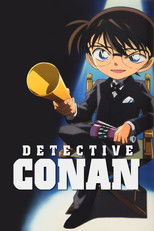
The *Detective Conan* film series is a long-running collection of animated feature films based on Gosho Aoyama's celebrated manga and anime franchise. Beginning in 1997 with *The Time Bombed Skyscraper*, the series has become an annual cinematic tradition in Japan, with new installments released each year. These films expand the universe of the diminutive detective Conan Edogawa, taking the core elements of the series—intricate mysteries, clever deductions, and a colorful cast of characters—and amplifying them with higher stakes, more elaborate set pieces, and a grander scale than the weekly television episodes typically allow. While the films are largely standalone mysteries, they often incorporate elements from the overarching narrative, particularly the ongoing conflict with the shadowy Black Organization, and provide deeper exploration of fan-favorite characters like the phantom thief Kaito Kid or the FBI agent Shuichi Akai. Over the decades, the series has evolved from relatively grounded whodunits to blockbuster spectacles involving international terrorism, advanced technology, and large-scale disasters, yet it consistently returns to the emotional core of Conan's quest to reclaim his true identity as Shinichi Kudo and his protective relationship with Ran Mouri. The films are known for their blend of suspense, humor, and heartfelt moments, making them accessible to both dedicated followers and casual viewers. As a cornerstone of Japanese popular culture, the *Detective Conan* films have achieved remarkable box office success, often ranking among the highest-grossing domestic releases of their respective years, and have contributed significantly to the franchise's enduring global legacy.