🎬 Lupin the Third vs. Detective Conan: The Movie (2013)
Part of Lupin the Third vs Detective Conan
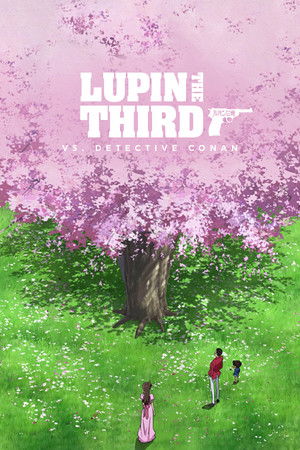
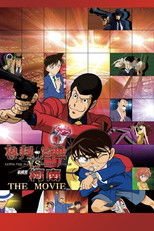
Lupin the Third vs. Detective Conan: The Movie (2013) is a Japanese animated theatrical crossover between TMS Entertainment's two long-running properties: Monkey Punch's manga 'Lupin III,' launched in Futabasha's 'Manga Action' in August 1967, and Gosho Aoyama's 'Detective Conan' (English title 'Case Closed'), launched in Shogakukan's 'Weekly Shōnen Sunday' in January 1994. The film is the second crossover between the two properties, following the 2009 TV special 'Lupin III vs. Detective Conan,' and centres on a plot involving the Vespanian kingdom, the legendary cherry-sapphire gem, and the intersecting theft and investigation agendas of Lupin III and Conan Edogawa.

'Lupin III' is a Japanese manga series created by Monkey Punch (Kazuhiko Kato) in 1967, debuting in Futabasha's 'Manga Action' magazine on August 10 of that year and following the gentleman-thief Arsène Lupin III, grandson of Maurice Leblanc's Arsène Lupin. The property has been continuously adapted since, with six animated television series, eight theatrical films including Hayao Miyazaki's 'The Castle of Cagliostro' (1979), and multiple annual TV specials from TMS Entertainment beginning in 1989. The Detective Conan crossover films draw on both this source and Gosho Aoyama's 1994 'Detective Conan' (Case Closed) manga.

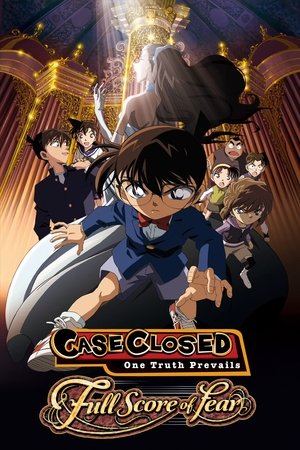
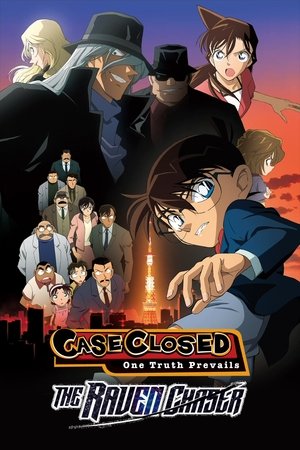
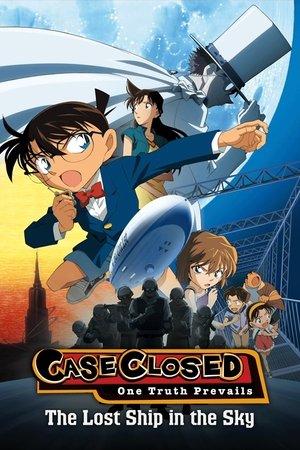
Case Closed, known in Japan as Detective Conan, is a long-running Japanese manga series written and illustrated by Gosho Aoyama. First serialized in Shogakukan's Weekly Shōnen Sunday magazine in January 1994, the series has become one of the best-selling manga of all time, with over 270 million copies in circulation worldwide. The story follows Shinichi Kudo, a brilliant high school detective who is transformed into a child's body after being poisoned by a mysterious criminal syndicate. Adopting the alias Conan Edogawa, he continues to solve complex criminal cases while secretly investigating the organization that shrank him, all while living with his childhood friend Ran Mouri and her bumbling private detective father.
The manga masterfully blends intricate whodunit mysteries with an overarching thriller narrative centered on the shadowy Black Organization. Aoyama's work is celebrated for its clever plotting, forensic detail, and a vast cast of recurring characters including rival detectives, FBI agents, and fellow victims of the organization's experiments. The series has spawned a massive media franchise encompassing an ongoing anime television series, animated feature films, video games, and live-action specials, cementing its status as a cornerstone of modern Japanese popular culture.
The "Lupin the Third vs Detective Conan" crossover is a celebrated meeting of two iconic anime properties, bringing together the gentleman thief Arsène Lupin III from Monkey Punch's long-running series and the brilliant young detective Conan Edogawa from Gosho Aoyama's beloved mystery franchise. Originating as a television special in 2009, this collaboration was a landmark event that delighted fans by merging the distinct tones and styles of both worlds. The special pitted Lupin's flamboyant, carefree heists against Conan's meticulous, logic-driven pursuit of justice, creating a dynamic narrative where the two geniuses engage in a thrilling battle of wits while developing a grudging mutual respect. The success of this initial encounter demonstrated the rich potential of a shared universe where the supporting casts—including Lupin's sharpshooter partner Daisuke Jigen and samurai Goemon Ishikawa, alongside Conan's allies—could interact in unexpected and entertaining ways.
The crossover expanded into a full cinematic event with the 2013 theatrical film, "Lupin the Third vs. Detective Conan: The Movie." This entry elevated the stakes, blending the comedic caper elements of a Lupin adventure with the high-tension mystery and dramatic depth characteristic of a Conan film. The movie weaves a complex plot involving a larger conspiracy and a race against time, forcing an uneasy alliance that tests the boundaries of both protagonists' moral codes. By balancing fan service with a compelling standalone story, the film solidified the crossover as more than a novelty, proving that these two distinct universes could coexist in a way that honors their individual legacies.
At its core, the "Lupin the Third vs Detective Conan" collection explores thematic contrasts that resonate deeply with audiences: the unshakeable faith in justice versus a freewheeling morality governed by personal honor. The cultural significance of these works lies in their ability to serve as both an accessible entry point for newcomers and a richly rewarding experience for long-time devotees, filled with visual homages and character moments that celebrate decades of anime history. By juxtaposing the retro-cool aesthetic of Lupin's world with the contemporary, gadget-driven intrigue of Conan's, the collection creates a legacy where the two icons are elevated by their encounter, demonstrating that the most compelling stories often emerge when a master of disguise meets an unerring eye for truth.