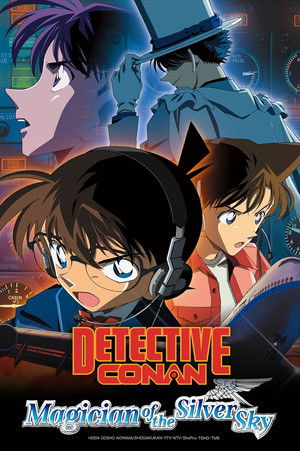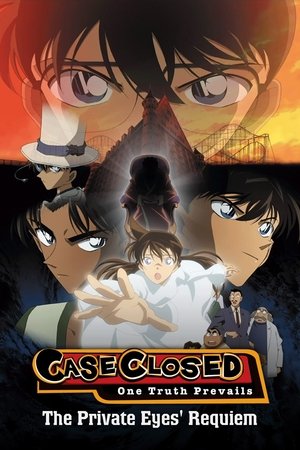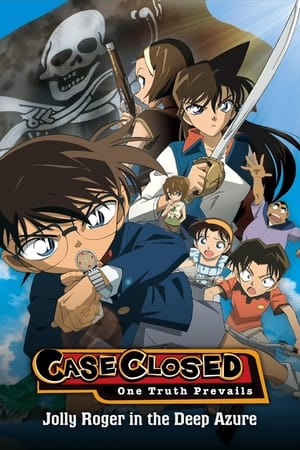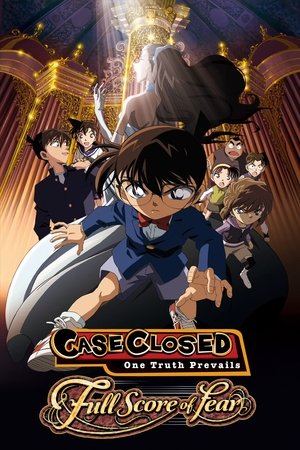
🎬 Detective Conan: Strategy Above the Depths (2005)
Part of Detective Conan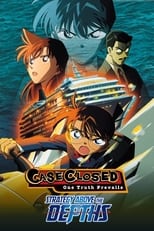
Setting sail in 2005, "Detective Conan: Strategy Above the Depths" takes the beloved pint-sized sleuth out of his usual urban hunting grounds and traps him on a luxurious ocean liner, the Saint Aphrodite. The film, the ninth in the annual feature film franchise, cleverly adapts Gosho Aoyama's mystery formula to a classic closed-circle setting. The vast, elegant cruise ship becomes a floating crime scene where the past literally haunts the present, as the narrative ties a contemporary murder spree to a maritime disaster from fifteen years prior. This installment leans heavily into a disaster-movie aesthetic, blending the meticulous deduction the series is known for with the visceral threat of a sinking ship, a departure from the more grounded, episodic mysteries of the manga.
The film makes a notable character-driven choice by placing Ran Mouri in a more proactive and perilous role than usual. While Conan races to solve the intertwined riddles of the Yashiro family's dark secrets, Ran finds herself as the primary protector of a young passenger, leading to a suspenseful climax that tests her martial arts skills and courage independently. This shift in focus allows the film to explore the emotional core of the series—the bond between Shinichi and Ran—from a different angle, emphasizing her strength rather than just her role as someone waiting to be saved. It's a structural change from the source material's typical rhythm, where Conan's deductions almost exclusively drive the resolution.
Visually, "Strategy Above the Depths" is a spectacle of oceanic peril, culminating in a dramatic sequence where the ship begins to capsize. The animation captures both the opulence of the vessel and the terrifying chaos of its demise. Despite its grand scale and high-stakes action, the film's box office performance marked a downturn, earning 2.15 billion yen, significantly less than its immediate predecessors. This commercial dip didn't diminish its place in the franchise's evolution, however, as it remains a distinct entry remembered for its atmospheric tension, the poignant parallel between a past tragedy and a present conspiracy, and for giving Ran a standout moment of heroism amidst the waves.

Case Closed, known in Japan as Detective Conan, is a long-running Japanese manga series written and illustrated by Gosho Aoyama. First serialized in Shogakukan's Weekly Shōnen Sunday magazine in January 1994, the series has become one of the best-selling manga of all time, with over 270 million copies in circulation worldwide. The story follows Shinichi Kudo, a brilliant high school detective who is transformed into a child's body after being poisoned by a mysterious criminal syndicate. Adopting the alias Conan Edogawa, he continues to solve complex criminal cases while secretly investigating the organization that shrank him, all while living with his childhood friend Ran Mouri and her bumbling private detective father.
The manga masterfully blends intricate whodunit mysteries with an overarching thriller narrative centered on the shadowy Black Organization. Aoyama's work is celebrated for its clever plotting, forensic detail, and a vast cast of recurring characters including rival detectives, FBI agents, and fellow victims of the organization's experiments. The series has spawned a massive media franchise encompassing an ongoing anime television series, animated feature films, video games, and live-action specials, cementing its status as a cornerstone of modern Japanese popular culture.
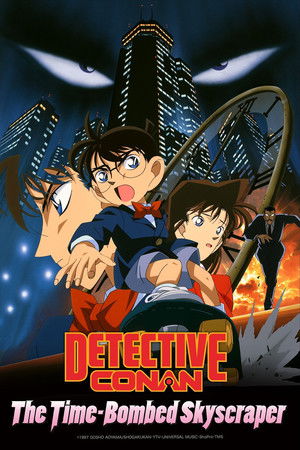
The *Detective Conan* film series is a long-running collection of animated feature films based on Gosho Aoyama's celebrated manga and anime franchise. Beginning in 1997 with *The Time Bombed Skyscraper*, the series has become an annual cinematic tradition in Japan, with new installments released each year. These films expand the universe of the diminutive detective Conan Edogawa, taking the core elements of the series—intricate mysteries, clever deductions, and a colorful cast of characters—and amplifying them with higher stakes, more elaborate set pieces, and a grander scale than the weekly television episodes typically allow. While the films are largely standalone mysteries, they often incorporate elements from the overarching narrative, particularly the ongoing conflict with the shadowy Black Organization, and provide deeper exploration of fan-favorite characters like the phantom thief Kaito Kid or the FBI agent Shuichi Akai. Over the decades, the series has evolved from relatively grounded whodunits to blockbuster spectacles involving international terrorism, advanced technology, and large-scale disasters, yet it consistently returns to the emotional core of Conan's quest to reclaim his true identity as Shinichi Kudo and his protective relationship with Ran Mouri. The films are known for their blend of suspense, humor, and heartfelt moments, making them accessible to both dedicated followers and casual viewers. As a cornerstone of Japanese popular culture, the *Detective Conan* films have achieved remarkable box office success, often ranking among the highest-grossing domestic releases of their respective years, and have contributed significantly to the franchise's enduring global legacy.