🎬 Man of Steel (2013)
Part of Man of Steel
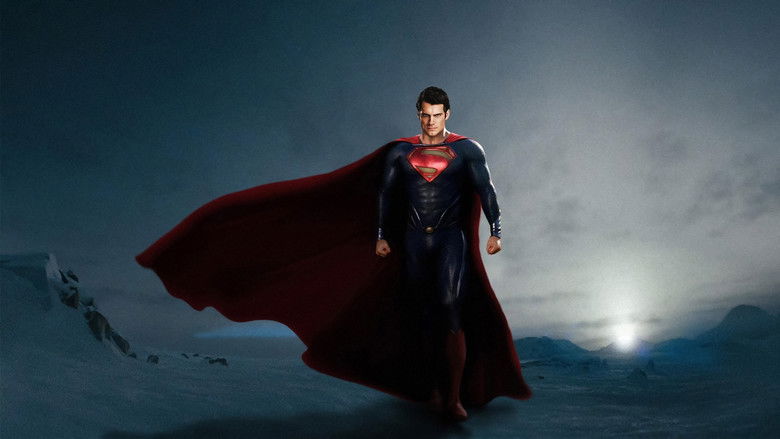
Man of Steel (2013) is a superhero film directed by Zack Snyder that serves as a reboot of the Superman film series and the inaugural entry in the DC Extended Universe (DCEU). The film draws its core mythology from the Superman comic books created by Jerry Siegel and Joe Shuster, first published in Action Comics #1 in 1938. Producer Christopher Nolan and screenwriter David S. Goyer developed the story, which retells the origin of the last son of Krypton with a more grounded, science-fiction-inflected tone than previous cinematic incarnations.
The film stars Henry Cavill as Clark Kent / Superman, Amy Adams as Lois Lane, and Michael Shannon as General Zod. It follows Kal-El's journey from his birth on a dying Krypton to his upbringing in Smallville, Kansas, and his eventual emergence as Earth's protector when Zod and his followers arrive seeking to terraform the planet into a new Krypton. The film departs from earlier Superman movies by emphasizing the alien nature of its hero and the catastrophic scale of his battles, a creative choice that sparked considerable debate among fans and critics.
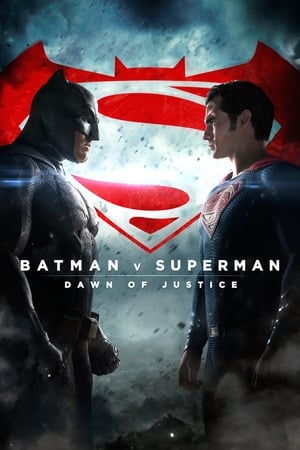
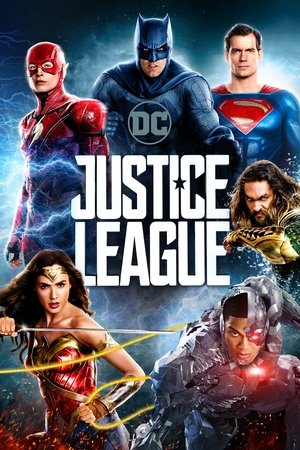
Man of Steel was a commercial success, grossing over $668 million worldwide, and directly led to the expansion of the DCEU with Batman v Superman: Dawn of Justice (2016) and Justice League (2017). The film's darker, more serious approach to the character marked a significant tonal shift from the Christopher Reeve-era films, particularly Richard Donner's 1978 classic, and set the template for the interconnected DC film universe that followed.

Superman is a superhero created by writer Jerry Siegel and artist Joe Shuster, first appearing in Action Comics #1 in 1938. The character is an alien from the doomed planet Krypton, sent to Earth as an infant and raised as Clark Kent in Smallville, Kansas. Endowed with extraordinary powers under Earth's yellow sun—including superhuman strength, flight, invulnerability, and heat vision—he adopts the secret identity of Superman to protect humanity while working as a mild-mannered reporter for the Daily Planet in Metropolis.
The character quickly became a cultural phenomenon, launching the entire superhero genre and establishing many of its core tropes: the secret identity, the colorful costume, the archnemesis, and the struggle to balance power with moral responsibility. Superman's iconic supporting cast includes love interest Lois Lane, photographer Jimmy Olsen, and editor Perry White, while his rogues' gallery features the criminal genius Lex Luthor, the fifth-dimensional imp Mister Mxyzptlk, and the monstrous Doomsday.
Among Superman's most enduring and peculiar antagonists is Bizarro, an imperfect duplicate of the Man of Steel created through failed cloning experiments or reality-warping accidents. Bizarro possesses all of Superman's powers but applies them with childlike, backwards logic—often causing destruction while genuinely trying to help. He speaks in reversed grammar, lives on the cube-shaped Bizarro World, and is beloved by fans as both a tragic figure and a source of absurdist comedy. Bizarro first appeared in Superboy #68 in 1958 and has remained a staple of DC Comics ever since.

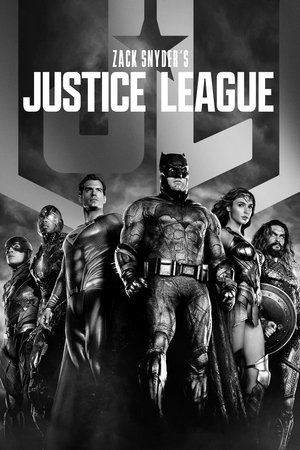
This collection centers on the foundational films of the DC Extended Universe's Superman storyline, beginning with Man of Steel (2013). Directed by Zack Snyder, the trilogy follows Clark Kent's journey from a conflicted alien outsider to Earth's greatest protector, and ultimately to his role in the formation of the Justice League. Henry Cavill's portrayal brought a more grounded, introspective version of Superman to the screen, exploring the weight of his powers and the moral dilemmas that come with being a god-like figure in a world of mortals.
The narrative arc progresses from Kal-El's origin and first confrontation with General Zod, through the devastating clash with Batman that forces a reckoning with humanity's fear of unchecked power, to the assembly of Earth's heroes against Steppenwolf and the forces of Apokolips. Batman v Superman: Dawn of Justice expanded the universe by introducing Ben Affleck's Batman and Gal Gadot's Wonder Woman, while Justice League brought the team together in a climactic battle for the planet.
Though each film received mixed critical reception, the trilogy collectively shaped the tone and ambition of the DC Extended Universe. Snyder's visual style — marked by mythic imagery, deconstructed heroism, and operatic action sequences — gave the series a distinct identity separate from its Marvel contemporaries, earning a passionate fanbase and influencing the broader direction of DC's cinematic ventures.
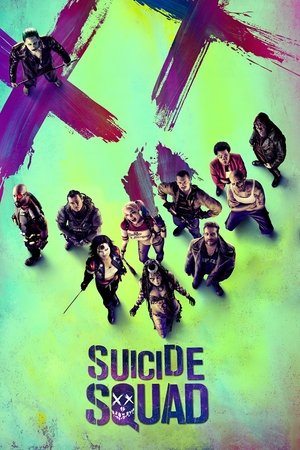
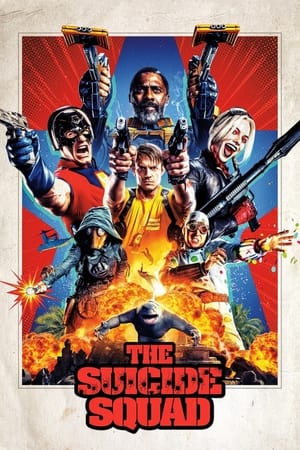
The Suicide Squad film series centers on a covert government program that recruits incarcerated supervillains for high-risk black ops missions in exchange for reduced sentences. Originating from the DC Comics team of the same name, the cinematic collection explores the morally ambiguous world of Task Force X, where expendable antiheroes are forced into deadly assignments under the threat of implanted explosives. The series is defined by its ensemble casts of deeply flawed, often mentally unstable characters who must navigate shifting alliances, personal demons, and the manipulative oversight of their handler, Amanda Waller. Themes of redemption, coercion, and the blurred line between heroism and villainy run throughout, as these outcasts are repeatedly thrust into situations where survival is never guaranteed.
The collection began with David Ayer's Suicide Squad (2016), which introduced a stylized, gritty take on the team, blending dark humor with explosive action. The narrative and tonal direction shifted significantly with James Gunn's The Suicide Squad (2021), a standalone follow-up that leaned further into irreverent comedy, ultraviolence, and heartfelt character moments, while retaining the core premise of disposable criminals on a suicide mission. This entry expanded the roster with obscure and eccentric characters, reinforcing the series' willingness to subvert expectations and kill off major figures without warning. The 2021 film also served as a launchpad for the spin-off television series Peacemaker, which follows one of the team's more jingoistic members in a continuation that deepens the universe's exploration of trauma, ideology, and unlikely redemption.
Beyond its own direct entries, the Suicide Squad concept has intersected with the broader DC film landscape, particularly through the character of Harley Quinn, who appears in Birds of Prey and other ensemble films. The series' influence is felt in its distinctive visual style, needle-drop soundtracks, and its embrace of chaotic, character-driven storytelling. While the core film series consists of two main entries, its narrative and thematic DNA extends into related media, forming a loose but recognizable collection of stories about society's rejects being weaponized for the greater good—or for the hidden agendas of those in power.
The Suicide Squad series has been noted for its tonal experimentation and its willingness to critique the very concept of state-controlled superhero teams. It has garnered a cult following for its irreverent humor, memorable antiheroes, and its ability to balance graphic violence with genuine emotional beats. As a collection, it stands apart from more traditional superhero sagas by focusing on the expendable, the damaged, and the reluctantly heroic, offering a darker, more satirical corner of the DC cinematic world.