🎬 Black Adam (2022)
Part of DC Extended Universe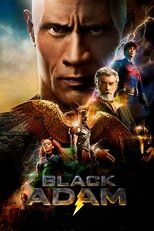
Black Adam roared onto the big screen in 2022 after nearly a decade of development, with Dwayne Johnson passionately championing the project as a personal vehicle. The character first appeared in the pages of The Marvel Family #1 in 1945, created by Otto Binder and C. C. Beck as a dark mirror to Captain Marvel. For years, Black Adam was simply a villain, but modern comics transformed him into a morally complex antihero — a ruthless protector of his nation who operates by his own brutal code. That complexity made him a perfect fit for Johnson, who brought both immense physical presence and surprising nuance to the role.
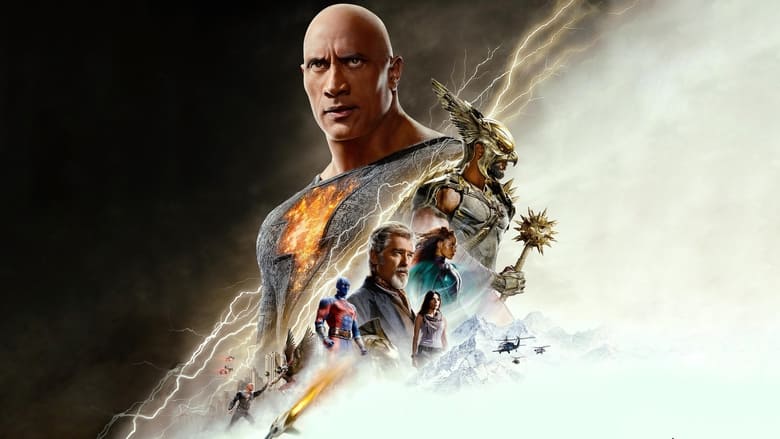
The film diverges significantly from the comics in its origin story. Instead of being an Egyptian from the time of Ramesses II, the cinematic Teth-Adam is a slave from the ancient nation of Kahndaq who gains his powers around 2600 BC. The movie introduces the Justice Society of America to the DC Extended Universe, featuring Aldis Hodge as Hawkman, Pierce Brosnan as Doctor Fate, Quintessa Swindell as Cyclone, and Noah Centineo as Atom Smasher. This marked the first live-action appearance of the JSA, one of comics' oldest superhero teams, predating even the Justice League.
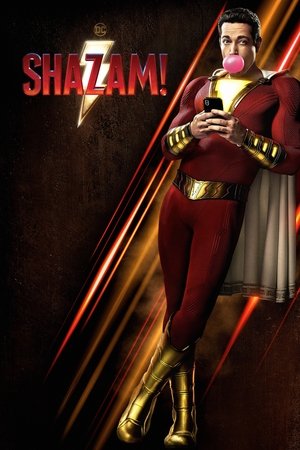
The journey to the screen was a long one. Johnson was initially attached to appear as Black Adam in Shazam! (2019), but his star power and the character's rich backstory convinced Warner Bros. to give him a standalone film instead. Director Jaume Collet-Serra, known for his lean thrillers, brought a darker, more action-oriented tone to the DCEU. The film also features a mid-credits scene that directly connects Black Adam to Superman, teasing a long-awaited confrontation that Johnson had been publicly advocating for years. Despite mixed critical reception, the film demonstrated the character's box office appeal and Johnson's drawing power as a leading man in the superhero genre.

Black Adam is a fictional supervillain and antihero appearing in American comic books published by DC Comics. He was created by writer Otto Binder and artist C. C. Beck, making his debut in The Marvel Family #1 in December 1945. Originally conceived as a one-time antagonist for Captain Marvel (now known as Shazam), the character was an ancient Egyptian named Teth-Adam who was chosen by the wizard Shazam to be his champion, only to be corrupted by the immense power and banished.
Over the decades, Black Adam evolved from a straightforward villain into one of DC's most complex and morally ambiguous characters. Modern interpretations, particularly those by writers Geoff Johns and David S. Goyer in the early 2000s, redefined him as a brutal but principled antihero willing to kill his enemies to protect his people. He became the ruler of the fictional Middle Eastern nation of Kahndaq, a role that allowed stories to explore themes of colonialism, justice, and the nature of power.
Black Adam's powers are nearly identical to those of Shazam: the stamina of Shu, the swiftness of Heru, the strength of Amon, the wisdom of Zehuti, the power of Aton, and the courage of Mehen. By speaking the magic word "Shazam," he is transformed into a superpowered being, though his willingness to use lethal force sets him apart from most traditional superheroes. He has been a member of various teams including the Justice Society of America and the Secret Society of Super Villains.
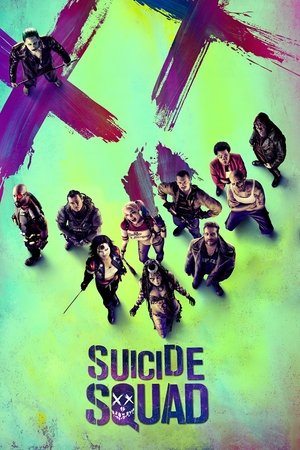
The Suicide Squad film series centers on a covert government program that recruits incarcerated supervillains for high-risk black ops missions in exchange for reduced sentences. Originating from the DC Comics team of the same name, the cinematic collection explores the morally ambiguous world of Task Force X, where expendable antiheroes are forced into deadly assignments under the threat of implanted explosives. The series is defined by its ensemble casts of deeply flawed, often mentally unstable characters who must navigate shifting alliances, personal demons, and the manipulative oversight of their handler, Amanda Waller. Themes of redemption, coercion, and the blurred line between heroism and villainy run throughout, as these outcasts are repeatedly thrust into situations where survival is never guaranteed.
The collection began with David Ayer's Suicide Squad (2016), which introduced a stylized, gritty take on the team, blending dark humor with explosive action. The narrative and tonal direction shifted significantly with James Gunn's The Suicide Squad (2021), a standalone follow-up that leaned further into irreverent comedy, ultraviolence, and heartfelt character moments, while retaining the core premise of disposable criminals on a suicide mission. This entry expanded the roster with obscure and eccentric characters, reinforcing the series' willingness to subvert expectations and kill off major figures without warning. The 2021 film also served as a launchpad for the spin-off television series Peacemaker, which follows one of the team's more jingoistic members in a continuation that deepens the universe's exploration of trauma, ideology, and unlikely redemption.
Beyond its own direct entries, the Suicide Squad concept has intersected with the broader DC film landscape, particularly through the character of Harley Quinn, who appears in Birds of Prey and other ensemble films. The series' influence is felt in its distinctive visual style, needle-drop soundtracks, and its embrace of chaotic, character-driven storytelling. While the core film series consists of two main entries, its narrative and thematic DNA extends into related media, forming a loose but recognizable collection of stories about society's rejects being weaponized for the greater good—or for the hidden agendas of those in power.
The Suicide Squad series has been noted for its tonal experimentation and its willingness to critique the very concept of state-controlled superhero teams. It has garnered a cult following for its irreverent humor, memorable antiheroes, and its ability to balance graphic violence with genuine emotional beats. As a collection, it stands apart from more traditional superhero sagas by focusing on the expendable, the damaged, and the reluctantly heroic, offering a darker, more satirical corner of the DC cinematic world.