🎬 Batman Returns (1992)
Part of Batman (1989–1997)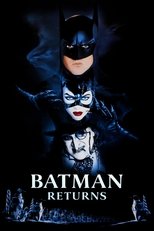
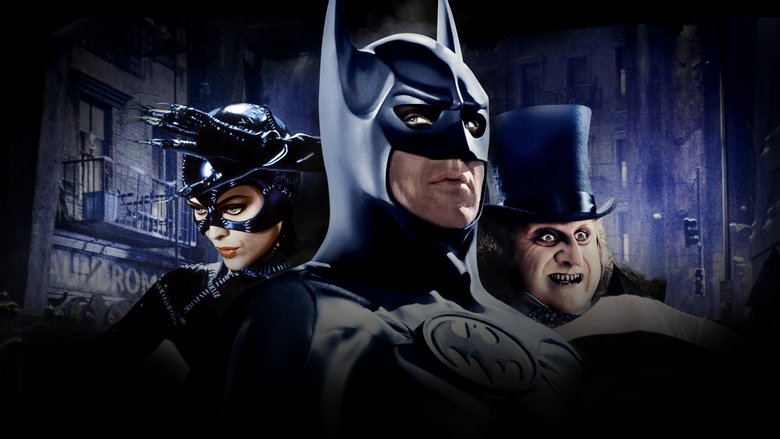
Batman Returns is the 1992 sequel to Tim Burton's 1989 blockbuster Batman, and the second installment in Warner Bros.' initial Batman film series. After the massive success of the first film, Burton was initially reluctant to return, feeling constrained by studio expectations. He agreed to direct only after being granted significantly greater creative control, which allowed him to imprint his signature gothic and macabre sensibilities even more deeply onto Gotham City. The result is a darker, stranger, and more psychologically complex film that leans heavily into the tragic and grotesque aspects of its villains.
The film draws primarily from the Batman comic book mythology created by Bob Kane and Bill Finger, which first appeared in Detective Comics #27 in 1939. While the movie is an original story not directly adapting any single comic arc, it pulls heavily from the characters' rich publishing history. The Penguin's portrayal as a deformed, sewer-dwelling outcast abandoned by his wealthy parents echoes elements from his comic origins, while Catwoman's resurrection and costumed identity as a vigilante seeking revenge draws from various interpretations of the character, particularly the darker post-Crisis on Infinite Earths era of DC Comics. The film's Christmas setting and noir-infused atmosphere also reflect the moody, expressionistic visual style that had defined the Batman comics since the 1970s.
Burton and screenwriter Daniel Waters crafted a story that functions as a twisted fairy tale, with Danny DeVito's Penguin as a tragic monster seeking acceptance and revenge, and Michelle Pfeiffer's Selina Kyle as a repressed secretary who transforms into the empowered and unhinged Catwoman after a near-death experience. Michael Keaton returns as Bruce Wayne/Batman, though the film is often noted for giving its villains more screen time and richer character arcs than the hero himself. Christopher Walken rounds out the cast as the corrupt industrialist Max Shreck, an original character created for the film who serves as the catalyst for much of the plot's conflict.
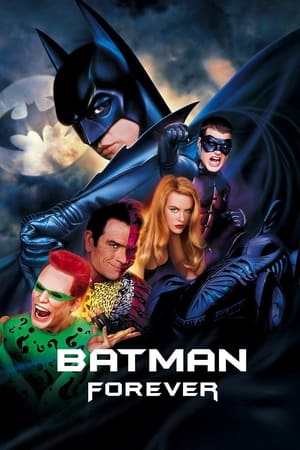
Upon release, Batman Returns was a commercial success, though it proved controversial for its dark tone and sexual undertones, leading to parental backlash and a McDonald's Happy Meal promotion being canceled. This controversy prompted Warner Bros. to pivot the franchise toward a lighter, more family-friendly direction with Joel Schumacher's Batman Forever. Despite the initial mixed reception in some circles, Batman Returns has been significantly reappraised over the years and is now widely regarded as one of the finest superhero films ever made, praised for its visual design, performances—particularly Pfeiffer's iconic Catwoman—and its willingness to embrace the psychological darkness of its source material.
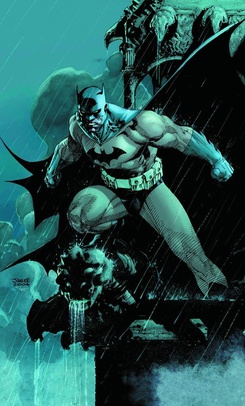
Batman is a fictional superhero created by artist Bob Kane and writer Bill Finger, first appearing in Detective Comics #27 in 1939. The character's secret identity is Bruce Wayne, a wealthy American playboy, philanthropist, and industrialist who resides in Gotham City. After witnessing the murder of his parents as a child, he swore revenge against criminals, an oath tempered by a sense of justice. Bruce Wayne trains himself physically and intellectually and crafts a bat-inspired persona to fight crime.
Unlike many superheroes, Batman possesses no superpowers; he relies on his genius intellect, physical prowess, martial arts abilities, detective skills, science and technology, vast wealth, intimidation, and indomitable will. A large ensemble cast of supporting characters includes his sidekick Robin, butler Alfred Pennyworth, and Police Commissioner James Gordon, as well as a rogues' gallery of villains including the Joker, Penguin, Harley Quinn, and Poison Ivy.
Batman quickly became one of DC Comics' most popular characters and has been adapted into numerous media, including film, television, animation, and video games. The character's dark, brooding nature and complex psychology have made him a cultural icon recognized worldwide, representing the archetype of the vigilante hero who operates outside the law to achieve justice.
The Batman film series from 1989 to 1997 represents Warner Bros.' foundational cinematic interpretation of the DC Comics character, marking a pivotal era in superhero filmmaking. Spanning four films, the series chronicles a dramatic tonal evolution, beginning with Tim Burton's darkly gothic vision and transitioning into Joel Schumacher's more flamboyant, camp-infused aesthetic. This collection not only redefined the caped crusader for a new generation but also demonstrated the immense commercial viability of comic book adaptations, setting the stage for the genre's future dominance. The series is unified by its exploration of duality, trauma, and the grotesque, though each installment interprets these themes through a distinctly different stylistic lens, from German Expressionist shadows to neon-lit excess. As a complete narrative arc, it traces Batman's journey from a solitary, vengeful figure to a more collaborative hero within a family of allies, before ultimately succumbing to the very campiness its first entry had so decisively rejected. The series' legacy is one of bold artistic swings and cautionary corporate pivots, leaving behind iconic character portrayals that continue to influence the Batman mythos.