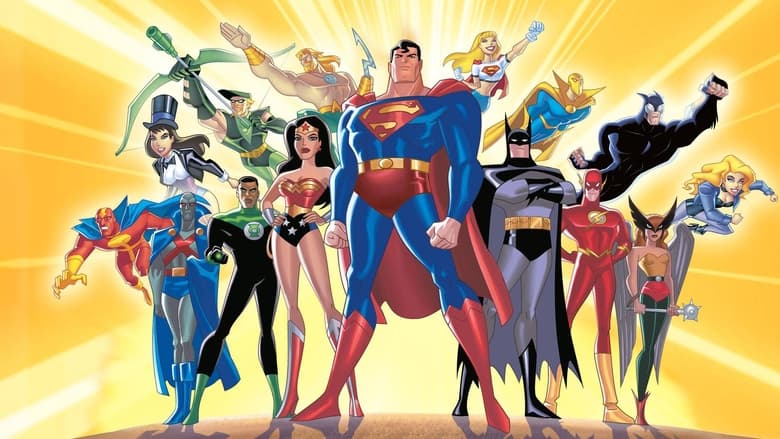
📺 Justice League Unlimited (2004)
Part of Bruce Timm's DC Animated Universe
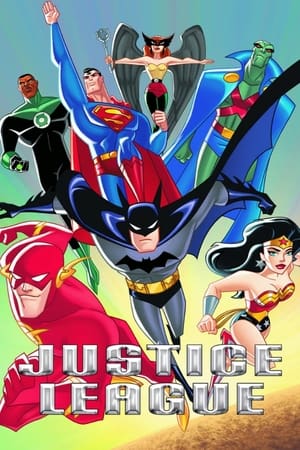
Justice League Unlimited wasn't just a continuation; it was a radical and brilliant expansion of the DC Animated Universe's core premise. Where its predecessor, Justice League, focused tightly on the iconic 'Big Seven' heroes, Unlimited threw open the doors to the entire DC pantheon. This shift, mandated by Cartoon Network's request for a rebranded show, saw the founding members like Superman, Batman, and Wonder Woman now acting as the anchor for a sprawling organization with over fifty heroes in the first episode alone. The storytelling evolved to match, moving from multi-part epics to a more flexible half-hour format that allowed for deep-dive spotlights on obscure characters like Green Arrow, The Question, and Booster Gold, often weaving their personal arcs into a larger, season-long conspiracy narrative.
The series masterfully adapted the source material's core theme of unity against overwhelming threats, but scaled it to a cosmic level. The central conflict with Project Cadmus and the government's fear of an unchecked metahuman army brought a layer of political paranoia rarely seen in superhero animation, directly questioning the balance between power and morality that the comics had explored for decades. This culminated in a season-long arc that pitted the League against a conspiracy led by Amanda Waller, forcing the heroes to confront the terrifying potential of their own power. It was a sophisticated adaptation that trusted its audience, both young and old, to grapple with complex ideas about security, freedom, and the very definition of heroism.
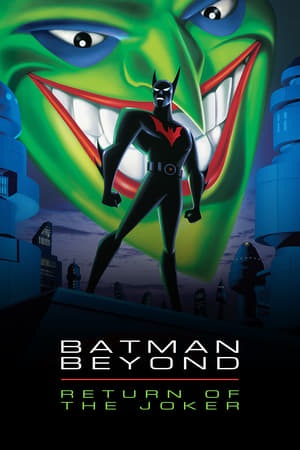
As the final chapter of the DC Animated Universe that began with Batman: The Animated Series, Justice League Unlimited served as a deeply rewarding conclusion. It was the most continuity-heavy show of the entire saga, bringing back characters and resolving plot threads from Superman: The Animated Series, Batman Beyond, and the original Justice League. The series finale, 'Destroyer,' provided a grand, operatic send-off, uniting virtually every hero introduced across the DCAU's history for a final, world-saving charge against Darkseid's forces. This wasn't just an adaptation of a comic book team; it was the culmination of a shared universe, a victory lap that celebrated the entire legacy of its animated world while delivering some of the most emotionally resonant and action-packed storytelling in the genre's history.

The Justice League is a legendary superhero team in DC Comics, first appearing in The Brave and the Bold #28 in 1960, created by writer Gardner Fox and artist Mike Sekowsky. The team unites DC's most iconic heroes—Superman, Batman, Wonder Woman, the Flash, Green Lantern, Aquaman, and Martian Manhunter—to combat threats too powerful for any single hero. Inspired by the Justice Society of America from the 1940s, it marked a new era of team-up adventures during the Silver Age of Comics, emphasizing unity, heroism, and epic battles against villains like Starro the Conqueror and the Injustice Gang.
Over decades, the Justice League evolved through various lineups, story arcs, and creative teams, exploring themes of leadership, sacrifice, and the balance between power and morality. Key runs include the 1980s era by Keith Giffen and J.M. DeMatteis, which added humor and ensemble dynamics, and Grant Morrison's 2000s JLA, which restored the core roster and tackled cosmic-scale crises. The team's cultural impact is immense, spawning countless spin-offs, influencing pop culture, and symbolizing the ultimate alliance of good against evil.
The DC Animated Universe is a shared continuity of animated television series and films based on characters from DC Comics. It was launched in the early 1990s under the creative guidance of producer and artist Bruce Timm, whose distinctive visual style and storytelling approach set a new standard for superhero animation. The series within this universe are noted for their mature themes, complex character development, and serialized storytelling, often blending noir aesthetics with modern action.
From its inception, the universe redefined the animated adaptation of comic book heroes, introducing a generation to darker, more psychologically rich narratives. The interconnected stories allowed characters to grow and relationships to evolve across multiple shows, creating an expansive and cohesive fictional world. Recurring voice actors and a consistent artistic vision further unified the projects, lending a sense of continuity rarely seen in television animation at the time.
The universe became known for addressing social issues, moral ambiguity, and the human cost of heroism, elevating the material beyond simple children's entertainment. It earned critical acclaim and a dedicated fanbase that followed the continuity from its first series to its later, more epic ensemble stories. Its influence extended beyond television, impacting subsequent DC animated films, video games, and even live-action portrayals of the characters.
The legacy of this shared universe is enduring; it is often hailed as one of the finest achievements in superhero animation. Its approach to serialized, character-driven storytelling laid the groundwork for many animated projects that followed, and its versions of iconic heroes remain definitive for many fans.