📺 Star Trek: Voyager (1995)
Part of Star Trek: Original Timeline
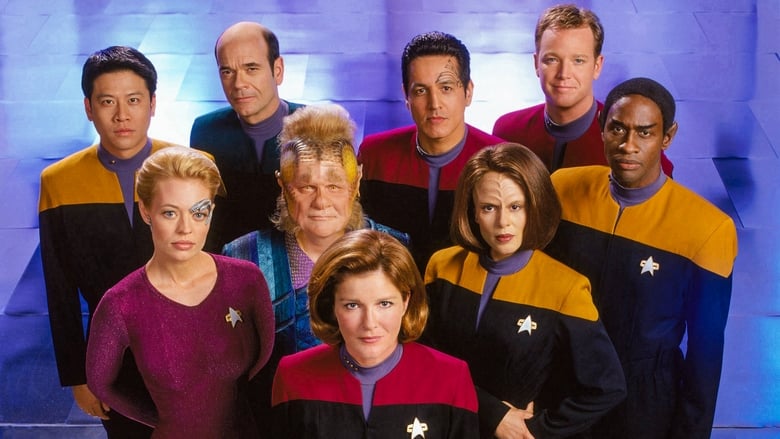
Star Trek: Voyager marked a bold new direction for the venerable science fiction franchise when it premiered in 1995 as the flagship series for the fledgling United Paramount Network (UPN). Created by Rick Berman, Michael Piller, and Jeri Taylor, the series broke new ground by placing Captain Kathryn Janeway, the franchise's first female commanding officer to lead a series, at the helm. The premise stranded the USS Voyager and its crew 70,000 light-years from home in the uncharted Delta Quadrant, blending the exploratory spirit of classic Star Trek with a desperate, ongoing struggle for survival and a long journey home.
The series was commissioned in the wake of Star Trek: The Next Generation's conclusion and was designed to run concurrently with Star Trek: Deep Space Nine. It inherited complex narrative threads from both predecessors, most notably the tense conflict between Starfleet and the Maquis, a group of Federation colonists turned rebels. This tension was baked directly into Voyager's premise, as the ship's crew was forced to integrate with a Maquis vessel also stranded in the Delta Quadrant, creating a unique internal dynamic of mistrust and eventual unity under Janeway's command.
Over seven seasons and 172 episodes, Voyager introduced memorable new alien species like the Borg-battling Species 8472 and the Hirogen hunters, while also bringing back the Borg themselves as a persistent and terrifying threat, culminating in the introduction of the iconic former drone, Seven of Nine. The show was known for its high-concept sci-fi plots, from temporal paradoxes to encounters with the macabre, organ-harvesting Vidiians. Though it faced criticism from some fans for occasionally resetting the ship's damage and supply shortages, it was praised for its strong character development, particularly the Doctor's quest for personhood and Tom Paris's redemption arc.
Voyager ultimately succeeded in its mission, returning to Earth in a finale that saw a future version of Janeway break temporal rules to bring her crew home sooner. The series remains a beloved chapter in the Star Trek saga, notable for proving a female captain could anchor a successful science fiction series and for its optimistic, persistent theme that even when lost, a diverse crew could become a family and find their way back together.
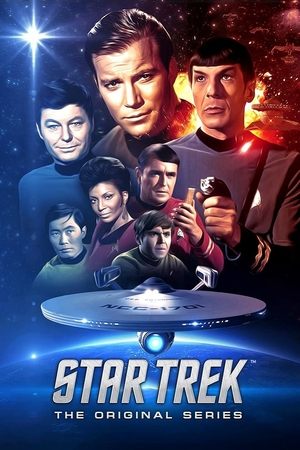
Star Trek is a monumental science fiction collection that began in 1966 with the original television series, envisioning a hopeful future where humanity has overcome its internal divisions to explore the galaxy. The central premise follows the voyages of starships from the United Federation of Planets, an interstellar alliance dedicated to peaceful exploration, diplomacy, and scientific discovery. The collection is renowned for its philosophical storytelling, often using alien encounters and futuristic scenarios as allegories for contemporary social and political issues. At its core, Star Trek is defined by an optimistic vision of the future, emphasizing diversity, cooperation, and the pursuit of knowledge. The iconic Prime Directive, a guiding principle of non-interference in the development of alien civilizations, serves as a recurring ethical touchstone. The original series broke new ground in television history by featuring one of the first multiracial and multicultural casts, including a Black female officer in a prominent role during an era of significant social change.
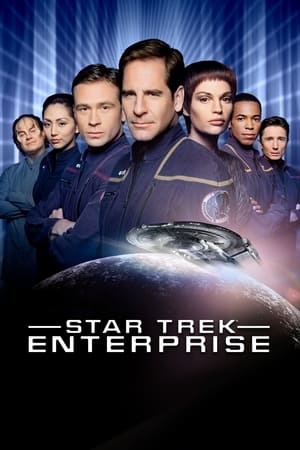
The universe of Star Trek expanded significantly over the decades, introducing new crews, starships, and eras while maintaining a shared continuity. The original timeline, encompassing the original series, its animated continuation, and the first ten films, chronicles the adventures of Captain Kirk and his crew, followed by the transition to Captain Picard and the Next Generation era. This timeline also includes later series such as Deep Space Nine, Voyager, and Enterprise, which explored darker themes, distant quadrants, and prequel narratives. The collection has explored themes ranging from the nature of consciousness and identity to the moral complexities of war and leadership. Its dedicated fanbase, often credited with pioneering modern fan culture, successfully campaigned to keep the collection alive, leading to a long-running film series and numerous television spin-offs.
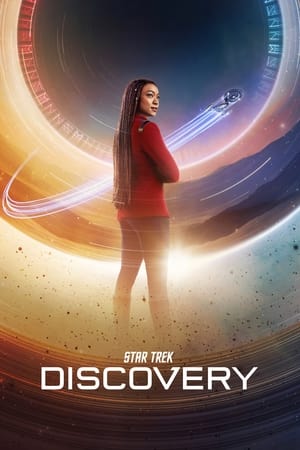
In the 21st century, the collection was revitalized with new series on streaming platforms, including Discovery, Picard, Strange New Worlds, and animated entries like Lower Decks and Prodigy. These additions have expanded the timeline further, delving into previously unexplored eras and character arcs, while maintaining the core ethos of exploration and ethical inquiry. The collection's enduring appeal lies in its ability to adapt to contemporary sensibilities while staying true to its foundational ideals. With a legacy spanning more than half a century, Star Trek has become a cornerstone of popular culture, influencing real-world science, technology, and a vision for a more inclusive society. Its impact extends beyond entertainment, inspiring generations of scientists, engineers, and explorers with the idea that humanity's greatest adventures lie in the stars.