📺 Star Trek (1973)
Part of Star Trek: Original Timeline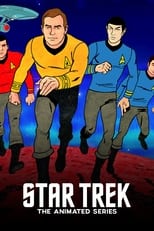
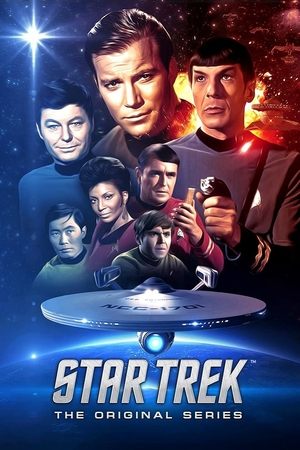
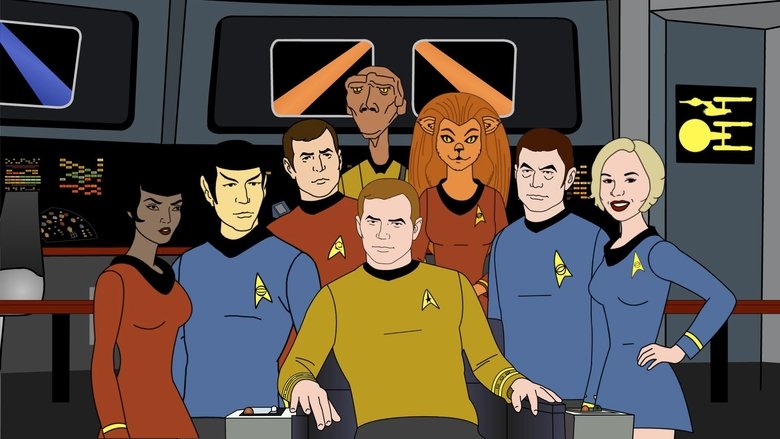
Boldly going where no Saturday morning cartoon had gone before, Star Trek (1973) brought the cancelled USS Enterprise back to life through the limitless possibilities of animation. Officially titled Star Trek: The Animated Series but airing simply as Star Trek, this Filmation production reunited nearly the entire original cast—William Shatner, Leonard Nimoy, DeForest Kelley, James Doohan, Nichelle Nichols, George Takei, and Majel Barrett—to continue their five-year mission. Only Walter Koenig was initially absent due to budget constraints, though he later contributed as a writer. The animated format liberated the series from the practical effects limitations of the 1960s, allowing for truly alien crew members like the cat-like M'Ress and the three-armed, tripedal Arex, as well as spectacular alien worlds that would have been impossible to realize in live action on a television budget.
Series writers D. C. Fontana and David Gerrold considered these 22 episodes to be effectively the fourth season of The Original Series, and the show maintained the same spirit of intelligent science fiction storytelling. The scripts tackled sophisticated themes for a children's programming slot, including time paradoxes, alien possession, and the return of iconic elements like the tribbles. Notably, the episode 'Yesteryear' delved deeply into Spock's childhood on Vulcan, becoming one of the most beloved entries in the entire franchise and establishing elements of Vulcan culture that would be referenced in later live-action series and films.
Critically acclaimed and historically significant, The Animated Series achieved what its live-action predecessor could not during its original run: it won a major award. In 1975, the second season received the Emmy Award for Outstanding Entertainment – Children's Series, making it the first Star Trek series to take home an Emmy. The show's success kept the franchise alive during a crucial period, maintaining fan enthusiasm and proving the property's viability, which ultimately paved the way for the planned Star Trek: Phase II television series and, when that project was retooled, the 1979 theatrical blockbuster Star Trek: The Motion Picture.
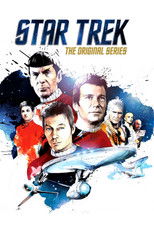
Star Trek is a monumental science fiction collection that began in 1966 with the original television series, envisioning a hopeful future where humanity has overcome its internal divisions to explore the galaxy. The central premise follows the voyages of starships from the United Federation of Planets, an interstellar alliance dedicated to peaceful exploration, diplomacy, and scientific discovery. The collection is renowned for its philosophical storytelling, often using alien encounters and futuristic scenarios as allegories for contemporary social and political issues. At its core, Star Trek is defined by an optimistic vision of the future, emphasizing diversity, cooperation, and the pursuit of knowledge. The iconic Prime Directive, a guiding principle of non-interference in the development of alien civilizations, serves as a recurring ethical touchstone. The original series broke new ground in television history by featuring one of the first multiracial and multicultural casts, including a Black female officer in a prominent role during an era of significant social change.
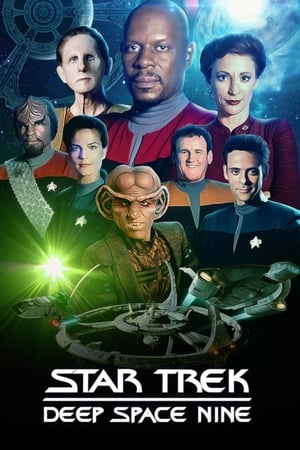
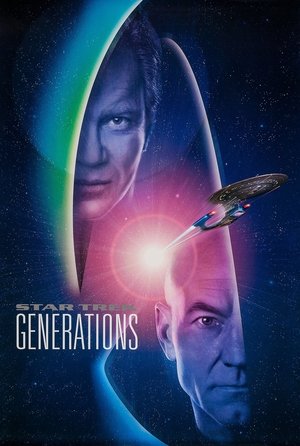
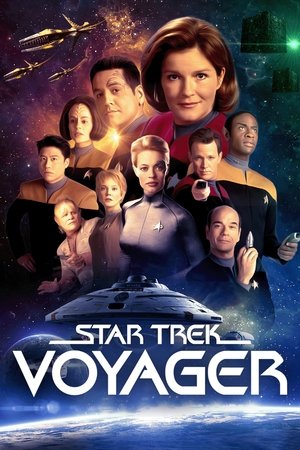
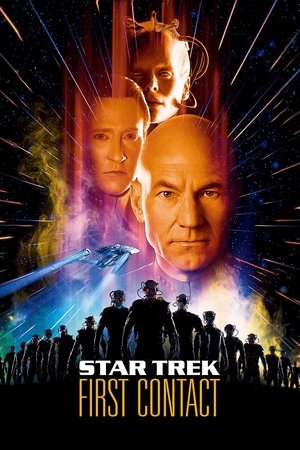
The universe of Star Trek expanded significantly over the decades, introducing new crews, starships, and eras while maintaining a shared continuity. The original timeline, encompassing the original series, its animated continuation, and the first ten films, chronicles the adventures of Captain Kirk and his crew, followed by the transition to Captain Picard and the Next Generation era. This timeline also includes later series such as Deep Space Nine, Voyager, and Enterprise, which explored darker themes, distant quadrants, and prequel narratives. The collection has explored themes ranging from the nature of consciousness and identity to the moral complexities of war and leadership. Its dedicated fanbase, often credited with pioneering modern fan culture, successfully campaigned to keep the collection alive, leading to a long-running film series and numerous television spin-offs.
In the 21st century, the collection was revitalized with new series on streaming platforms, including Discovery, Picard, Strange New Worlds, and animated entries like Lower Decks and Prodigy. These additions have expanded the timeline further, delving into previously unexplored eras and character arcs, while maintaining the core ethos of exploration and ethical inquiry. The collection's enduring appeal lies in its ability to adapt to contemporary sensibilities while staying true to its foundational ideals. With a legacy spanning more than half a century, Star Trek has become a cornerstone of popular culture, influencing real-world science, technology, and a vision for a more inclusive society. Its impact extends beyond entertainment, inspiring generations of scientists, engineers, and explorers with the idea that humanity's greatest adventures lie in the stars.