🎬 Lupin the Third: The Legend of the Gold of Babylon (1985)
Part of Lupin the Third
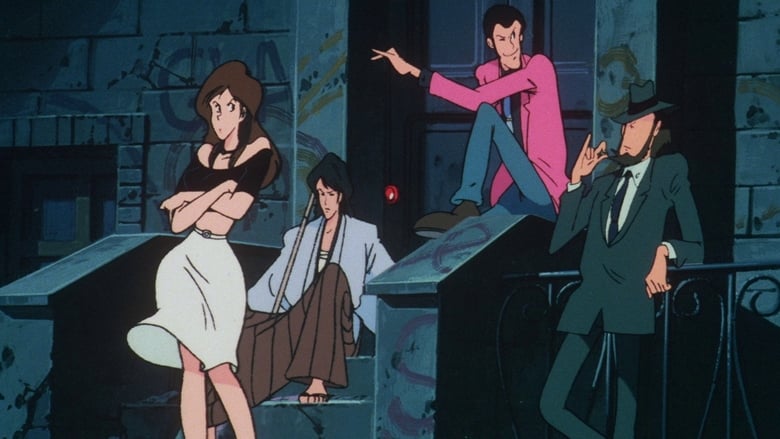
The third theatrical outing for Monkey Punch's gentleman thief, "Lupin III: The Legend of the Gold of Babylon," stands as one of the franchise's most eccentric and divisive entries, largely due to the singular vision of its co-director, Seijun Suzuki. Known for his surreal, pop-art yakuza films that got him blacklisted from Nikkatsu, Suzuki was a wildly unconventional choice to helm a Lupin adventure. His influence is immediately apparent: the film is a hallucinatory fever dream that swaps the usual tight heist plotting for a cascade of bizarre imagery, non-sequitur gags, and a plot that often feels secondary to pure stylistic indulgence. The story sends Lupin and his gang from the streets of New York to the ancient secrets of Babylon, pursued by the mafioso Marciano and a trio of elderly, gun-toting hitwomen, but the narrative frequently detours into extended, almost silent-comedy chase sequences and musical numbers.
The film makes a notable departure from the source material's tone and characterizations. While Monkey Punch's original manga was adult-oriented with a gritty, sharp-edged humor, "The Legend of the Gold of Babylon" leans hard into absurdist, cartoonish slapstick. Lupin himself is drawn with a softer, rounder character design than his more angular manga counterpart, and the film introduces a bizarre romantic subplot with Rosetta, a drunken elderly woman who claims to be a former lover and provides cryptic clues about the treasure. This is a far cry from the suave, womanizing Lupin of the manga, placing him in a strangely chaste and almost maternal dynamic. Fujiko Mine, typically a cunning femme fatale, spends much of the film sidelined or used as a pawn, lacking the agency and dangerous allure that defines her in the original comics.
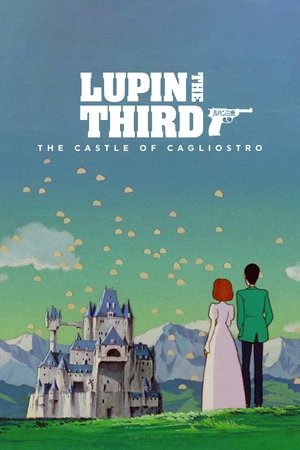
Upon its release in 1985, the film was met with confusion and disappointment from fans and critics who were expecting something closer to Hayao Miyazaki's beloved "The Castle of Cagliostro." Its chaotic structure, heavy use of then-novel CGI for certain vehicle sequences, and Suzuki's avant-garde sensibilities alienated audiences looking for a straightforward caper. For decades, it was considered a black sheep of the franchise, difficult to find outside of Japan. However, modern reappraisal has been kinder, with many now celebrating it as a fascinating, wildly creative auteur piece that captures the anything-goes spirit of anime's bubble-era excess. Its eventual North American release by Discotek Media in 2018, complete with a new English dub, allowed a new generation to experience this strange, jazz-soaked artifact on its own terms.
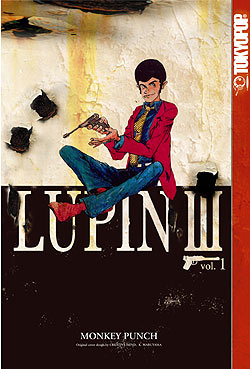
Lupin III is a Japanese manga series written and illustrated by Monkey Punch. It was serialized in Futabasha's Weekly Manga Action magazine from August 10, 1967, to May 22, 1969, with additional chapters appearing sporadically until 1972. The series follows the adventures of Arsène Lupin III, the grandson of Maurice Leblanc's gentleman thief Arsène Lupin, as he travels the globe pulling off elaborate heists alongside his partners: the crack-shot Daisuke Jigen and the stoic swordsman Goemon Ishikawa XIII. They are frequently pursued by the dogged Inspector Koichi Zenigata of Interpol, and Lupin's schemes are often complicated by his love-hate relationship with the alluring femme fatale Fujiko Mine.
The manga is known for its blend of action, comedy, and noir-inspired storytelling, with a distinctly adult tone that set it apart from many of its contemporaries. Monkey Punch's dynamic, cartoonish art style and the series' irreverent humor helped establish Lupin III as a cornerstone of Japanese pop culture. The 129 original chapters were collected into 14 tankōbon volumes, and the series has since spawned numerous sequel manga, spin-offs, and one-shots by various creators.
Lupin III's cultural significance is immense, having launched one of the most enduring and beloved media franchises in Japan. Its influence extends across generations, inspiring a long-running anime series, annual television specials, theatrical films, video games, and even a musical. The character of Lupin III has become an iconic figure, representing a rakish, anti-hero archetype that continues to resonate with audiences worldwide.
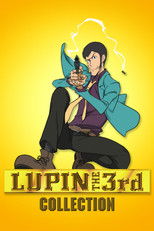
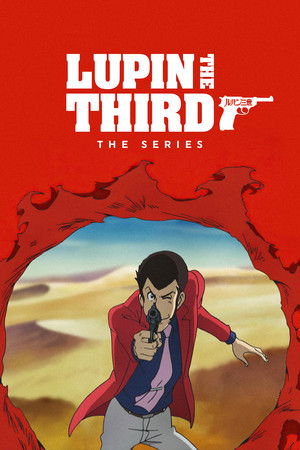
Lupin the Third is a long-running Japanese media collection centered on the exploits of Arsène Lupin III, the grandson of Maurice Leblanc's gentleman thief. Created by the artist Monkey Punch in 1967 as a manga series, the property quickly evolved into a genre-defying institution spanning television anime, theatrical films, television specials, OVAs, and video games. The core appeal lies in the chemistry of its central ensemble: the irrepressible and endlessly inventive Lupin, the sharp-shooting Daisuke Jigen, the stoic swordsman Goemon Ishikawa XIII, the alluring and treacherous Fujiko Mine, and the dogged Inspector Zenigata, whose pursuit of Lupin is as much a personal obsession as a professional duty. Together, they form a dynamic that has allowed the series to explore a vast spectrum of tones, from slapstick comedy and lighthearted caper to hard-boiled noir and psychological drama.
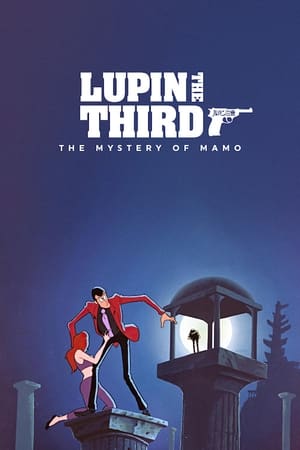
The collection's remarkable adaptability is a key to its longevity. Hayao Miyazaki's 1979 film *The Castle of Cagliostro* presented a softer, more chivalrous version of the character, influencing animated adventure storytelling worldwide. In contrast, the 1978 film *The Mystery of Mamo* delved into psychedelic paranoia and existential themes. This narrative flexibility has been sustained across decades of annual television specials, which began in 1989 and continue to this day, offering self-contained adventures that place the characters in a variety of global settings and high-stakes scenarios. The television series itself has undergone several reinventions, with each new part—from the iconic red jacket of the second series to the more recent adventures set in Italy and France—reintroducing the gentleman thief to a new generation while maintaining the core spirit of the original manga.
The cultural significance of Lupin the Third extends beyond its home country, establishing it as a globally recognized ambassador for stylish, jazz-scored escapism. The collection has consistently balanced a sense of timeless cool with creative reinvention, allowing it to remain relevant for over half a century. In the 21st century, the property has expanded into darker, more adult-oriented territory with the *Lupin the IIIrd* film series, which pushes its animation and psychological depth to new extremes, while simultaneously delighting audiences with lighter, self-contained television specials. Across its many iterations, the collection remains a testament to the enduring appeal of a perfect character dynamic and the thrill of the chase, proving that the greatest treasure is often the adventure itself.