🎬 Lupin the 3rd (2014)
Based on manga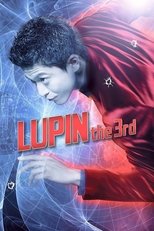
Ryuhei Kitamura’s 2014 live-action feature "Lupin the 3rd" represents a bold, if divisive, attempt to reimagine Monkey Punch’s iconic manga for a modern, international audience. Functioning as an origin story, the film departs significantly from the episodic capers of the source material by assembling the classic crew—Lupin, Jigen, Goemon, and Fujiko—through a single, high-stakes heist involving the Crimson Heart of Cleopatra. This narrative choice modernizes the characters, placing them within a global thieves' guild called "The Works" and pitting them against a rival named Michael Lee, a structure entirely foreign to the original 1967 manga. The film’s most striking deviation is its linguistic approach; the cast, including Shun Oguri as Lupin, delivers the majority of their dialogue in English, a creative gamble intended to broaden its appeal but one that became a major point of contention for audiences accustomed to the franchise's distinctly Japanese flavor.
Visually, Kitamura’s adaptation captures the stylish, kinetic energy that defines the franchise, translating the exaggerated action of the anime into slick live-action choreography. However, the film largely eschews the manga’s darker, more cynical tone and its adult-oriented edge, opting instead for a more accessible, blockbuster-style adventure. The characterizations are streamlined for a contemporary setting; Lupin is portrayed as a younger, more rebellious figure finding his footing, while the enigmatic Fujiko Mine, played by Meisa Kuroki, is woven into the plot through her own machinations within the guild. The film pays homage to the source material through visual nods and character beats, but its heart is in creating a new, interconnected mythology rather than a direct translation of Monkey Punch’s often fragmented and fourth-wall-breaking original stories.
Upon its release, "Lupin the 3rd" achieved financial success but was met with mixed to negative reviews, with criticism frequently leveled at its convoluted plot and the perceived awkwardness of its predominantly English-language performances. For many fans, the film struggled to balance its identity as a Lupin III story with its aspirations as an international heist thriller. Despite this, it stands as a fascinating artifact within the franchise’s long history—a second live-action attempt that, unlike the surreal 1974 film "Strange Psychokinetic Strategy," aimed for a sleek, modern blockbuster feel. It remains a testament to the enduring adaptability of Monkey Punch’s characters, even when the execution polarizes the very fanbase it seeks to entertain.
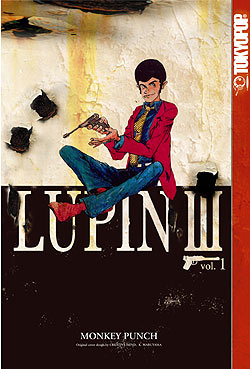
Lupin III is a Japanese manga series written and illustrated by Monkey Punch. It was serialized in Futabasha's Weekly Manga Action magazine from August 10, 1967, to May 22, 1969, with additional chapters appearing sporadically until 1972. The series follows the adventures of Arsène Lupin III, the grandson of Maurice Leblanc's gentleman thief Arsène Lupin, as he travels the globe pulling off elaborate heists alongside his partners: the crack-shot Daisuke Jigen and the stoic swordsman Goemon Ishikawa XIII. They are frequently pursued by the dogged Inspector Koichi Zenigata of Interpol, and Lupin's schemes are often complicated by his love-hate relationship with the alluring femme fatale Fujiko Mine.
The manga is known for its blend of action, comedy, and noir-inspired storytelling, with a distinctly adult tone that set it apart from many of its contemporaries. Monkey Punch's dynamic, cartoonish art style and the series' irreverent humor helped establish Lupin III as a cornerstone of Japanese pop culture. The 129 original chapters were collected into 14 tankōbon volumes, and the series has since spawned numerous sequel manga, spin-offs, and one-shots by various creators.
Lupin III's cultural significance is immense, having launched one of the most enduring and beloved media franchises in Japan. Its influence extends across generations, inspiring a long-running anime series, annual television specials, theatrical films, video games, and even a musical. The character of Lupin III has become an iconic figure, representing a rakish, anti-hero archetype that continues to resonate with audiences worldwide.