🎬 Crayon Shin-chan: Fast Asleep! The Great Assault on Dreamy World! (2016)
Part of Crayon Shin-chan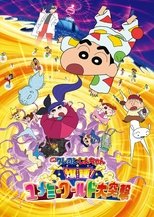
The 24th installment in the long-running Crayon Shin-chan film series, Fast Asleep! The Great Assault on Dreamy World! takes the Nohara family out of their familiar Kasukabe setting and plunges them into the surreal, limitless landscape of their own subconscious. Directed by Wataru Takahashi, who previously helmed the robot-dad adventure Serious Battle! Robot Dad Strikes Back, this entry distinguishes itself with a script co-written by the popular Japanese comedian Hitori Gekidan. This collaboration infuses the film with a distinct, offbeat comedic sensibility that complements the franchise's signature crude humor while exploring a more psychologically fantastical premise than many of its predecessors.
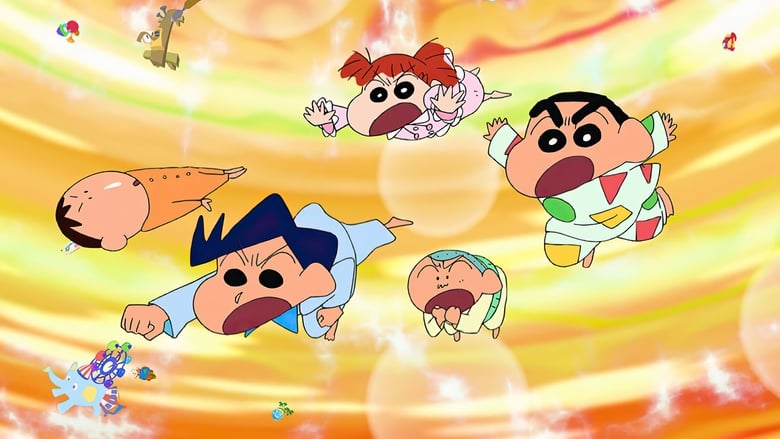
The story kicks off when a mysterious giant fish begins devouring the dreams of the citizens of Kasukabe, including the Noharas. The family soon finds themselves transported to a dream world where they can control their surroundings through imagination. This high-concept setup allows the film to adapt the source material's core themes—family bonds and childhood imagination—in a visually inventive way. Shin-chan's famously unfiltered id becomes a literal superpower, as his ability to conjure absurd imagery, from giant robots to his beloved Action Mask, is key to battling the film's antagonists. The movie cleverly uses the dreamscape to externalize each family member's inner desires and anxieties, giving characters like Hiroshi and Misae more emotional depth than the typical gag-driven TV episodes.
While the manga by Yoshito Usui is grounded in the mundane hilarity of suburban life, this film fully embraces the franchise's cinematic tradition of escalating stakes into the realm of sci-fi and fantasy. The adaptation is notable for how it balances its original, dream-based mythology with the established character dynamics. The humor remains quintessentially Shin-chan, loaded with butt jokes and blunt observations, but it is layered with a genuine, heartfelt message about the importance of dreams—both literal and aspirational—in holding a family together. The film was well-received for its imaginative visuals and the successful integration of Gekidan's comedic voice, standing out as a vibrant and emotionally resonant chapter in the series' expansive filmography.

Crayon Shin-chan is a Japanese manga series written and illustrated by Yoshito Usui. It was first serialized in 1990 in the magazine Weekly Manga Action, published by Futabasha. The series follows the daily life and misadventures of Shinnosuke "Shin-chan" Nohara, a mischievous, often inappropriate five-year-old boy living in Kasukabe, Saitama Prefecture, with his family. The humor derives largely from Shin-chan's bizarre observations, linguistic misunderstandings, and his knack for embarrassing his parents in public.
Following the tragic death of Yoshito Usui in 2009, the original manga concluded. However, the franchise proved so popular that a continuation, titled New Crayon Shin-chan, began publication in 2010, created by Usui's former assistants. The manga's unique blend of crude humor, social satire, and genuine family warmth resonated deeply with readers, making it one of the best-selling manga series of all time, with over 148 million copies in circulation.
The manga spawned a massive media franchise, most notably a long-running anime television series that began airing in 1992 and continues to this day. The franchise also includes a highly successful series of annual animated feature films, video games, and a vast array of merchandise. Crayon Shin-chan has become a cultural icon in Japan and has achieved significant international popularity, dubbed into dozens of languages worldwide.
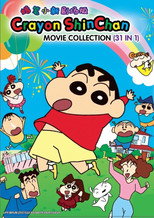
Few animated series have captured the chaotic, unfiltered energy of childhood quite like *Crayon Shin-chan*. Born from the mischievous pen of Yoshito Usui in 1990, the series centers on Shinnosuke "Shin" Nohara, a gleefully inappropriate five-year-old whose antics constantly upend the quiet suburb of Kasukabe. With his signature cheeky grin, bizarre improvised dance, and a knack for mortifying his parents, Shin became an instant cultural phenomenon, transforming everyday family life into a canvas for sharp social satire and unbridled slapstick. The franchise’s genius lies in its dual identity: on the surface a crude, laugh-out-loud comedy for children, yet layered with a wry, often nostalgic commentary on Japanese middle-class life that resonates deeply with adults.
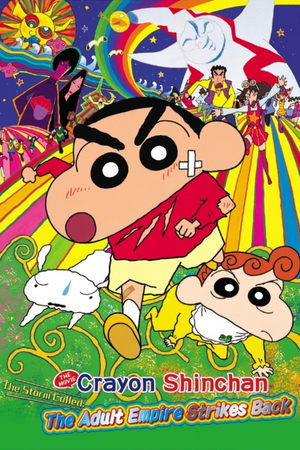
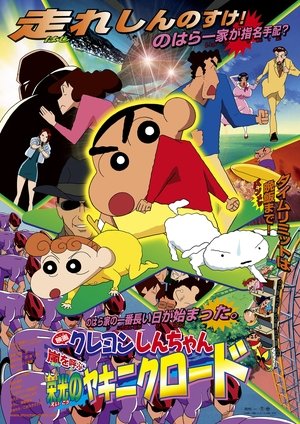
The manga’s staggering success—selling over 148 million copies—swiftly translated into a sprawling multimedia empire anchored by a continuously running television series since 1992 and a beloved tradition of annual feature films. These theatrical adventures often catapult the Nohara family out of their domestic mishaps and into high-stakes genre playgrounds, pitting them against everything from supernatural forces and sci-fi dystopias to historical samurai. Landmark films like *The Adult Empire Strikes Back* elevated the series to critical acclaim, weaving bittersweet reflections on nostalgia into a child’s adventure, while others like *The Glorious Storm-invoking Yakiniku Road* showcase the franchise’s unique ability to build entire sagas around absurd, mundane cravings. This cinematic legacy has cemented the films as a vital, inventive counterpart to the weekly sitcom format.
Tragically interrupted by Usui’s passing in 2009, the franchise demonstrated remarkable resilience, continuing as *New Crayon Shin-chan* under his former assistants and maintaining its status as a cultural institution. The series has never lost its fearless edge, effortlessly bouncing between toilet humor and surprisingly tender moments of familial love, all while Shin’s voice remains a generational constant in Japanese pop culture. With over 30 films, countless video game adaptations, and spin-offs, *Crayon Shin-chan* endures as a uniquely unvarnished portrait of modern life, proving that the ungovernable id of a five-year-old can be both a devastatingly funny mirror to society and a timeless engine for storytelling.