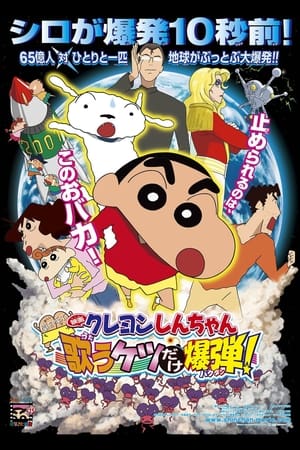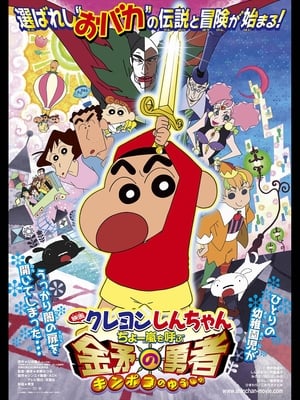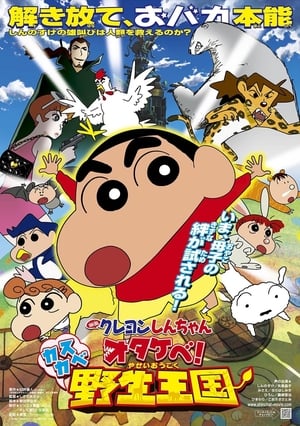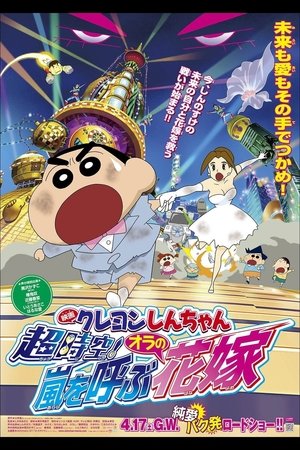
🎬 Crayon Shin-chan: Explosion! The Hot Spring's Feel Good Final Battle (1999)
Part of Crayon Shin-chan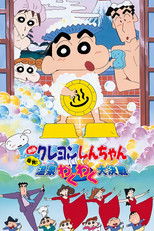
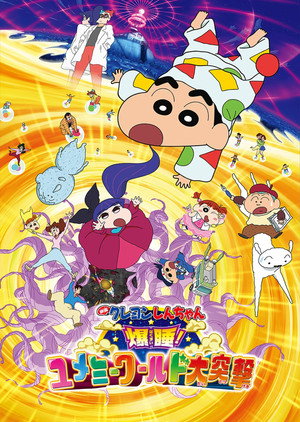
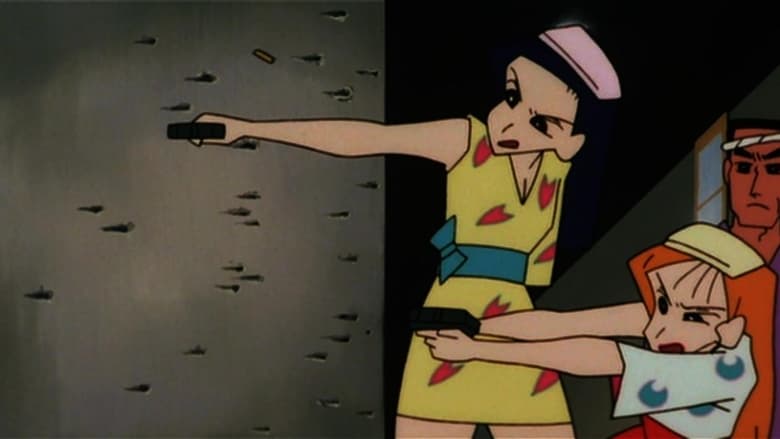
Released in 1999 as the seventh installment in the long-running anime film series, "Crayon Shin-chan: Explosion! The Hot Spring's Feel Good Final Battle" takes the Nohara family out of their usual suburban hijinks and plunges them into a nationwide conspiracy. The film cleverly adapts the manga's signature blend of lowbrow comedy and sharp social satire by targeting a quintessential pillar of Japanese culture: the public bath. When a shadowy organization called Yazuko threatens to destroy all the hot springs in Japan, it falls to the unlikeliest of heroes—a five-year-old boy obsessed with his rear end—to save the day. The film elevates the source material's crude humor into a full-blown action-comedy, complete with secret agents, ancient deities, and a mystical "Golden Shower Spring" that is as absurdly named as it is crucial to the plot.
The movie is notable for how it balances its ridiculous premise with genuine stakes. While the manga often focuses on slice-of-life vignettes, this adaptation constructs a cohesive, high-stakes narrative that still makes room for Shin-chan's trademark antics. The family dynamic is front and center, with Hiroshi and Misae getting pulled into the action alongside their son, a structure that would become a beloved formula for the film series. The introduction of Sukunabikona, a god presiding over the legendary spring, adds a layer of fantastical Japanese mythology to the story, grounding the film's more outlandish elements in a recognizable cultural framework. This fusion of the everyday and the extraordinary is a hallmark of the franchise's theatrical outings, and "Explosion!" executes it with a confident, self-aware charm.
Critically, the film was well-received as part of the golden era of Crayon Shin-chan movies, a period when the annual releases were consistently strong both creatively and at the box office. It arrived at a time when the franchise had fully established its cinematic identity, moving beyond simple extended episodes into ambitious genre parodies. "Explosion!" functions as a playful riff on disaster and spy films, filtered through the irreverent lens of Kasukabe's most infamous kindergartner. The animation quality, while typical of a late-90s anime feature, shines during the climactic battle sequences, where the hot spring's explosive power is rendered with a suitably over-the-top spectacle that matches Shin-chan's own larger-than-life personality.
Paired with the short film "Kureshin Paradise! Made in Saitama," this theatrical release is a time capsule of the franchise at its peak. It demonstrates how the adaptation process can take a gag manga's core elements—a mischievous child, a loving but exasperated family, and a penchant for toilet humor—and weave them into a story with national implications, all without losing the heart that makes the characters so enduring. For fans, it remains a standout entry that perfectly captures the feel-good, chaotic spirit implied by its title, proving that even the fate of Japan's hot springs can hinge on the whims of a boy in red shorts.

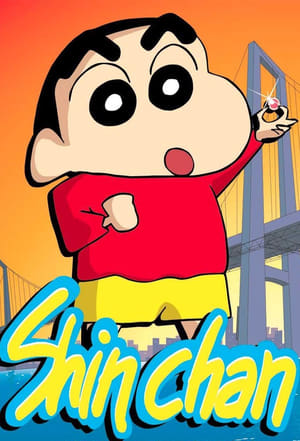
Crayon Shin-chan is a Japanese manga series written and illustrated by Yoshito Usui. It was first serialized in 1990 in the magazine Weekly Manga Action, published by Futabasha. The series follows the daily life and misadventures of Shinnosuke "Shin-chan" Nohara, a mischievous, often inappropriate five-year-old boy living in Kasukabe, Saitama Prefecture, with his family. The humor derives largely from Shin-chan's bizarre observations, linguistic misunderstandings, and his knack for embarrassing his parents in public.
Following the tragic death of Yoshito Usui in 2009, the original manga concluded. However, the franchise proved so popular that a continuation, titled New Crayon Shin-chan, began publication in 2010, created by Usui's former assistants. The manga's unique blend of crude humor, social satire, and genuine family warmth resonated deeply with readers, making it one of the best-selling manga series of all time, with over 148 million copies in circulation.
The manga spawned a massive media franchise, most notably a long-running anime television series that began airing in 1992 and continues to this day. The franchise also includes a highly successful series of annual animated feature films, video games, and a vast array of merchandise. Crayon Shin-chan has become a cultural icon in Japan and has achieved significant international popularity, dubbed into dozens of languages worldwide.
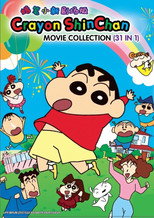
Few animated series have captured the chaotic, unfiltered energy of childhood quite like *Crayon Shin-chan*. Born from the mischievous pen of Yoshito Usui in 1990, the series centers on Shinnosuke "Shin" Nohara, a gleefully inappropriate five-year-old whose antics constantly upend the quiet suburb of Kasukabe. With his signature cheeky grin, bizarre improvised dance, and a knack for mortifying his parents, Shin became an instant cultural phenomenon, transforming everyday family life into a canvas for sharp social satire and unbridled slapstick. The franchise’s genius lies in its dual identity: on the surface a crude, laugh-out-loud comedy for children, yet layered with a wry, often nostalgic commentary on Japanese middle-class life that resonates deeply with adults.
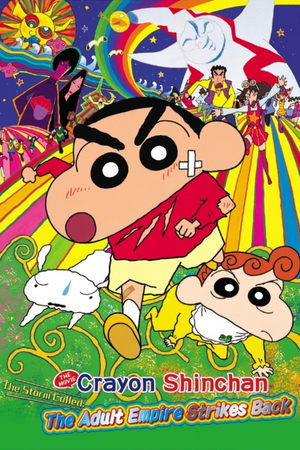
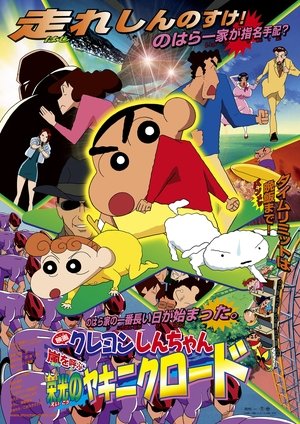
The manga’s staggering success—selling over 148 million copies—swiftly translated into a sprawling multimedia empire anchored by a continuously running television series since 1992 and a beloved tradition of annual feature films. These theatrical adventures often catapult the Nohara family out of their domestic mishaps and into high-stakes genre playgrounds, pitting them against everything from supernatural forces and sci-fi dystopias to historical samurai. Landmark films like *The Adult Empire Strikes Back* elevated the series to critical acclaim, weaving bittersweet reflections on nostalgia into a child’s adventure, while others like *The Glorious Storm-invoking Yakiniku Road* showcase the franchise’s unique ability to build entire sagas around absurd, mundane cravings. This cinematic legacy has cemented the films as a vital, inventive counterpart to the weekly sitcom format.
Tragically interrupted by Usui’s passing in 2009, the franchise demonstrated remarkable resilience, continuing as *New Crayon Shin-chan* under his former assistants and maintaining its status as a cultural institution. The series has never lost its fearless edge, effortlessly bouncing between toilet humor and surprisingly tender moments of familial love, all while Shin’s voice remains a generational constant in Japanese pop culture. With over 30 films, countless video game adaptations, and spin-offs, *Crayon Shin-chan* endures as a uniquely unvarnished portrait of modern life, proving that the ungovernable id of a five-year-old can be both a devastatingly funny mirror to society and a timeless engine for storytelling.