🎬 Fantastic Beasts: The Crimes of Grindelwald (2018)
Part of Fantastic Beasts
Fantastic Beasts: The Crimes of Grindelwald is the second installment in the Fantastic Beasts film series, a prequel-spin-off franchise within the larger Wizarding World created by J.K. Rowling. The film serves as a direct sequel to 2016's Fantastic Beasts and Where to Find Them, and the entire series draws its inspiration from Rowling's 2001 guidebook of the same name, which was written as a companion to the Harry Potter novels. While the original book is a charming, encyclopedic textbook detailing magical creatures, the film series uses its fictional author, Newt Scamander, as the protagonist in an original story penned directly for the screen by Rowling herself.
Set in 1927, the plot follows magizoologist Newt Scamander as he is enlisted by a young Albus Dumbledore to thwart the rise of the dark wizard Gellert Grindelwald. The film significantly deepens the franchise's lore, moving beyond the creature-focused adventures of the first film into a darker, more politically charged narrative that directly sets up the legendary duel between Dumbledore and Grindelwald. The production was notable for being the first Wizarding World script written entirely by Rowling without a prior novel to adapt, making the film's narrative a primary source for this era of the universe's history.
The film expanded its cast with Jude Law taking on the iconic role of Albus Dumbledore, and it controversially retained Johnny Depp as Grindelwald despite public backlash. Filming took place across Warner Bros. Studios in Leavesden, as well as on location in London, Switzerland, and Paris, bringing a grand, European scale to the wizarding world. Though it received mixed reviews from critics for its dense plotting and numerous subplots, it was praised for its visual effects, production design, and the performances of its ensemble cast, further cementing the Fantastic Beasts series as a key pillar of the franchise.

Fantastic Beasts and Where to Find Them is a guide book written by British author J. K. Rowling, published in 2001. It was written under the pseudonym Newt Scamander, the fictional author of the textbook used by Hogwarts students in the Harry Potter series. The book purports to be a facsimile of Harry Potter's own copy of the textbook, complete with handwritten notes in the margins by Harry, Ron Weasley, and Hermione Granger.
The book is an A-to-Z encyclopedia of magical creatures from the wizarding world, detailing their habitats, behaviors, and classifications by the Ministry of Magic. It includes creatures like the Niffler, Bowtruckle, and Thunderbird, many of which would later become central to the film adaptations. The book was originally published to raise money for Comic Relief, a British charity, with a portion of the proceeds going to support children in need around the world.
Though initially conceived as a slim charity volume, the book became a beloved artifact for Harry Potter fans, offering a deeper glimpse into the magical ecosystem Rowling had created. Its success and the rich world-building it contained eventually inspired Warner Bros. and Rowling to develop a new film series set decades before the events of Harry Potter, following the adventures of Newt Scamander himself.
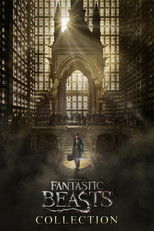
Fantastic Beasts is a British-American fantasy film series and a prequel/spin-off to the Harry Potter franchise. Created by J.K. Rowling, the series expands the Wizarding World beyond Hogwarts, following magizoologist Newt Scamander and his adventures across 1920s New York, Paris, and Berlin. The films explore the rise of the dark wizard Gellert Grindelwald and the global wizarding community's struggle against his growing power. While set decades before Harry Potter's story, the series weaves in connections to familiar characters and lore, including Albus Dumbledore's complex history. The franchise began with the 2016 film Fantastic Beasts and Where to Find Them, based on Rowling's 2001 companion book of the same name.
The Fantastic Beasts film series is a fantasy collection set within the broader Wizarding World, conceived by author J. K. Rowling as a prequel and spin-off to the Harry Potter saga. Inspired by the fictional textbook of the same name mentioned in the original novels, the series shifts the focus to magizoologist Newt Scamander and expands the magical universe to new eras and continents, primarily 1920s New York and Paris. The narrative explores the rise of the dark wizard Gellert Grindelwald and the early struggles of a young Albus Dumbledore, weaving a complex tale of political intrigue, magical creatures, and the fight against prejudice.
At its core, the series examines themes of power, identity, and the moral choices that define individuals, echoing the deeper conflicts of the Harry Potter stories while standing on its own narrative ground. It delves into the nature of obscurial magic, the tensions between the magical and non-magical worlds, and the personal costs of loyalty and betrayal. The films are characterized by lavish period production design, a menagerie of imaginative creatures, and a tone that matures alongside its central conflict.
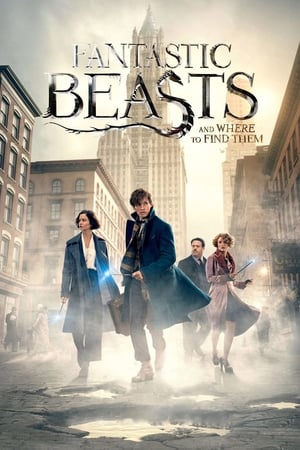
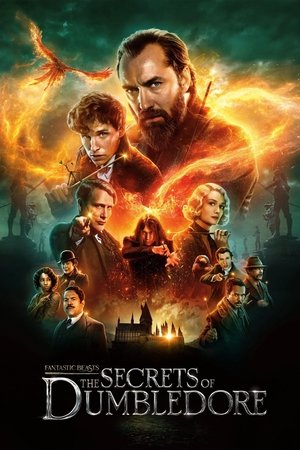
Originally planned as a five-film arc, the series evolved into a trilogy with the release of Fantastic Beasts and Where to Find Them (2016), Fantastic Beasts: The Crimes of Grindelwald (2018), and Fantastic Beasts: The Secrets of Dumbledore (2022). While the first entry was widely praised for its charm and world-building, subsequent installments received more mixed responses, though they continued to attract a dedicated fanbase and contributed significantly to the lore of the Wizarding World. The series is notable for being the first cinematic extension of Rowling’s universe not directly adapted from a novel, with screenplays written by Rowling herself.
The Fantastic Beasts collection holds a unique place in modern fantasy cinema as an ambitious attempt to deepen and globalize an already beloved mythology. It introduced a new generation of characters, including Newt, Tina and Queenie Goldstein, and Jacob Kowalski, while recontextualizing familiar figures like Dumbledore. Despite its truncated run, the series expanded the thematic and geographical scope of the Wizarding World, leaving a legacy of visual creativity and narrative ambition that continues to be explored in other media and theme park experiences.