🎬 Harry Potter and the Philosopher's Stone (2001)
Part of Harry Potter
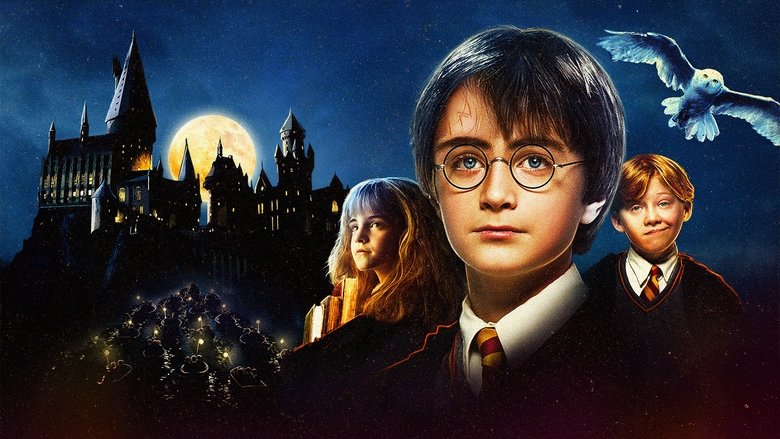
Bringing J.K. Rowling’s literary phenomenon to the screen was a task fraught with immense expectation, and Chris Columbus’s 2001 adaptation of Harry Potter and the Philosopher’s Stone met the challenge by choosing reverence over reinvention. The film is a remarkably faithful translation of the novel’s plot, hitting every major beat from the letters flooding Privet Drive to the final confrontation over the titular Stone. Screenwriter Steve Kloves streamlined the narrative by trimming some of the book’s more episodic detours—such as Hermione’s potion logic puzzle—but preserved the core emotional arc of an orphaned boy finding a home and a sense of identity at Hogwarts. Columbus’s direction bathes the wizarding world in a warm, storybook glow, emphasizing wonder and whimsy, which perfectly matched the tone of the source material’s first, most innocent instalment.
The casting process became legendary in its own right, driven by Rowling’s insistence on an all-British and Irish cast. After an exhaustive search, the then-unknown Daniel Radcliffe, Rupert Grint, and Emma Watson were chosen to embody the central trio. Their youthful, unpolished performances lent an authenticity that no seasoned child actor could have manufactured, grounding the magical spectacle in genuine emotion. The film also assembled a formidable ensemble of British acting royalty—including Maggie Smith, Alan Rickman, and Richard Harris—who brought instant gravitas to their roles. Rickman’s Snape, in particular, became an iconic figure whose layered performance was enriched by Rowling revealing to him the character’s secret backstory long before it was public knowledge.
While the adaptation was widely praised for its visual splendor—from the soaring ceilings of the Great Hall to the goblin-run vaults of Gringotts—some critics noted that its fidelity to the book left little room for a distinct cinematic voice. The film runs nearly two and a half hours, yet it often feels like a highlight reel of beloved scenes rather than a narrative with its own rhythm. Nevertheless, this approach was exactly what fans craved, and the movie’s massive box office success proved that loyalty to the source material could be a winning strategy. John Williams’s unforgettable score, particularly the "Hedwig’s Theme" leitmotif, became the definitive musical signature of the entire franchise, instantly evoking the magic of Rowling’s world.
Premiering in November 2001, the film shattered box office records and became the highest-grossing film of the year, cementing the Harry Potter series as a cinematic juggernaut. It demonstrated that a children’s fantasy adaptation could be a serious, prestige blockbuster without sacrificing its heart. More importantly, it established the visual and tonal template for the seven sequels that followed, even as later directors like Alfonso Cuarón took the series into darker, more stylized territory. For a generation of viewers, the film didn’t just adapt a beloved book—it permanently fused the faces of its young stars with the characters they portrayed, making it impossible to imagine Harry, Ron, and Hermione any other way.
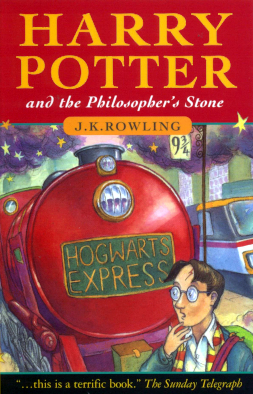
Harry Potter and the Philosopher's Stone is a fantasy novel written by British author J. K. Rowling. It was published in 1997 by Bloomsbury in the United Kingdom and later by Scholastic in the United States, where it was retitled Harry Potter and the Sorcerer's Stone. The novel follows eleven-year-old Harry Potter, who discovers on his eleventh birthday that he is a wizard and has been accepted to Hogwarts School of Witchcraft and Wizardry. At Hogwarts, he makes his first friends, including Ron Weasley and Hermione Granger, and learns that he is famous in the wizarding world for surviving an attack by the dark wizard Lord Voldemort. The story culminates in Harry's confrontation with the school's caretaker, who is revealed to be the half-blood wizard Quirrell, possessed by Voldemort and seeking the Philosopher's Stone to restore his master to full power.
The novel was initially written for Rowling's son and was rejected by several publishers before being accepted by Bloomsbury. It won numerous awards, including the British Book Award and the Whitbread Children's Book Award. The success of the book launched the Harry Potter series, which consists of seven novels and has sold over 600 million copies worldwide, becoming one of the best-selling book series in history. The story explores themes of love, friendship, courage, and the battle between good and evil, resonating with readers of all ages and spawning a massive global franchise.
The Fantastic Beasts film series is a fantasy collection set within the broader Wizarding World, conceived by author J. K. Rowling as a prequel and spin-off to the Harry Potter saga. Inspired by the fictional textbook of the same name mentioned in the original novels, the series shifts the focus to magizoologist Newt Scamander and expands the magical universe to new eras and continents, primarily 1920s New York and Paris. The narrative explores the rise of the dark wizard Gellert Grindelwald and the early struggles of a young Albus Dumbledore, weaving a complex tale of political intrigue, magical creatures, and the fight against prejudice.
At its core, the series examines themes of power, identity, and the moral choices that define individuals, echoing the deeper conflicts of the Harry Potter stories while standing on its own narrative ground. It delves into the nature of obscurial magic, the tensions between the magical and non-magical worlds, and the personal costs of loyalty and betrayal. The films are characterized by lavish period production design, a menagerie of imaginative creatures, and a tone that matures alongside its central conflict.
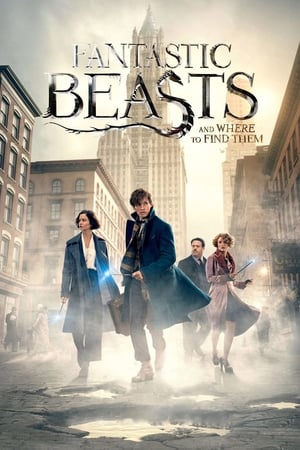
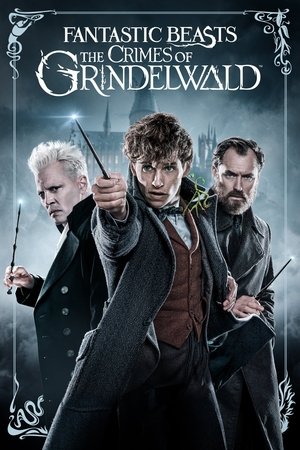
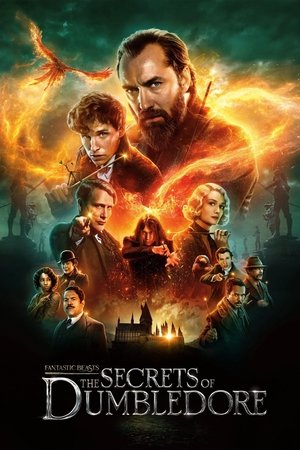
Originally planned as a five-film arc, the series evolved into a trilogy with the release of Fantastic Beasts and Where to Find Them (2016), Fantastic Beasts: The Crimes of Grindelwald (2018), and Fantastic Beasts: The Secrets of Dumbledore (2022). While the first entry was widely praised for its charm and world-building, subsequent installments received more mixed responses, though they continued to attract a dedicated fanbase and contributed significantly to the lore of the Wizarding World. The series is notable for being the first cinematic extension of Rowling’s universe not directly adapted from a novel, with screenplays written by Rowling herself.
The Fantastic Beasts collection holds a unique place in modern fantasy cinema as an ambitious attempt to deepen and globalize an already beloved mythology. It introduced a new generation of characters, including Newt, Tina and Queenie Goldstein, and Jacob Kowalski, while recontextualizing familiar figures like Dumbledore. Despite its truncated run, the series expanded the thematic and geographical scope of the Wizarding World, leaving a legacy of visual creativity and narrative ambition that continues to be explored in other media and theme park experiences.