🎬 Pokémon the Movie: Volcanion and the Mechanical Marvel (2016)
Part of Pokémon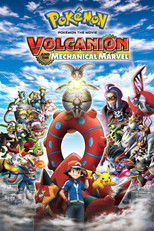
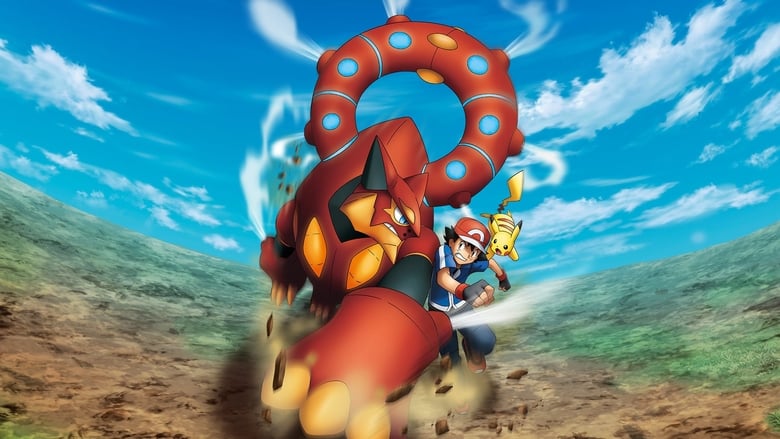
Pokémon the Movie: Volcanion and the Mechanical Marvel stands as a unique entry in the long-running anime film series, primarily because it pivots away from the core narrative of the Kalos region games. Rather than adapting the story of Team Flare, the ancient weapon, or the legendary Pokémon Xerneas and Yveltal, the film crafts an original tale centered on the mythical Pokémon Volcanion and the artificial Magearna. This decision allowed the movie to explore the steampunk-inspired Azoth Kingdom, a location entirely absent from the Pokémon X and Y video games, giving the film a distinct visual and thematic identity separate from the player’s journey through Kalos.
The film’s central mechanic is a classic buddy-comedy setup, forcing Ash Ketchum and the misanthropic Volcanion into an unwilling partnership via a mysterious magnetic band. This physical link serves as a clever narrative device to explore Volcanion’s deep-seated distrust of humans, a theme that resonates with the source material’s background lore about Pokémon abused by people. While the games touch on the consequences of human ambition through the ultimate weapon and Mega Evolution, the film personalizes this conflict through Magearna, a man-made Pokémon whose Soul-Heart is coveted by the villainous Councillor Alva to power a flying fortress. The shift from the games’ grand, region-wide stakes to a more contained story of a singular artificial life form allowed for a surprisingly emotional arc about identity and belonging.
Critically, the film was noted for its high-quality animation and the compelling dynamic between the fiery Volcanion and Ash, though it was also seen as a more formulaic adventure compared to the deeper lore of the Kalos games. By setting the story on the remote Nebel Plateau, the film sidesteps the need to reference the player character or the gym challenge entirely, making it accessible to viewers who may not have played Pokémon X and Y. The inclusion of Mega Evolution, a defining feature of the sixth generation, is present but takes a backseat to the central plot, functioning more as a spectacular action beat than a core mystery to be unraveled. This approach highlights the film’s role as a companion piece that expands the world of Kalos rather than retelling its established story.
Upon its release in 2016, Volcanion and the Mechanical Marvel served as the grand finale for the Pokémon the Series: XY film trilogy, closing out the era with a focus on mythical Pokémon that had not been featured in the main games’ storyline. The English dub premiered later that year on Disney XD, bringing the steampunk fantasy to international audiences. While it may not directly adapt the journey through Vaniville Town or the battle against Team Flare, the film successfully translates the generation’s spirit of discovery and the bond between humans and Pokémon into a self-contained, visually inventive spectacle.

Pokémon X and Pokémon Y are role-playing video games developed by Game Freak and published by The Pokémon Company and Nintendo for the Nintendo 3DS. Released worldwide in October 2013, they marked the beginning of the sixth generation of the core Pokémon series and were the first mainline Pokémon titles to feature fully rendered 3D graphics. The games are set in the Kalos region, a star-shaped land inspired by France, and introduced 72 new Pokémon species alongside the new Fairy type to balance the game's type matchups.
The story follows a young Pokémon trainer who moves to Vaniville Town and embarks on a journey across Kalos, collecting gym badges while confronting the nefarious Team Flare, an organization obsessed with creating a "beautiful world" through mass destruction. A central theme of the games is the concept of Mega Evolution, a temporary transformation that certain Pokémon can undergo during battle to become more powerful, which ties into the region's lore about a legendary war and the ancient weapon that ended it.
X and Y were critically acclaimed for their visual overhaul, the introduction of player customization, and the new Fairy type, though some critics found the story and characters less compelling than previous entries. Commercially, they were a massive success, selling over 16 million copies worldwide and becoming the best-selling games on the Nintendo 3DS after Mario Kart 7. The games' legendary Pokémon—Xerneas, the Life Pokémon, and Yveltal, the Destruction Pokémon—became central figures in the expanded Pokémon anime and film universe.

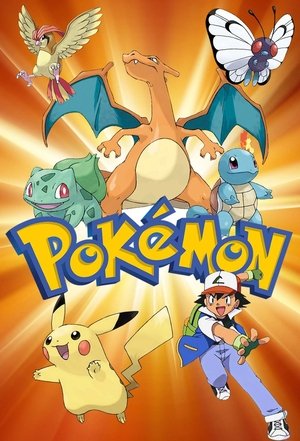
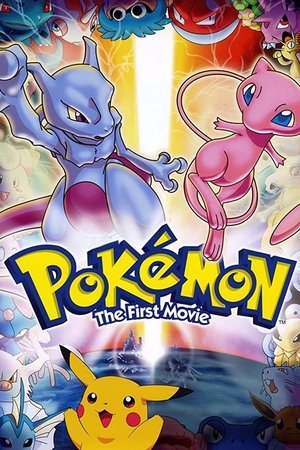
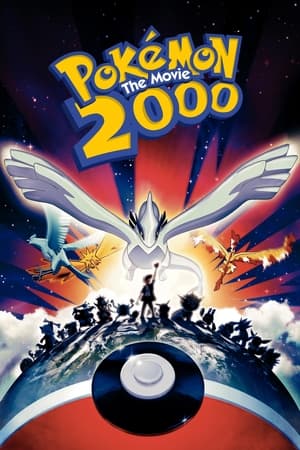
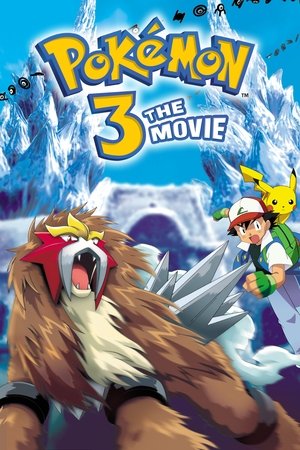
The Pokémon film collection is a long-running series of animated features that extends the adventures of the globally beloved Pokémon anime. Originating alongside the television series in the late 1990s, the films initially served as companion pieces to the ongoing narrative, following Ash Ketchum and his Pikachu as they encountered rare and legendary Pokémon in cinematic, self-contained stories. The early entries, beginning with 'Pokémon: The First Movie' in 1998, captured the peak of the late-90s Pokémon phenomenon and became a staple of the franchise's multimedia expansion, often distributed internationally by Warner Bros. during the anime's original broadcast run.
Over the decades, the collection evolved in tandem with the video game generations, with each film typically showcasing the mythical or legendary Pokémon introduced in the corresponding game release. This structure allowed the movies to function as both standalone adventures and promotional showcases for new creatures, while maintaining a consistent focus on themes of friendship, coexistence between humans and Pokémon, and the wonder of discovery. As the anime's continuity progressed through regions like Johto, Hoenn, Sinnoh, and beyond, the films mirrored these settings and introduced a rotating cast of supporting characters alongside the perennial heroes.
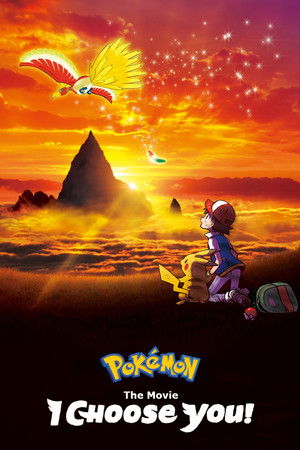
A significant shift occurred in the late 2010s when the film series began to depart from the main anime timeline. Starting with 'Pokémon the Movie: I Choose You!' in 2017, the collection embraced a reboot approach, retelling and reimagining Ash's origin story in an alternate continuity. This creative direction continued with subsequent entries, including a CGI remake of the first film, allowing the collection to explore nostalgic narratives while appealing to both new audiences and longtime fans. This period marked a transition from being direct extensions of the TV series to more experimental, standalone cinematic experiences.
The Pokémon film collection stands as a testament to the franchise's enduring cross-media legacy. With over two dozen theatrical releases spanning more than two decades, it has consistently delivered family-friendly adventures that reinforce the core values of the Pokémon world. While individual entries vary in critical reception, the collection as a whole remains a culturally significant component of one of the most successful entertainment properties in history, offering a cinematic entry point for each new generation of trainers.