📺 Death Note: New Generation (2016)
Part of Death Note
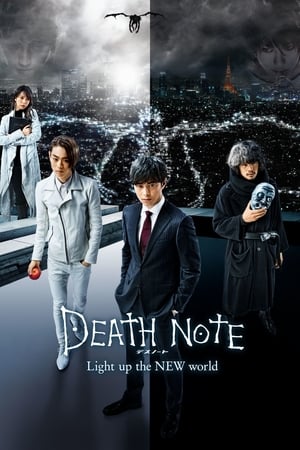
Before the cinematic return of the Death Note to Japanese theaters in 2016, fans were treated to a unique narrative bridge with "Death Note: New Generation." This three-episode Hulu Japan miniseries was not a direct adaptation of the manga's plot, but rather an original sequel set a decade after the climactic events of the 2006 films, specifically designed to set the stage for the feature film "Death Note: Light Up the New World." The series cleverly functions as a prologue, introducing the new key players who would inherit the complex legacy of Light Yagami and L. By splitting its focus across three distinct episodes, each centered on a different protagonist, the show efficiently establishes the new status quo of a world still reeling from Kira's brief, terrifying reign.
The series introduces Tsukuru Mishima, a detective obsessed with the Death Note case who leads a special task force investigating strange new deaths; Ryuzaki, a brilliant but reluctant successor to L who is finally drawn into a new Death Note incident; and Yuki Shien, a cyber-terrorist and traumatized survivor who becomes a fervent Kira worshipper upon gaining a notebook of his own. This triptych structure allows the adaptation to explore the manga's core themes from fresh angles—grief, legacy, and the cyclical nature of extremist ideology—without simply retelling the original story. It is a direct expansion of the live-action film universe, meaning it inherits that continuity's specific deviations from the manga, such as L's fate and the altered rules surrounding the notebooks.
As a web series, "Death Note: New Generation" had a smaller scale than its theatrical counterparts, but it compensated with a tight, atmospheric focus on psychological suspense. The casting of rising stars like Masaki Suda, who brings a volatile, unsettling energy to the role of Shien, and Sosuke Ikematsu as the coolly analytical Ryuzaki, grounded the supernatural premise in intense character drama. The series was well-received as a compelling appetizer, successfully reigniting interest in the franchise's live-action world by demonstrating that the most dangerous thing Light Yagami left behind was not a notebook, but an idea.

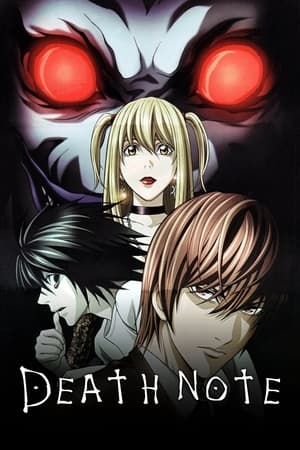
Death Note is a Japanese manga series written by Tsugumi Ohba and illustrated by Takeshi Obata. It was serialized in Shueisha's Weekly Shōnen Jump magazine from December 2003 to May 2006, spanning 12 collected tankōbon volumes. The story centers on Light Yagami, a brilliant high school student who discovers a supernatural notebook dropped by a shinigami (death god) named Ryuk. The notebook grants its user the ability to kill anyone by writing their name while picturing their face. Light adopts the alias Kira and sets out to purge the world of criminals, creating a utopia under his judgment. His actions attract the attention of an enigmatic international detective known only as L, leading to a high-stakes cat-and-mouse game. Blending psychological thriller, supernatural crime, and philosophical elements, Death Note quickly became a cultural phenomenon, sparking widespread discussion about morality, justice, and power.
The manga's intricate plotting, moral ambiguity, and stark artwork earned critical acclaim and a massive international following. It won several awards and has sold over 30 million copies worldwide, making it one of the best-selling manga series in history. Its influence extends far beyond comics, inspiring a wide range of merchandise, video games, and unofficial community creations. The series' legacy endures through its memorable characters, iconic rules of the Death Note, and the enduring debate over whether the ends justify the means.

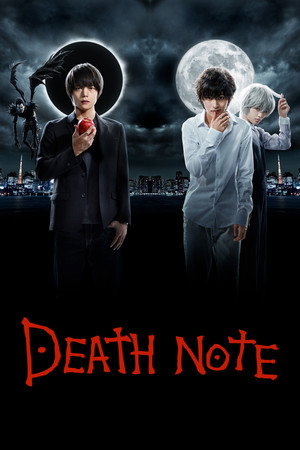
The Death Note live-action film series is a Japanese collection of supernatural thriller films based on the acclaimed manga of the same name by Tsugumi Ohba and Takeshi Obata. The series adapts the manga's central premise: a high school student discovers a notebook that allows him to kill anyone by writing their name, leading to a cat-and-mouse game with a genius detective. The films translate the manga's intense psychological battles and moral dilemmas to the screen, focusing on the clash between Light Yagami's godlike ambitions and L's relentless pursuit of justice. While the first two films closely follow the original story, later entries expand the universe with original narratives, exploring the consequences of the Death Note's power in new contexts. The series is known for its dark atmosphere, intricate plotting, and the compelling dynamic between its two brilliant leads, capturing the essence of the source material's exploration of justice and corruption.