🎬 The Hobbit: The Battle of the Five Armies (2014)
Part of The Lord of the Rings
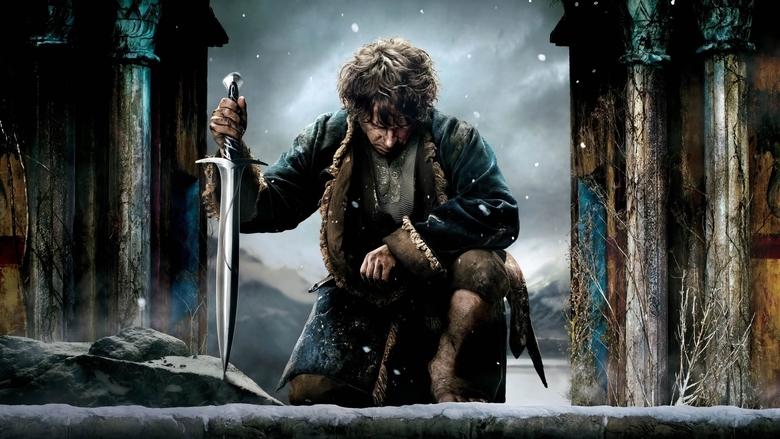
Peter Jackson's final journey to Middle-earth arrived with 'The Hobbit: The Battle of the Five Armies,' a film that faced the unique challenge of adapting roughly fifty pages of Tolkien's novel into a 144-minute epic. Where the book's titular battle is famously handled with Bilbo being knocked unconscious and waking to its aftermath, Jackson thrusts the audience directly into the heart of a sprawling, CGI-laden conflict. The film expands the source material's brief skirmish into a grand, multi-front war, weaving in material from Tolkien's appendices to give weight to the clash between dwarves, elves, men, and the converging orc armies from Mount Gundabad. This adaptation choice transforms a children's story's climax into a somber, action-driven spectacle that serves as a direct tonal and narrative bridge to the director's earlier 'Lord of the Rings' trilogy.
The film's most significant departure from the novel lies in its character arcs, particularly the tragic descent of Thorin Oakenshield. Richard Armitage's performance grounds the fantastical 'dragon sickness' in a palpable psychological torment, a thread only lightly touched upon in the source material. Similarly, the invention of the elf warrior Tauriel and her doomed love triangle with the dwarf Kili provides an emotional core entirely absent from the book, a controversial addition that polarized fans but aimed to add romantic stakes to the otherwise male-dominated narrative. The film also delivers on the long-teased confrontation between Thorin and the pale orc Azog, a villain given a vastly expanded role across the trilogy compared to his single mention in the novel's history.
Released in December 2014, the film was met with a mixed critical reception, with many praising the visual grandeur and Martin Freeman's steadfast portrayal of Bilbo, while others lamented the bloat of stretching a short novel into three films. The 45-minute battle sequence, while technically impressive, drew comparisons to a video game for its relentless digital chaos, a far cry from the more intimate and practical skirmishes of 'The Lord of the Rings.' Despite this, the film was a box office titan, grossing over $962 million globally and securing its place as the second-highest-grossing film of the year. It earned an Academy Award nomination for Best Sound Editing, a testament to its technical craft.
Ultimately, 'The Battle of the Five Armies' stands as a fascinating case study in adaptation. It takes the skeleton of Tolkien's anti-war climax and fleshes it out with a modern blockbuster's sensibilities, prioritizing inter-franchise connectivity and emotional melodrama over the book's quieter, more fairy-tale-like resolution. While it may lack the literary restraint of its source, the film succeeds in bringing a mythic scope to the page's final moments, ensuring that Bilbo's simple adventure concludes with the weight of an entire age of Middle-earth coming to an end.
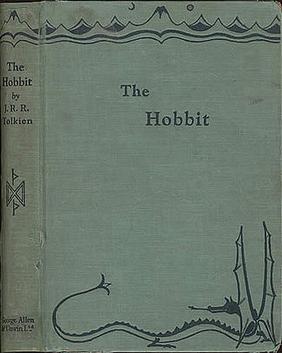
The Hobbit, or There and Back Again is a children's fantasy novel by the English author J. R. R. Tolkien. It was published on 21 September 1937 to wide critical acclaim, being nominated for the Carnegie Medal and awarded a prize from the New York Herald Tribune for best juvenile fiction. The book remains popular and is recognized as a classic in children's literature.
The story is set in Middle-earth and follows the home-loving hobbit Bilbo Baggins, who is persuaded by the wizard Gandalf to join a company of thirteen dwarves led by Thorin Oakenshield on a quest to reclaim the Lonely Mountain and its treasure from the dragon Smaug. Bilbo's journey takes him from his peaceful rural surroundings into darker, more dangerous territory, encountering trolls, goblins, giant spiders, and the creature Gollum, from whom he acquires a mysterious ring of invisibility.
Tolkien wrote The Hobbit in the early 1930s, initially as a story for his own children. The tale draws on his deep knowledge of Anglo-Saxon and Norse mythology, as well as his experiences in the trenches of the First World War. The novel introduces readers to the richly imagined world of Middle-earth, which Tolkien would later expand dramatically in The Lord of the Rings.
The Hobbit has never been out of print and has sold over 100 million copies worldwide, making it one of the best-selling books of all time. Its enduring appeal lies in its blend of epic adventure, gentle humour, and the timeless theme of an ordinary person discovering courage and resourcefulness in extraordinary circumstances.
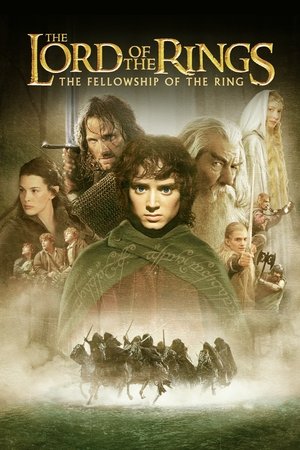
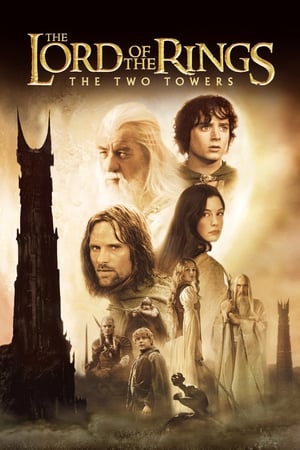
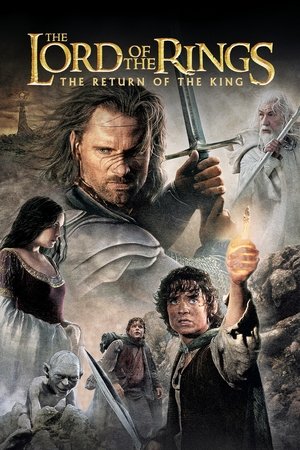
The Middle-earth film series, directed by Peter Jackson, represents one of the most ambitious undertakings in cinematic history, translating J.R.R. Tolkien's expansive legendarium into a six-film saga. Spanning two trilogies—*The Lord of the Rings* (2001–2003) and *The Hobbit* (2012–2014)—the series brings to life the richly detailed world of Middle-earth, from the peaceful Shire to the volcanic wasteland of Mordor. Rooted in Tolkien's themes of fellowship, the corrupting influence of power, and the triumph of the humble over overwhelming darkness, the films weave together epic quests, intimate character journeys, and monumental battles. Jackson's adaptation is celebrated for its groundbreaking visual effects, intricate practical design, and Howard Shore's sweeping musical score, which collectively set a new standard for fantasy filmmaking and demonstrated that literary fantasy could achieve both critical acclaim and massive commercial success on a global scale. The series begins with the quest to destroy the One Ring, an artifact of ultimate evil, and later expands to chronicle the earlier adventures of Bilbo Baggins and the re-emergence of ancient threats, creating a cohesive narrative that spans decades within the fictional timeline. While the two trilogies differ in tone—the former a tightly focused epic, the latter a more sprawling prequel—they together form a unified exploration of courage, loss, and the enduring power of hope in a world teetering on the brink of ruin. Culturally, the Middle-earth films have left an indelible legacy, influencing a generation of filmmakers and solidifying Tolkien's mythology as a cornerstone of modern popular culture. The series' innovative use of motion capture technology, particularly in the creation of Gollum, pushed the boundaries of digital performance, while its commitment to New Zealand's landscapes as the backdrop for Middle-earth boosted tourism and inspired a wave of fantasy adaptations across media. Beyond the screen, the films spawned extensive merchandising, video games, and a lasting fan community, ensuring that the world of hobbits, wizards, and elves continues to resonate with audiences worldwide.
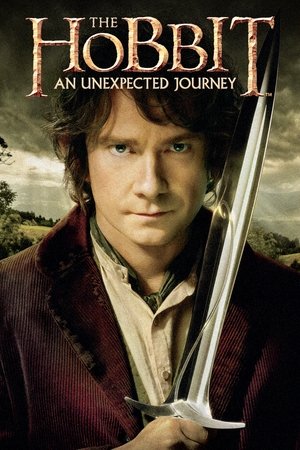
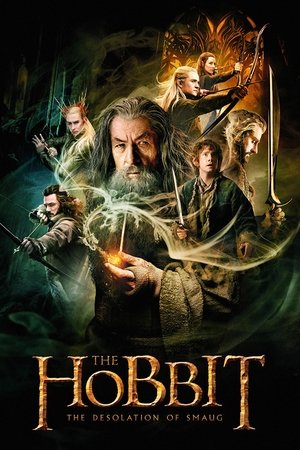
The franchise is a cinematic adaptation of J.R.R. Tolkien's beloved 1937 novel, brought to life by director Peter Jackson. Conceived as a prequel to the highly acclaimed Lord of the Rings trilogy, the series expands the rich lore of Middle-earth by exploring events that occurred decades prior to the original saga. The production drew heavily from Tolkien's source material, incorporating not only the core narrative of the novel but also supplementary details from the appendices of his later works to flesh out the world's history and mythology.
At its heart, the series is an epic fantasy adventure that emphasizes themes of courage, camaraderie, and the struggle between good and evil. It follows a reluctant hero on a transformative quest, accompanied by a diverse fellowship of dwarves, elves, wizards, and other mythical creatures. The films are renowned for their groundbreaking visual effects, immersive world-building, and sweeping musical score, which collectively establish a distinct yet familiar tone within the broader Middle-earth cinematic universe.
Released over a three-year span, the franchise achieved massive commercial success, grossing nearly three billion dollars worldwide. It solidified the director's reputation as a master of fantasy filmmaking and introduced a new generation of audiences to Tolkien's expansive literary universe. The series remains a cornerstone of modern fantasy cinema, celebrated for its ambitious scale, detailed craftsmanship, and enduring appeal to fans of the genre.