📺 The Three Musketeers (2014)
Based on novel
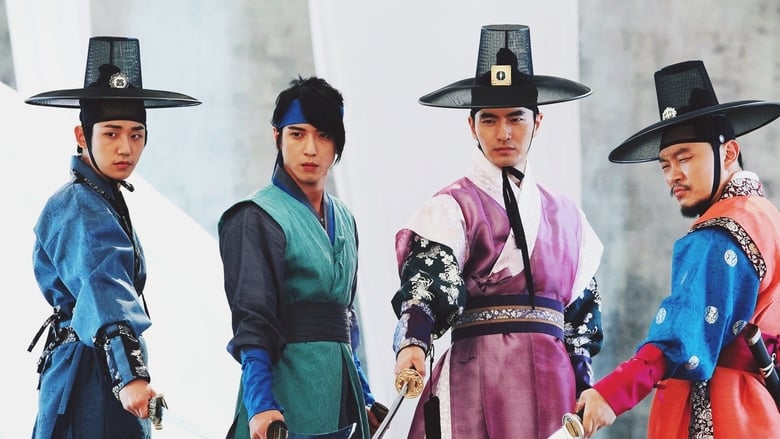
tvN's 2014 series "The Three Musketeers" represents one of the most audacious reimaginings of Alexandre Dumas's classic novel, transplanting the swashbuckling intrigue of 17th-century France to the Joseon dynasty. The adaptation, which was ambitiously planned as a three-season, $10 million project, reinterprets the iconic characters through a Korean historical lens. The naive country nobleman d'Artagnan becomes Park Dal-hyang, a warrior from the provinces played by Jung Yong-hwa, while the three musketeers are recast as warrior guards serving Crown Prince Sohyeon, who himself takes on the melancholic, noble qualities of Athos. This structural shift places the royal heir directly in the line of action, merging the character of Athos with the political weight of the throne and creating a dynamic where the sworn brotherhood is intrinsically tied to the fate of the nation.
The series cleverly maps Dumas's political machinations onto the turbulent power struggles of the era. King Injo stands in for the weak Louis XIII, while the villainous Kim Ja-jeom assumes the role of the scheming Cardinal Richelieu. The adaptation doesn't shy away from the source material's darker romantic entanglements, with Yoo In-young's Jo Mi-ryung embodying the femme fatale Milady de Winter, and Seo Hyun-jin's Kang Yoon-seo taking on the role of the crown princess, echoing Anne of Austria's compromised position. The translation of the Duke of Buckingham into the Qing envoy Inggūldai further demonstrates the writers' commitment to grounding Dumas's fictionalized international tensions in the very real historical conflicts between Joseon and the rising Qing dynasty.
Despite its creative ambition and a cast that included rising stars like Jung Hae-in as the pious warrior Ahn Min-seo (Aramis), the series struggled to find its audience. Airing on the cable network tvN, it faced the inherent challenge of a smaller viewership base compared to Korea's major public broadcasters. The low ratings ultimately led to the indefinite postponement of the planned second and third seasons, leaving the story as a 12-episode standalone arc. This premature conclusion was a disappointment for fans who appreciated the drama's lush production values, its kinetic sword-fighting choreography that translated European rapier duels into dynamic Korean blade work, and its earnest, if heavily fictionalized, engagement with a pivotal period in Joseon history.
Ultimately, this adaptation stands as a fascinating cultural experiment—a "what if" that demonstrates both the universality of Dumas's themes of honor and camaraderie and the specific challenges of cross-cultural adaptation. While it never reached the iconic status of its source material or the most famous Western film versions, it remains a unique entry in the vast library of Musketeer adaptations, proving that the cry of "All for one, and one for all" can resonate just as powerfully when shouted from the battlements of a Joseon fortress as from the streets of Paris.
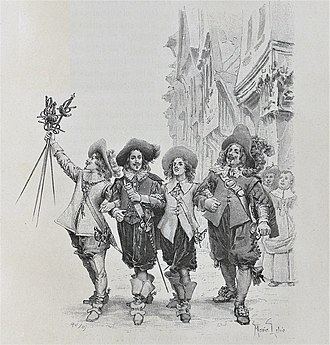
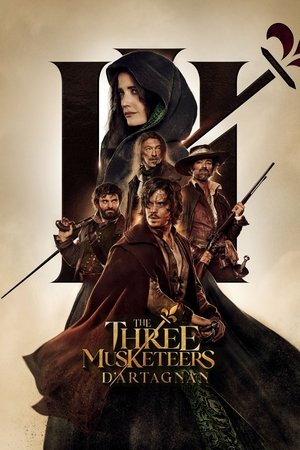
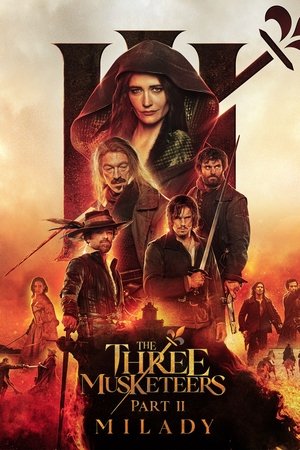
The Three Musketeers is a historical adventure novel written by French author Alexandre Dumas, first published in serial form in 1844. Set between 1625 and 1628, it recounts the adventures of a young man named d'Artagnan after he leaves home to travel to Paris, hoping to join the Musketeers of the Guard. Although d'Artagnan is not able to join this elite corps immediately, he befriends three of the most formidable musketeers of the age — Athos, Porthos, and Aramis — and becomes embroiled in affairs of state and court.
The novel is celebrated for its swashbuckling action, memorable characters, and intricate plotting involving political intrigue, romance, and betrayal. It explores themes of honor, friendship, and loyalty, famously encapsulated in the musketeers' motto: "All for one, and one for all." The story draws loosely on historical figures and events, including Cardinal Richelieu, King Louis XIII, Queen Anne, and the Duke of Buckingham.
One of the most widely read French novels, The Three Musketeers has been adapted countless times across virtually every medium, including film, television, stage, and comics. Its enduring popularity has made d'Artagnan and the three musketeers archetypal figures in popular culture, and the novel remains a cornerstone of classic adventure literature.