🎬 The Three Musketeers (1973)
Part of The Musketeers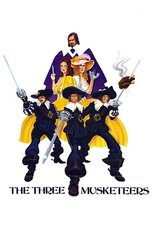
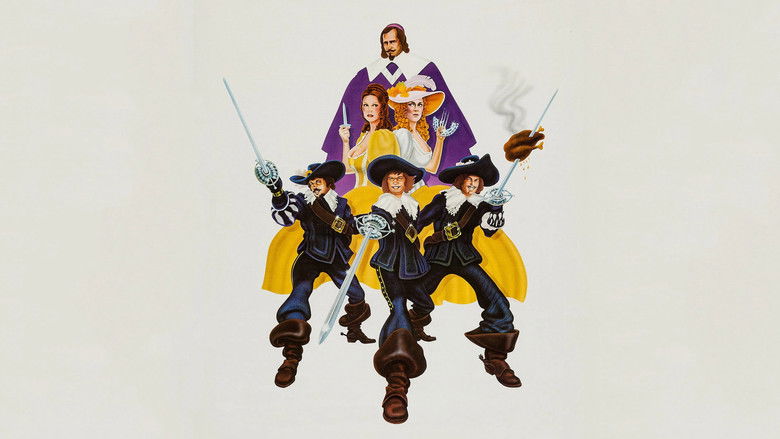
Richard Lester’s 1973 adaptation of The Three Musketeers arrived at a time when swashbuckling adventure was ripe for reinvention, and the director brought his distinctly irreverent, fast-paced sensibility to the project. Originally conceived as a vehicle for the Beatles after their collaborations on A Hard Day’s Night and Help!, the film eventually took shape with a stellar ensemble cast including Michael York as the earnest d’Artagnan, Oliver Reed as the brooding Athos, Frank Finlay as the comically verbose Porthos, and Richard Chamberlain as the elegant Aramis. George MacDonald Fraser, himself a master of historical pastiche through his Flashman novels, penned a screenplay that remains remarkably faithful to Dumas’s plot while injecting a constant stream of slapstick, visual gags, and earthy humor that undercuts the grandeur without ever mocking it.
The film distinguishes itself through its commitment to period authenticity despite its playful tone. Shot by cinematographer David Watkin on location in Madrid and Segovia, Spain, the production paid meticulous attention to costume and architectural detail, creating a lived-in 17th-century world that feels grimy, cold, and genuinely dangerous. The fight sequences, choreographed by legendary sword master William Hobbs, are a particular highlight — they are chaotic, exhausting affairs where combatants slip in mud, scramble over furniture, and wield everything from rapiers to laundry paddles. This approach strips away the balletic elegance of earlier Hollywood swashbucklers and replaces it with a visceral, almost documentary-like immediacy that makes every duel feel like a genuine struggle for survival.
Lester’s casting choices added layers of texture that the novel only hints at. Charlton Heston brings a calculating menace to Cardinal Richelieu, while Faye Dunaway’s Milady de Winter is a mesmerizing blend of icy beauty and ruthless cunning — her quiet scenes carry a chilling, predatory stillness. Raquel Welch as Constance Bonacieux and Geraldine Chaplin as Queen Anne round out a cast that treats even minor roles with dramatic weight, while Spike Milligan’s brief appearance as Monsieur Bonacieux injects pure vaudevillian absurdity. The film’s tone walks a tightrope between high adventure and low comedy, a balance that divided some critics at the time but has since been recognized as a deliberate and sophisticated interpretation of Dumas’s own narrative voice, which always understood that heroism and ridiculousness are often two sides of the same coin.
Released in December 1973, The Three Musketeers was a commercial success and earned a reputation as one of the most entertaining and visually distinctive adaptations of Dumas’s novel. Its production was so ambitious that the filmmakers secretly shot enough material for a sequel simultaneously, leading to legal battles when the cast discovered they had unwittingly made two films for the price of one — a controversy that resulted in the Salkind Clause, now a standard contractual protection in Hollywood. The film’s legacy endures not just for its swashbuckling thrills but for proving that a classic adventure story could be treated with both respect and a knowing wink, paving the way for later genre hybrids that refused to take themselves too seriously.
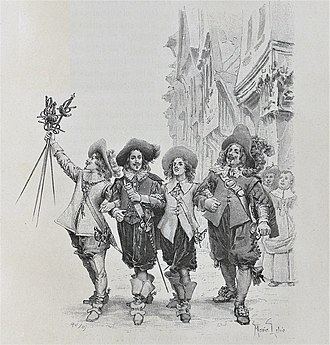
The Three Musketeers is a historical adventure novel written by French author Alexandre Dumas, first published in serial form in 1844. Set between 1625 and 1628, it recounts the adventures of a young man named d'Artagnan after he leaves home to travel to Paris, hoping to join the Musketeers of the Guard. Although d'Artagnan is not able to join this elite corps immediately, he befriends three of the most formidable musketeers of the age — Athos, Porthos, and Aramis — and becomes embroiled in affairs of state and court.
The novel is celebrated for its swashbuckling action, memorable characters, and intricate plotting involving political intrigue, romance, and betrayal. It explores themes of honor, friendship, and loyalty, famously encapsulated in the musketeers' motto: "All for one, and one for all." The story draws loosely on historical figures and events, including Cardinal Richelieu, King Louis XIII, Queen Anne, and the Duke of Buckingham.
One of the most widely read French novels, The Three Musketeers has been adapted countless times across virtually every medium, including film, television, stage, and comics. Its enduring popularity has made d'Artagnan and the three musketeers archetypal figures in popular culture, and the novel remains a cornerstone of classic adventure literature.
This film trilogy, directed by Richard Lester, adapts Alexandre Dumas's classic adventure novels, bringing the swashbuckling brotherhood of d'Artagnan, Athos, Porthos, and Aramis to the screen with a distinctive blend of action, humor, and human frailty. The series begins with *The Three Musketeers* (1973), introducing the young d'Artagnan's arrival in Paris and his entanglement in a deadly game of statecraft, where the Musketeers must protect the Queen's honor against Cardinal Richelieu. The story deepens considerably with *The Four Musketeers* (1974), which shatters the initial romanticism of adventure, confronting the inseparable friends with the brutal consequences of their actions and a tragic reckoning with Milady de Winter's lethal revenge. This darker chapter elevates the narrative from a rollicking caper to a poignant drama about the passing of youthful ideals.
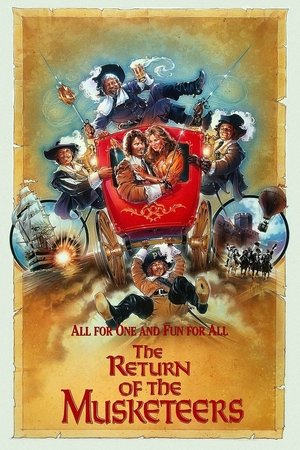
The saga concludes with *The Return of the Musketeers* (1989), a reunion that adapts Dumas's *Twenty Years After* and finds the heroes drawn from the comfort of middle age back into a fractured France on the brink of civil war. Forced to choose between old friendships and new allegiances, the Musketeers evolve from brash soldiers into weary legends, their swords a little heavier but their spirit unbroken. Across these three films, the collection captures not only the clashing steel and royal pageantry but also the melancholic truth that even the greatest heroes must eventually face a changing world, their shared history the only shield against the relentless march of time.
Lester's trilogy is celebrated for its earthy, irreverent tone and its commitment to character-driven storytelling, setting it apart from more sanitized adaptations. The films were shot back-to-back, a logistical feat that allowed for a remarkable consistency in cast and visual style, and they remain a definitive cinematic portrayal of Dumas's world. The collection stands as a testament to the enduring appeal of the Musketeers' motto, "all for one and one for all," exploring friendship tested by duty, love corrupted by vengeance, and the personal cost of serving a crown.