🎬 Oliver Twist (2005)
Based on novel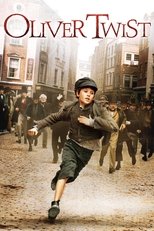
Roman Polanski’s 2005 adaptation of Oliver Twist stands apart from the musical exuberance of Oliver! by stripping the story back to its grim, Dickensian roots. The film is a meticulous, almost painterly recreation of 19th-century London, emphasizing the squalor, desperation, and ever-present chill that defined the original novel. Polanski, working from a screenplay by Ronald Harwood, crafts a version that is less about rousing adventure and more a somber character study of a child navigating a world of systemic cruelty. The director’s own childhood experiences as an orphan escaping the Kraków Ghetto during World War II lend a palpable, unspoken authenticity to Oliver’s isolation and vulnerability, making this a deeply personal project.
The film makes several key structural and character adjustments to fit its cinematic form. The narrative is streamlined, excising much of the novel’s convoluted mystery regarding Oliver’s parentage until the final act, which sharpens the focus on his immediate survival. Perhaps the most significant shift is in the portrayal of Fagin, played with tragic complexity by Ben Kingsley. Gone is the overtly grotesque caricature of earlier adaptations; instead, Kingsley presents a man who is avuncular and genuinely caring toward his boys, yet morally bankrupt and driven by a desperate, self-preserving cowardice. This humanization creates a more ambiguous and unsettling villain, whose betrayal of Oliver feels like a painful failure of nerve rather than pure malice. The relationship between Nancy and Bill Sikes is also rendered with a brutal, claustrophobic intensity, highlighting the domestic tragedy at the story’s dark heart.
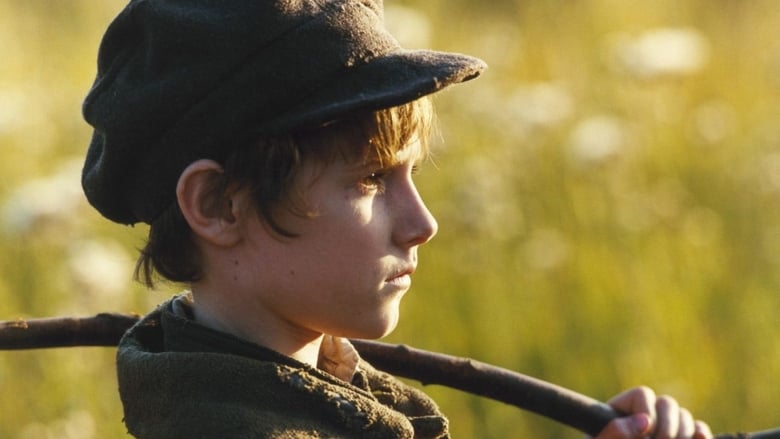
Visually, the film is a triumph of production design and cinematography, creating a London that feels both vast and suffocating. The workhouse, with its sickly green hues and rigid geometry, is a vision of institutionalized starvation, while Fagin’s den is a chaotic, warm, yet ultimately imprisoning warren. Polanski’s choice to cast the relatively unknown Barney Clark as Oliver reinforces the character’s ordinariness; he is not a preternaturally angelic child, but a quiet, resilient boy whose defining act is simply asking for more. This grounded approach extends to the film’s tone, which avoids sentimentality in favor of a clear-eyed, sometimes harrowing look at child exploitation.
Despite premiering at the Toronto International Film Festival to generally positive critical notices, the film was a commercial disappointment, failing to recoup its budget. Critics praised its craftsmanship and fidelity to the novel’s darker spirit, though some found its deliberate pacing and lack of emotional uplift a challenge. Ultimately, Polanski’s Oliver Twist endures as a visually sumptuous and psychologically rich interpretation, a film that honors Dickens’s social outrage by refusing to soften the blows it depicts, making it a distinctive and mature entry in the long history of the novel’s adaptations.

Oliver Twist, or The Parish Boy's Progress, is the second novel by English author Charles Dickens. It was first published as a serial from 1837 to 1839 in the magazine Bentley's Miscellany, and then as a three-volume book in 1838. The novel tells the story of the orphan Oliver Twist, who endures a harsh upbringing in a workhouse, is sold into apprenticeship, and eventually escapes to London, where he becomes entangled with a gang of juvenile pickpockets led by the conniving Fagin. Through a series of adventures, Oliver discovers his true identity and finds a family.
The novel is an early example of the social novel, satirizing the cruel treatment of orphans, child labor, and the criminal underworld of 19th-century England. Dickens drew on his own difficult childhood experiences and the reported case of a child laborer to lend authenticity to Oliver's plight. The character of Fagin became one of Dickens's most memorable villainous creations, while Nancy's moral complexity added depth.
Oliver Twist has been highly influential in literature and popular culture, helping to raise awareness about social injustices. Its vivid characters and dramatic narrative have made it a favorite for stage and screen adaptations. The novel remains a staple of English literature, studied for its themes of poverty, class, and redemption.