🎬 Oliver Twist (1933)
Based on novel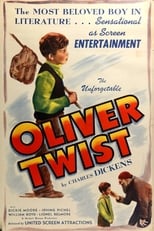
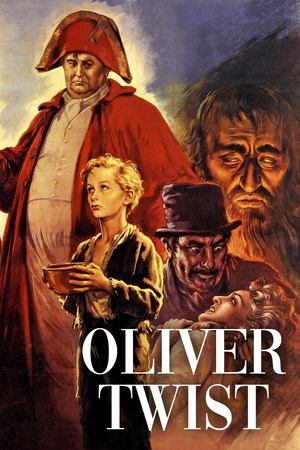
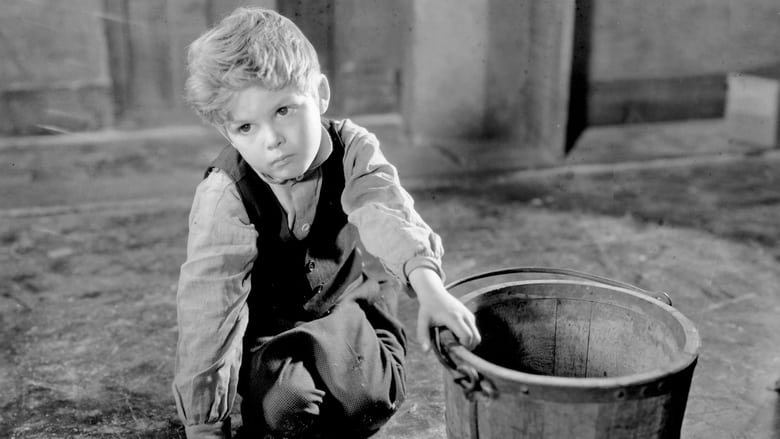
The 1933 version of Oliver Twist holds a unique place in film history as the earliest sound adaptation of Charles Dickens’s classic novel. Directed by William J. Cowen for the low-budget studio Monogram Pictures, this pre-Code drama had the unenviable task of condensing a sprawling serialized narrative into a brisk feature-length runtime. The film stars child actor Dickie Moore as the beleaguered orphan, with Irving Pichel delivering a memorably grotesque portrayal of Fagin, complete with the exaggerated makeup and prosthetics that typified early cinematic interpretations of the character. Doris Lloyd’s Nancy and William “Stage” Boyd’s menacing Bill Sikes round out the central cast, bringing a raw, unpolished energy to the criminal underworld that reflected the film’s modest production values.
Unlike the lavish musical adaptations that would follow decades later, this version strips the story down to its grim essentials. The screenplay races through the iconic set pieces—the workhouse gruel, the escape to London, and the indoctrination into Fagin’s gang of pickpockets—with a starkness that mirrors the novel’s social criticism more than its sentimentality. The film’s pre-Code status allowed it to retain some of the darker edges of Dickens’s vision, particularly in its depiction of Nancy’s perilous position between loyalty and redemption, though the constraints of its shoestring budget meant that much of the novel’s subplot involving Oliver’s mysterious parentage was heavily truncated or omitted entirely.
Upon release, the film failed to make a significant impact, overshadowed by the more prestigious literary adaptations of the era and hampered by Monogram’s limited distribution. It languished in obscurity for decades, effectively becoming a lost footnote in the long history of Dickens on screen. The movie resurfaced only in the 1980s when television broadcasts introduced it to a new generation of viewers, who could appreciate its historical significance if not its artistic polish. Critics have since noted its workmanlike direction and the earnestness of its young lead, though it remains more a curiosity for completists than a definitive interpretation of the source material.
What makes this adaptation particularly fascinating is its status as a transitional artifact. It arrived just as Hollywood was mastering synchronized sound, yet before the Production Code would enforce stricter moral guidelines on depictions of crime and violence. The film’s Fagin, while still drawing on troubling antisemitic caricatures present in the novel’s original illustrations, is played with a theatrical menace by Pichel that feels distinctly of its time. Though it would be swiftly eclipsed by David Lean’s celebrated 1948 version and later by the Oscar-winning musical Oliver!, this scrappy 1933 production endures as a testament to the enduring adaptability of Dickens’s tale, proving that even the most modest resources could bring the foggy streets of Victorian London to life.

Oliver Twist, or The Parish Boy's Progress, is the second novel by English author Charles Dickens. It was first published as a serial from 1837 to 1839 in the magazine Bentley's Miscellany, and then as a three-volume book in 1838. The novel tells the story of the orphan Oliver Twist, who endures a harsh upbringing in a workhouse, is sold into apprenticeship, and eventually escapes to London, where he becomes entangled with a gang of juvenile pickpockets led by the conniving Fagin. Through a series of adventures, Oliver discovers his true identity and finds a family.
The novel is an early example of the social novel, satirizing the cruel treatment of orphans, child labor, and the criminal underworld of 19th-century England. Dickens drew on his own difficult childhood experiences and the reported case of a child laborer to lend authenticity to Oliver's plight. The character of Fagin became one of Dickens's most memorable villainous creations, while Nancy's moral complexity added depth.
Oliver Twist has been highly influential in literature and popular culture, helping to raise awareness about social injustices. Its vivid characters and dramatic narrative have made it a favorite for stage and screen adaptations. The novel remains a staple of English literature, studied for its themes of poverty, class, and redemption.