📺 He-Man and the Masters of the Universe (2002)
Reboot of
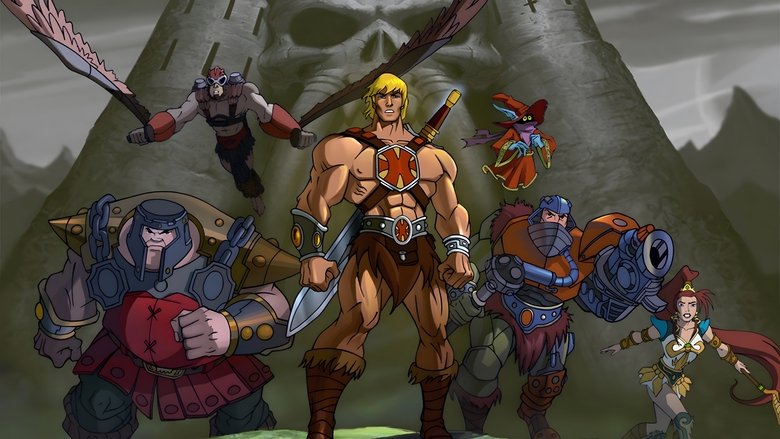
The 2002 "He-Man and the Masters of the Universe" series arrived as a deliberate and ambitious re-forging of the classic myth, not just a simple update. Developed by the original franchise creator Michael Halperin and animated by Mike Young Productions, this Cartoon Network revival sought to strip away the campier, more comedic elements that had defined the 1980s Filmation series and return to the property’s sword-and-sorcery roots. The result was a visually sleeker, more anime-influenced Eternia where the stakes felt genuinely dire. This version made a foundational change to its hero: Prince Adam was no longer a lazy, joke-cracking alter ego, but a serious, inexperienced teenager burdened by the weight of his destiny, making his transformation into the confident He-Man a true coming-of-age arc rather than a simple costume change.
The series distinguished itself through its commitment to serialized storytelling and deep mythology. Where the original show often reset the status quo, this adaptation built a continuous narrative, dedicating entire episodes to the tragic origins of its villains like Skeletor, who was reimagined as Keldor, a disfigured warlord with a personal connection to the royal family. This focus on backstory extended across the entire cast, finally giving animated debuts to long-time toyline favorites who had never appeared on screen before, such as the villainous King Hiss and the heroic Sy-Klone. The writing team, bolstered by returning veterans like Larry DiTillio, crafted a world where magic and advanced technology—the franchise’s signature blend—coexisted in a more coherent and politically complex landscape, exploring the nature of power and the cost of heroism with a maturity that respected its now-older original fanbase while courting a new generation.
Visually and tonally, the series was a dramatic departure, trading the soft, rounded character designs of Filmation for sharp, angular anatomy and dynamic, fast-paced combat sequences. The iconic transformation sequence was re-engineered as a spectacle of raw power, often triggered mid-battle rather than in a secluded spot. While it paid homage to its predecessor with a familiar opening narration—interrupted this time by an actual explosion and invasion—the show quickly established its own identity. The voice cast was largely Canadian, a notable shift from the original, though it retained a key link to the past in Cam Clarke, who returned not as He-Man but as the voice of Prince Adam, bridging the two eras with a vocal performance that captured the character’s new, more vulnerable youth.
Despite critical acclaim for its writing and animation, the series’ run was cut short after two seasons, a victim of shifting network strategies and the immense cost of its high-quality production. It concluded with a tantalizing, unresolved cliffhanger involving the rise of the Snake Men, leaving a dedicated fanbase hungry for a conclusion that never came. Nevertheless, this 2002 interpretation has endured as a cult classic, often cited by fans as the definitive screen version of the Masters of the Universe lore. It proved that a toy-based property could support a genuinely compelling and emotionally resonant narrative, and its influence can be felt in subsequent revivals that continue to struggle with matching the high bar it set for character-driven, epic fantasy storytelling.
Masters of the Universe is a media franchise created by the American toy company Mattel, first launched in 1982 with a line of action figures. The central premise revolves around the conflict between the heroic He-Man, the alter ego of Prince Adam, and the evil sorcerer Skeletor on the planet Eternia. The toy line was notable for its muscular, barbarian-inspired aesthetic, which was a departure from the smaller, less detailed action figures of the previous decade.
The franchise was accompanied by a series of mini-comics packed in with the figures, which established the initial lore and character backstories. This mythology was significantly expanded by the popular 1983 animated television series He-Man and the Masters of the Universe, which softened the characters and introduced the now-iconic transformation sequence. The franchise became a massive cultural phenomenon in the 1980s, spawning a feature film, multiple animated series, and a vast array of merchandise.
Beyond its commercial success, Masters of the Universe is recognized for its unique blend of science fiction and fantasy, creating a world where advanced technology coexists with magic and mythical creatures. The franchise has maintained a dedicated fanbase for decades, leading to periodic revivals and reinterpretations of its core characters and stories, exploring deeper themes of power, destiny, and the nature of good and evil.