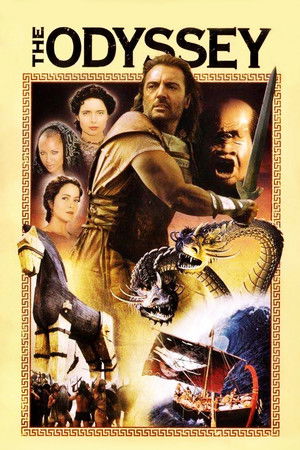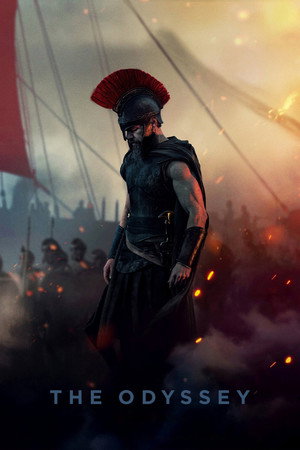
🎬 O Brother, Where Art Thou? (2000)
Based on novel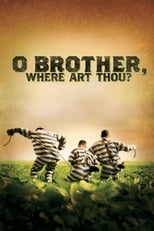
The Coen brothers’ "O Brother, Where Art Thou?" is a delightfully irreverent adaptation that filters Homer’s ancient epic through the dust bowl aesthetics of Depression-era Mississippi. Rather than a straightforward retelling, the film acts as a structural and thematic echo, transplanting the hero’s journey into a picaresque chain-gang comedy. George Clooney’s Ulysses Everett McGill is a fast-talking, pomade-obsessed convict whose odyssey is not a return from war but an escape from a chain gang to stop his wife from remarrying. The film cleverly maps Homeric episodes onto Southern folklore, transforming the Cyclops into John Goodman’s one-eyed Bible salesman Big Dan Teague, the Sirens into three seductive laundresses by a river, and the blind prophet Tiresias into a railway handcar operator who foretells the trio’s future.
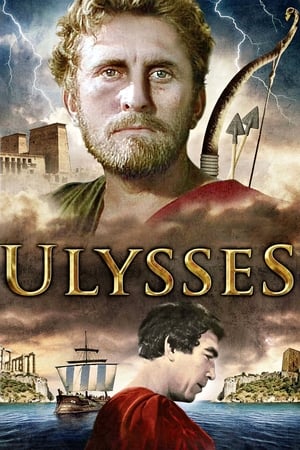
The adaptation’s genius lies in its tonal translation rather than literal fidelity. The concept of metis, or cunning intelligence, is perfectly embodied by Ulysses’ silver-tongued schemes and obsession with Dapper Dan pomade, while the divine meddling of the gods is replaced by the capricious forces of the law, the Klan, and a populist gubernatorial race. The Coens famously claimed they had never actually read "The Odyssey," instead relying on cultural osmosis and adaptations like the Kirk Douglas film, which explains the film’s loose, almost dreamlike connection to its source. This approach allowed them to craft a work that stands entirely on its own, using the epic’s skeleton to support a very American story about music, redemption, and the search for a mythical treasure that turns out to be a flooded valley.
Beyond its narrative, the film became a landmark for its technical and musical achievements. It was a pioneer in digital color correction, becoming the first feature film to be entirely digitally timed, which created its distinctive sun-baked, sepia-toned visual palette. The soundtrack, produced by T-Bone Burnett, became an unexpected cultural phenomenon, selling millions of copies and sparking a mainstream revival of bluegrass, folk, and old-timey music. The Soggy Bottom Boys’ rendition of "Man of Constant Sorrow" transcended the film to win a Grammy, proving that this quirky, anachronistic odyssey had struck a deep chord, turning a loose adaptation of a 2,800-year-old poem into a uniquely resonant piece of Americana.

The Odyssey is one of two major epic poems attributed to the ancient Greek poet Homer. Composed in the 8th or 7th century BC, it is a cornerstone of Western literature and one of the oldest surviving works of literary art. The poem is divided into 24 books and follows the Greek hero Odysseus (known as Ulysses in Latin) on his arduous ten-year journey home to Ithaca after the Trojan War. Along the way, he encounters mythical creatures, divine interventions, and numerous trials, while his wife Penelope and son Telemachus fend off suitors vying for his throne.
The epic explores themes of nostos (homecoming), xenia (hospitality), loyalty, cunning, and the relationship between mortals and gods. Odysseus's intelligence and resourcefulness, epitomized by his trick of the Trojan Horse, are central to his character. The poem's structure, with its non-linear narrative and use of flashbacks, has influenced storytelling for millennia.
The Odyssey was originally composed in Homeric Greek and transmitted orally before being written down. It became a foundational text of the Greek literary canon by the 6th century BC and has been translated into countless languages. Its characters, episodes, and phrases have permeated global culture, from the Sirens and Cyclops to the term "odyssey" itself, which now denotes any long, eventful journey.
The poem's enduring legacy includes countless adaptations in literature, theater, film, television, and other media. It has inspired works ranging from James Joyce's Ulysses to modern films and video games, cementing its status as a timeless tale of adventure and the human spirit.