🎬 Ulysses (1954)
Based on myths/legends
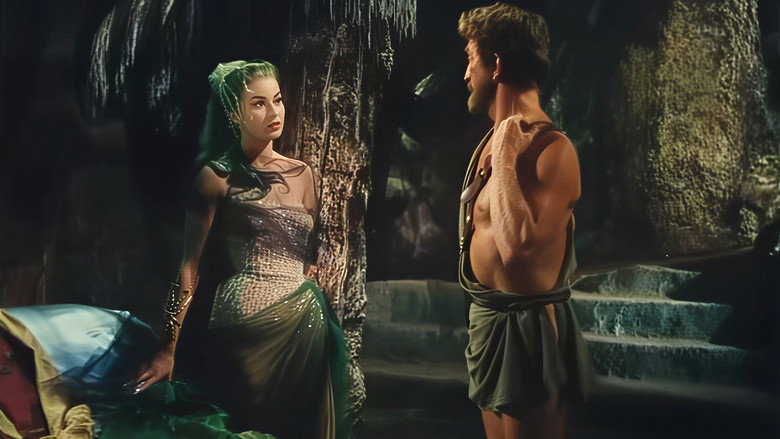
In 1954, director Mario Camerini took on one of the most ambitious literary adaptations in cinema history: bringing Homer's ancient epic, the Odyssey, to the big screen. Starring Kirk Douglas as the titular hero, this Italian-French-American co-production (produced by Dino De Laurentiis and Carlo Ponti) was a lavish, Technicolor spectacle that aimed to capture the mythic sweep of Odysseus's ten-year journey home. The film wisely focuses on the hero's most famous adventures—the Cyclops, Circe, the Sirens, and the descent into the Underworld—while framing the narrative with Penelope's struggle against the suitors in Ithaca. Silvana Mangano delivers a standout dual performance as both the faithful Penelope and the enchantress Circe, while Anthony Quinn brings menace as the lead suitor Antinous.
The film is notable for its straightforward, episodic approach to the source material, eschewing the modernist experimentation of James Joyce's contemporaneous novel for a more traditional heroic adventure. Kirk Douglas, fresh off his success in The Vikings, brings a rugged, physical presence to Ulysses, emphasizing the character's cunning and resilience. The screenplay by Camerini and Franco Brusati condenses Homer's 24 books into a brisk 105-minute runtime, prioritizing spectacle over poetic depth. Yet the film remains faithful to the core themes of nostos (homecoming) and perseverance, and its depiction of the Trojan Horse in flashback is a memorable set piece.
Upon its release, Ulysses was a commercial success and received praise for its visual effects, particularly the Cyclops sequence, which used oversized props and forced perspective. While not a critical darling in all quarters—some felt it lacked the epic's psychological nuance—it remains a landmark as one of the first major cinematic adaptations of Homer's work. The film's international cast and production values helped popularize the Odyssey for a new generation, and it stands as a fascinating artifact of mid-century cinema's attempt to bring ancient mythology to life with Hollywood star power and Italian artistry.

The Odyssey is one of two major epic poems attributed to the ancient Greek poet Homer. Composed in the 8th or 7th century BC, it is a cornerstone of Western literature and one of the oldest surviving works of literary art. The poem is divided into 24 books and follows the Greek hero Odysseus (known as Ulysses in Latin) on his arduous ten-year journey home to Ithaca after the Trojan War. Along the way, he encounters mythical creatures, divine interventions, and numerous trials, while his wife Penelope and son Telemachus fend off suitors vying for his throne.
The epic explores themes of nostos (homecoming), xenia (hospitality), loyalty, cunning, and the relationship between mortals and gods. Odysseus's intelligence and resourcefulness, epitomized by his trick of the Trojan Horse, are central to his character. The poem's structure, with its non-linear narrative and use of flashbacks, has influenced storytelling for millennia.
The Odyssey was originally composed in Homeric Greek and transmitted orally before being written down. It became a foundational text of the Greek literary canon by the 6th century BC and has been translated into countless languages. Its characters, episodes, and phrases have permeated global culture, from the Sirens and Cyclops to the term "odyssey" itself, which now denotes any long, eventful journey.
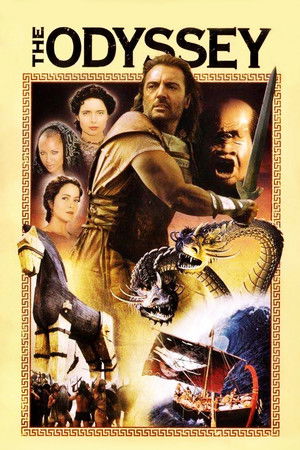
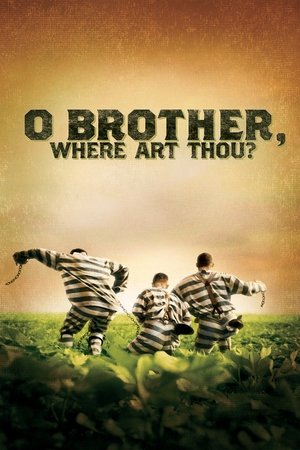
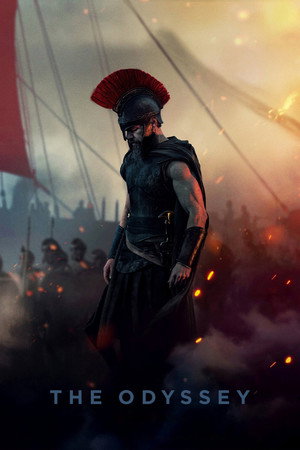
The poem's enduring legacy includes countless adaptations in literature, theater, film, television, and other media. It has inspired works ranging from James Joyce's Ulysses to modern films and video games, cementing its status as a timeless tale of adventure and the human spirit.